
Trusted by:
University of Southern California
Warner Bros.
Volvo
Amazon
Stanford University
Updated: September 16, 2026
11 min read
A physical employee of the month plaque gathers dust on a desk. This guide shows how digital badges for employees travel further, and which platform makes them worth issuing.
Research with AI:
Hand someone a printed employee of the month award and it usually ends up in a drawer. Issue the same recognition as a digital badge and it can sit on their LinkedIn profile for years, in front of their whole network.
That gap is why more HR and L&D teams now want a reliable platform to issue work badges to employees.
This guide shows what you can recognize with digital badges for employees and how to set up each badge type so it stays credible. It also weighs the platforms that fit both formal awards and lighter culture moments.
Digital badges for employees outlast paper awards because they live on LinkedIn and stay verifiable.
Match each badge to its purpose, since a compliance badge needs different rules than a culture badge.
Certifier issues both formal and casual work badges, with bulk sending and LinkedIn sharing on a free starting plan.

A printed certificate does one job and then sits in a drawer. A digital badge keeps working long after the moment it marks. Here's what changes when recognition goes digital.

Permanence: The badge stays on a LinkedIn profile and a resume indefinitely, so the recognition doesn't expire with the print run.
Shareability: Employees can share their badges in a few clicks on LinkedIn, X, or other social media channels. They can also add them to an email signature, resume, or personal portfolio. People love showing their achievements.
Verifiability: Anyone can click the badge and confirm it's real, which matters for compliance and assessed skills.
Scalability: Issuing to 500 people doesn’t take much longer as issuing to one.
There's a second payoff worth naming. Every connection who sees that badge also sees your company name, which turns recognition into quiet employer branding.
That's what makes digital employee recognition more than a perk. Done well, digital badges recognition work as a retention tool and a branding channel at once. If you want the wider view, we cover the full benefits of digital badges separately.
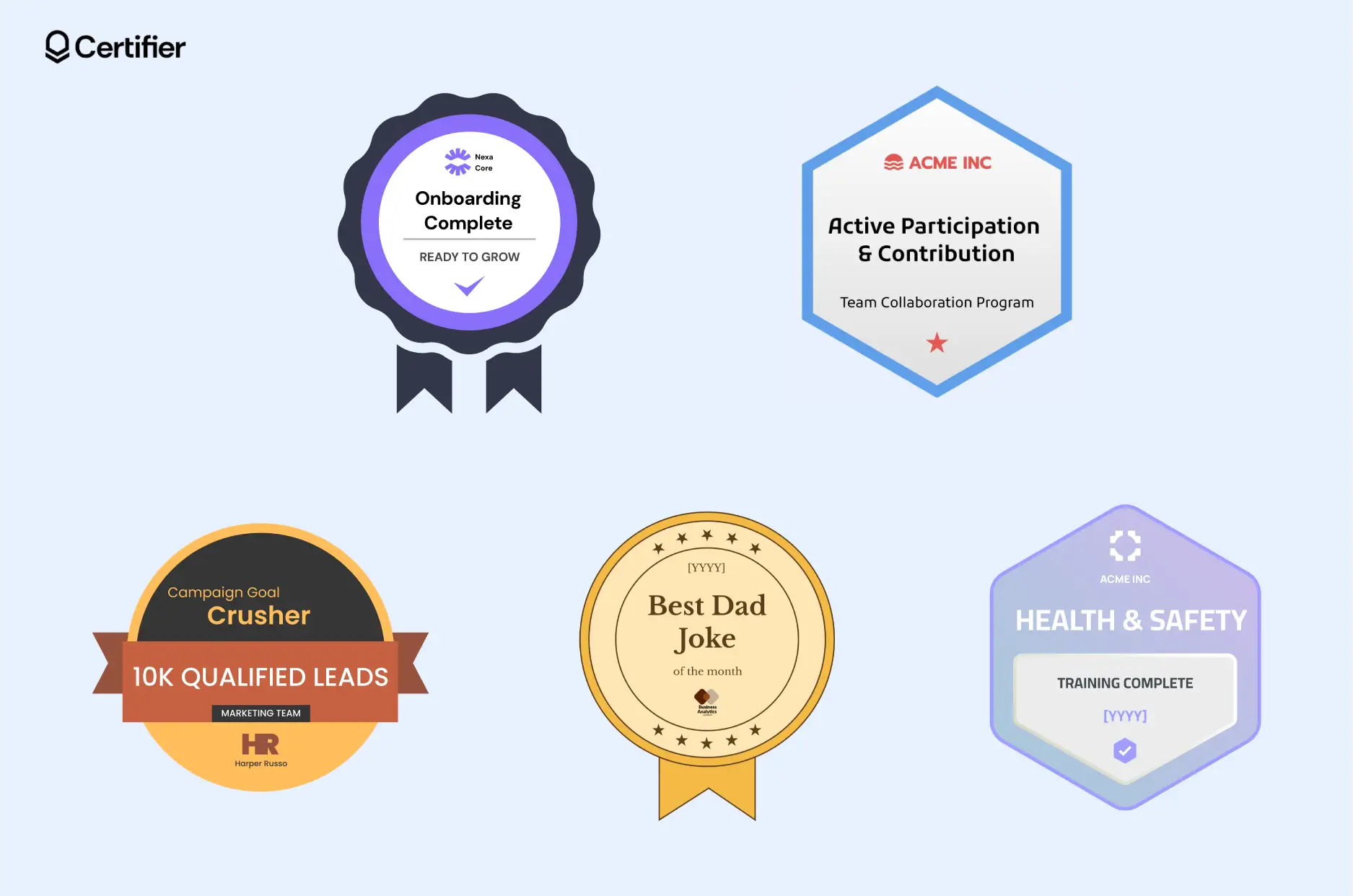
Not every work badge means the same thing. It’s key to sort your employee recognition badges by purpose first. Most fall into one of three lanes, and each lane needs its own earning rules. Certifier can handle all three as digital badges under one roof.
Before you create anything, settle a few questions for each badge:

Who nominates or approves a recipient? This sets accountability, so an employee badge isn't handed out on a whim.
Are the earning criteria written down and measurable? Clear criteria let employees see what to aim for, and they make the award defensible if someone asks why they missed out.
Is it internal-only, or is it meant to be shared externally? A compliance credential is built to be verified by outsiders, while a "best GIF" badge usually isn't. That choice shapes how you design it.
Can an employee opt out of public sharing? There’s a chance that not everyone wants their performance posted to a network, so the option protects trust and avoids awkward pressure.
Should it count as a formal credential, or stay a light token? Treating a casual badge as a certified skill confuses recipients and dilutes the badges that carry real weight.
The answers shift by lane, so the next three sections walk through them.
These celebrate the moment an employee finishes something required. They cover onboarding completion and mandatory compliance courses such as GDPR or health and safety training. Internal certification tracks and upskilling programs belong here too.
You can also break a long onboarding into stages, with a badge at the 30-day and 90-day marks so new hires see steady progress.
This lane is the easiest to keep fair, because the criteria are objective. The badge is being issued when the course or assessment is passed, so there's no nomination and no room for favoritism.
That also makes these the strongest candidates for external sharing, since a manager or auditor can verify exactly what was completed.
Why issue these achievements as badges? Two reasons stand out.
→ They create an audit trail for compliance
→ They give employees something verifiable to put on LinkedIn
An employee training certificate that lives online is also far easier to re-issue than a paper one.
If most of your badges follow a course or training, Certifier can automatically issue employee training certificates and badges the moment completion is recorded.
This lane holds your headline awards. Think of an employee of the month badge or a five year work anniversary. Sales milestones and promotions also sit in this group.
One design tip matters most here. Make these badges look distinct and a little premium, because the design itself signals how much the award counts. Also, decide upfront who nominates and who signs off, usually a manager or peer nomination with HR approval.
These credentials work like classic achievement badges tied to a clear milestone. For yearly recognition, you can also issue employee of the year certificate.
Sharing here is the employee's call, so let them choose whether a promotion or award goes public.
Peer recognition often lands harder than a top-down award. This is where culture badges live. A “team MVP” or “most helpful in Slack” badge fits the lane neatly, and such a program can be especially easy to implement if you integrate Slack with a certificate automation.
You can also go informal with a "best GIF of the quarter" tag or a "remote work champion" shout-out. Wellbeing and volunteering moments work too, like finishing a wellness challenge or showing up for a community day.
Keep two guardrails on this lane. First, rotate who can win and keep nominations open to everyone, so the same few names don't collect every badge.
Second, treat these as light tokens rather than formal credentials, because a "best dad joke" badge shouldn't sit next to a compliance certification as if it proves a skill. Default these to internal recognition, and let employees opt in before anything reaches LinkedIn.
Most employees may prefer recognition that's public, which is part of why these badges for recognition spread well inside a team.
If you want playful formats, our gamification badge examples show how teams keep them fun without losing meaning.
For a longer running list, see our employee recognition badge ideas.
Once you've sorted badges by purpose, let’s ornaize the rules for each type. This table maps how each one should behave, so your digital badges for employee recognition stay credible.
Badge Type | Typical Examples | What Makes It Valid | Default Sharing | Best Issuance Method |
|---|---|---|---|---|
Verifiable credential badge | Compliance training, assessed skills | Earning criteria plus a verifiable issue date | Good for LinkedIn and external checks | Bulk or automated |
Performance and milestone badge | Employee of the month, work anniversary | Transparent criteria with manager approval | Optional, based on employee preference | Individual or scheduled |
Culture and appreciation badge | Team MVP, values champion | Clear purpose and inclusive criteria | Better kept internal | Individual, manager-led |
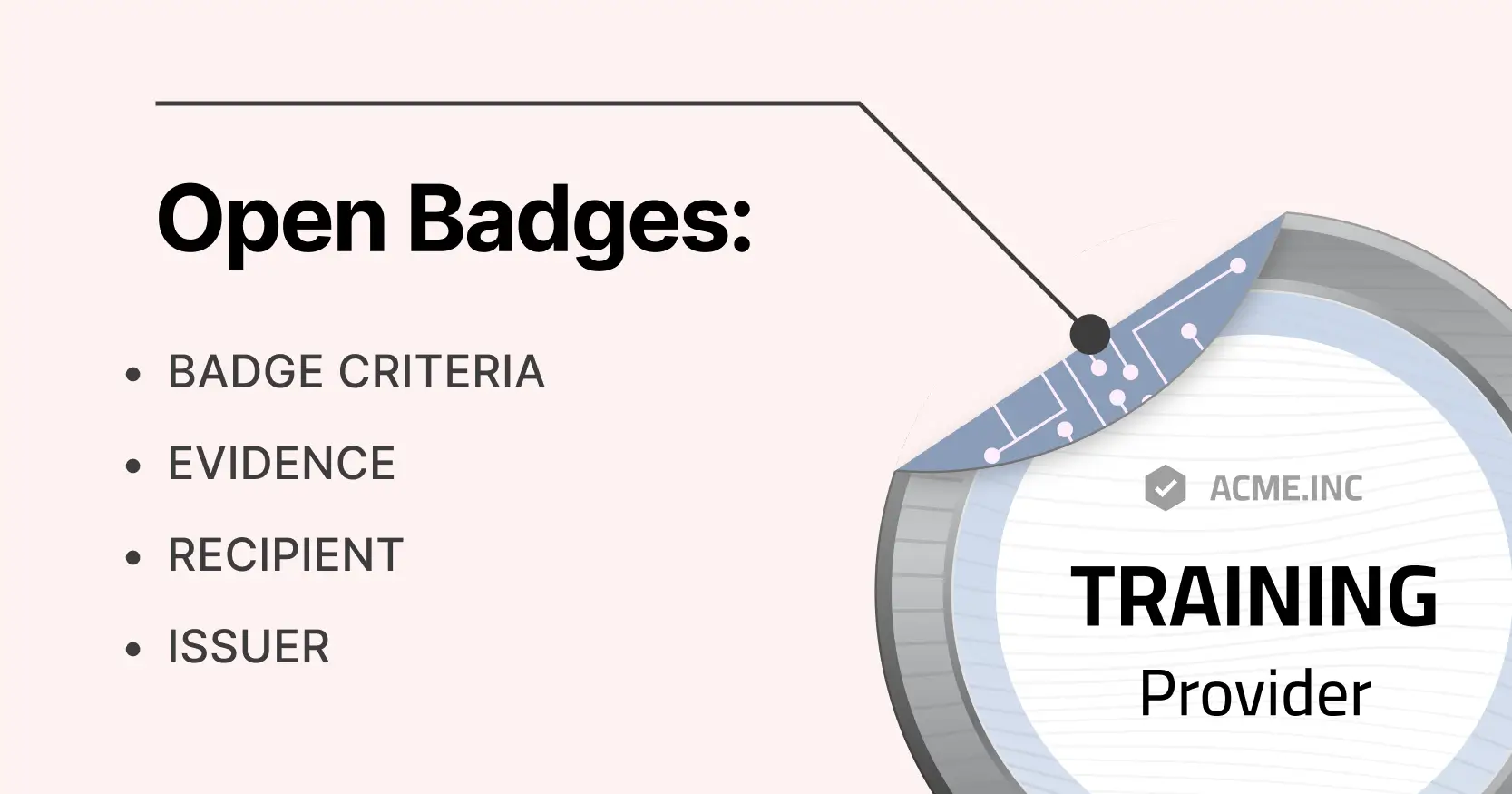
When issuing more formal digital badges for employees, make sure they use an Open Badges 3.0 standard. It means they include verified data to the badge, like who earned it, who issued it, when it was issued, and what criteria the employee met.
That makes the badge harder to fake and easier for managers, auditors, or future employers to check. Good news–all work badges employees will get from you issued with Certifier are in compliance with O.B. 3.0 standard.
When you compare a platform to issue work badges to employees, weigh four things.
Easy design: You should build an on-brand badge without a designer or an IT ticket.
Bulk issuance: Look for CSV upload so a full onboarding cohort goes out at once.
LinkedIn sharing: The badge should drop into LinkedIn's Licenses and Certifications section in one click and be easy to be shared as a post.
Analytics: You want to see who received and shared each badge.
Those four cover the day-to-day reality of digital badges for employee recognition. Whether you issue formal credentials or casual badges for recognition, the checklist stays the same. The rest is polish.
Certifier is a platform to platform to issue work badges to employees. It handles the full workflow without any special setup. Here's how a program runs end to end.
01Design the badge: Start from a template, then apply your colors and logo. You can also start from scratch, but using a badge template is faster. See the badge design ideas. The templates there are customizable in Certifier’s badge editor.
02Set the criteria: Decide what earns the badge and who signs off on it.
03Issue it: Send one badge by email, or upload a CSV to issue a whole cohort.
04Let it deliver: Each recipient gets a branded email with the badge and a verification link.
05Share to LinkedIn: One click adds the badge to the recipient's profile.
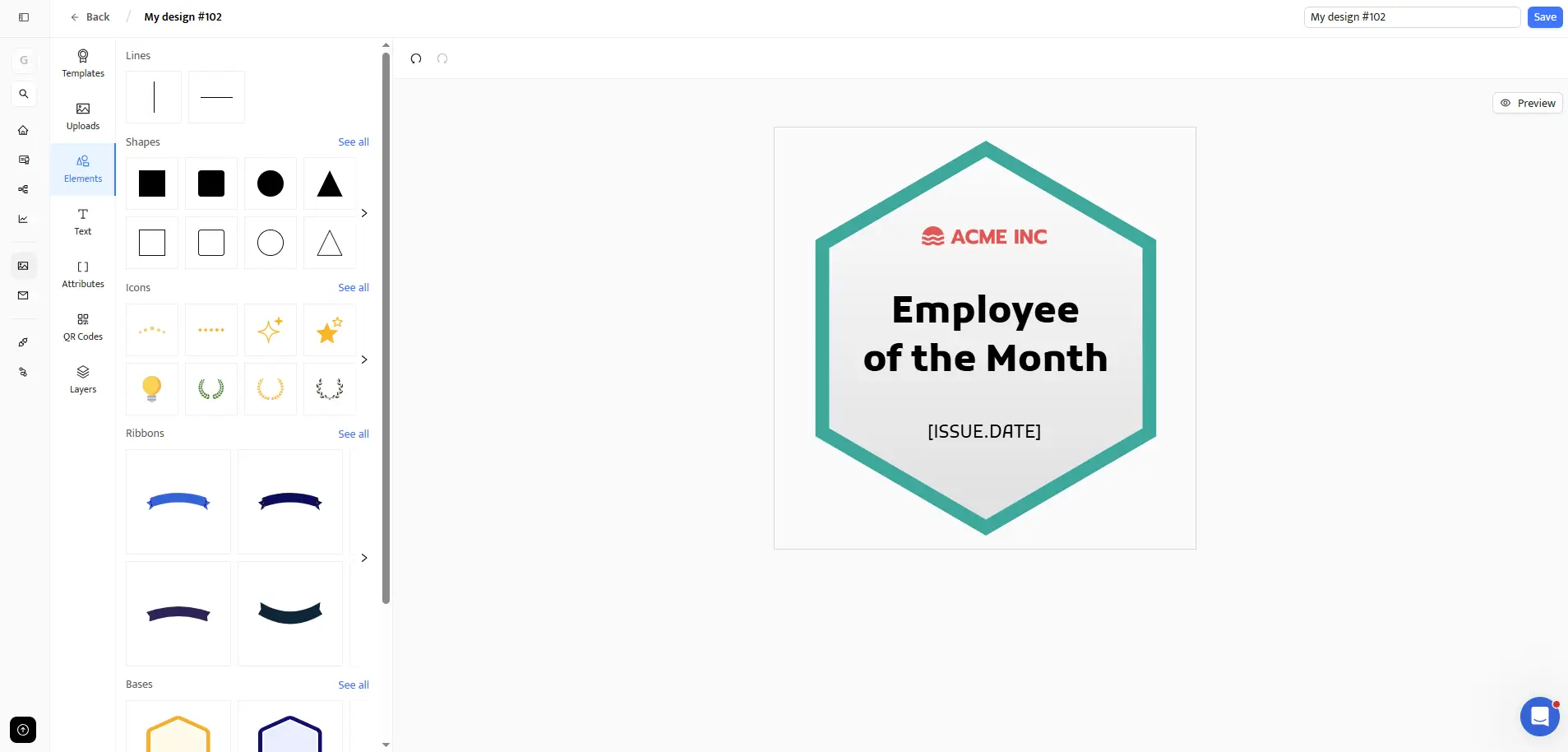
The free plan covers 250 credentials a year, which is enough to pilot a program before you spend anything. Paid plans add branded emails and scheduled issuing. They also surface analytics on who opened and shared each badge.
For automation, Certifier connects through Zapier or Make. For example, you can connect HRIS platforms like BambooHR to Certifier so selected onboarding, training, or employee record updates issue the appropriate credential.
Certifier also offers native HubSpot and Salesforce integrations, so badges can fire from a completion event.
Every badge follows the Open Badge 3.0 standard, and the platform holds ISO 27001 and GDPR compliance.
No single tool wins for every team, so here's where the main alternatives fit and where they don't.
Certifier. Suited to HR and L&D teams that want both formal and casual credentials from one tool. This platform to issue work badges to employees includes bulk issuance and LinkedIn sharing, and the free plan covers 250 credentials a year before you spend anything.
Credly. Suited to large enterprises issuing formal skills credentials inside a shared public network, and now owned by Pearson. It can feel heavy and expensive for teams that also want lightweight culture badges, and recipients often have to create an account to claim.
Accredible. Suited to established credential programs that want branded badges with built-in verification. Pricing climbs with volume, and premium white-labeling sits on higher tiers.
Litmos. Suited to organizations already on Litmos that want badges tied directly to training completion inside the LMS. It's less useful for recognition programs that live outside the LMS.
IssueBadges. Suited to teams wanting a lightweight tool that delivers by email without recipient accounts. Compare its automation and analytics against Certifier before committing, since that's where the gap tends to show.
You don't need a separate tool for every kind of recognition. Sort badges by purpose and set fair rules for each. Then issue them all from one place.
Certifier's templates cover the common employee recognition badges, from an employee of the month badge to a compliance completion mark, and you can customize any of them in a few minutes.
These badges for recognition all run from one dashboard. Ready to issue your first work badges to employees? You can start with Certifier for free, and the first 250 credentials cost nothing.
The best platform to issue work badges to employees lets you design on-brand badges and send them in bulk without IT. Certifier suits most teams because it handles both formal and casual badges on a single free starting plan.
A digital badge is an image with verifiable data built in, so anyone can confirm who earned it and why. With digital employee recognition badges, the employee gets an email and then adds the badge to LinkedIn or a resume.
For deeper dive into the topic, read out guide to digital badges for recognition.
At a minimum, it should name the achievement and the issuer. It also needs the earning criteria and an issue date. On the Open Badges 3.0 standard, that data travels inside the badge, so it stays verifiable anywhere.
Yes. Most platforms add the badge to LinkedIn's Licenses and Certifications section, often in one click. Certifier includes that sharing flow, so work badges for employees reach a professional network on their own. Badges can also be shared with a post.
Pick a template and add your branding. Then decide who approves the award. In Certifier you can design an employee of the month badge and issue it with a personal note in a few minutes.
Yes. Certifier's free plan covers 250 credentials a year, which is enough to pilot an employee badge program. You can upgrade once your issuance grows.

- B2B SaaS marketing
- Digital Credentials
- Content Strategy
- On-page SEO
- Lead Generation
Chief Marketing Officer
Aksen leads marketing at Certifier, bringing 7+ years of experience with global brands to position digital credentialing as a trusted solution for training providers and educational institutions.
Credly
https://www.credly.comAccredible
https://www.accredible.comLitmos
https://www.litmos.com/IssueBadges
https://issuebadge.com/