

Trusted by:
University of Southern California
Warner Bros.
Volvo
Amazon
Stanford University
Updated: September 15, 2026
9 min read
Badgr didn’t just disappear overnight. It went through acquisitions, rebrands and the phaseout of its free badge issuing. This article explains this evolution and what still works.
Research with AI:
Badgr didn’t vanish overnight. Since its acquisition, it’s been rebranded twice—first as Canvas Badges/Canvas Credentials and now as Parchment Digital Badges.
This article traces this evolution, explains what changes (and what doesn’t) and shows you how to evaluate or migrate to a credentialing platform, like Certifier, that fits your needs today.
Badgr was acquired in 2022 by Instructure and rebranded under Canvas as Canvas Badges/Canvas Credentials.
On October 31, 2025 Canvas Credentials is rebranded to Parchment Digital Badges as part of a larger credential-network consolidation under Parchment.
The rebrand is cosmetic only–name, logo, URLs change. Functionality remains the same.
But the legacy free badge-issuing plan is being sunset. Free issuer accounts will no longer work after December 31, 2025.
For organizations relying on free or lightweight badge issuing, now is the time to export data, evaluate alternatives such as Certifier or plan for migration to avoid disruption.

Originally developed by Concentric Sky, Badgr emerged as one of the first widely adopted platforms for issuing digital badges compliant with open-badge standards.

Over time, Badgr badges became popular among academics, nonprofits and online course creators–especially those who valued open-credentials, portability and learner-owned digital badges across institutions and systems.
Because of this early momentum and ease of integration, Badgr had a significant share of the “micro-credentialing” and “open badge” market before acquisition.
In April 2022, Instructure (the company behind popular LMS Canvas) acquired Concentric Sky, the makers of Badgr. As part of the merger, Badgr was rebranded as Canvas Badges and its “Pro” offering was repositioned as a paid upgrade called Canvas Credentials.
Under this new structure:

Badgr’s core free badge issuing became the default “Canvas Badges” feature for Canvas LMS users.
Institutions could optionally opt for “Canvas Credentials”–unlimited badging, analytics, pathways and more advanced credentialing features – via a paid subscription.
At the time, this looked like a way to integrate credentials more tightly into LMS systems, making badge issuing more accessible to institutions already using Canvas.
On October 31, 2025, Canvas Credentials officially becomes Parchment Digital Badges: as part of Instructure’s consolidation of credentialing services under the Parchment brand.
Key facts about the rebrand:
It’s a branding-only change. Product workflows, features, integrations remain unchanged.
User interface, URLs and logos are updated to reflect Parchment branding.
Canvas LMS integration (via LTI) remains supported; API endpoints are maintained via redirects.
For existing users, this means continuity in badge issuance, verification and sharing, but under a new name and brand identity.

While the rebrand preserves functionality, the free-tier badge issuing model is being retired.
According to public notices:
After June 30, 2025 → no new free issuer accounts may be created under Canvas Badges/Credentials. You're not longer able to set a Badgr account.
After December 31, 2025 → all free issuing capabilities are removed. Existing free issuers are converted into read-only backpacks; no new badges can be issued; data export is disabled.
As a result, many organizations, especially small courses, nonprofits and volunteer-based programs, that relied on free digital badge issuing may no longer be able to continue their credential workflows under Parchment unless they pay or migrate.
Under Parchment Digital Badges:
Badge issuing, verification links, learner backpacks and credential sharing remain supported.
For paid subscribers or institutions, the full functionality (pathways, analytics, bulk issuing) continues.
For free-tier users (post-2025), issuing/export is removed–effectively disabling new credential creation under the free model.
In short: old badge data and earned credentials likely remain visible to learners, but the ability to issue new badges or export/archive old data under free accounts will be gone after end-2025.
The Badgr → Canvas → Parchment evolution, combined with the free-tier shutdown, highlights systemic risks in relying on vendor-controlled credentialing platforms:

Vendor lock-in risk. If you depend on a platform’s free plan (or affordable tier), future pricing changes may force migration or shutdown.
Limited data portability. Without export or open-standards assurances, you may lose control over badge data, metadata, verification links.
Unsuitable for small or non-profit use. Enterprise-grade credentialing tools are often overkill (and over-budget) for volunteer programs, micro-courses or internal recognition.
Unpredictability for learners and organizations. Future changes (pricing, licensing, data access) can disrupt credentialing operations and learner trust.
History has shown that even widely adopted tools like Badgr can be acquired, rebranded and restructured, leaving users to scramble.
Given that context, it’s critical to evaluate your credentialing needs: not just now, but for the medium-to-long term.
If you rely on issued badges or credentials, take these steps before the Badgr tool transition deadlines:
Export all existing badge data, including metadata, learner lists, badge definitions.
Archive or backup learner records, in case access becomes restricted.
Re-evaluate how many credentials you issue annually to check whether a paid plan or alternative makes sense long-term.
Test at least one alternative badge provider (with free/freemium or transparent pricing)–run a small pilot.
Inform learners or stakeholders about upcoming changes. Explain what stays, what changes and what you plan to do.
By acting early, you reduce risk and ensure continuity.
If you decide to migrate (or simply explore alternatives), consider this checklist when evaluating any badge platform:
Support for open-badge standards (for portability and interoperability)
Issuing (single+bulk) and certificate/badge creation workflows that don’t require an LMS
Data export and backup–CSV, JSON, PDF–to ensure you own your credential data
Public verification links and metadata for transparency and trust
Transparent, predictable pricing or a stable free/freemium tier
Flexibility–ability to integrate with LMSs, APIs or run independently
Independence from forced enterprise contracts or vendor lock-in
Feeling the squeeze of the Parchment rebrand? Transitioning from a legacy platform can be daunting, especially when free tiers are being sunset.
To see how a modern, flexible alternative compares to the new Parchment ecosystem, check out our Parchment Digital Badges vs. Certifier comparison.
When Badgr’s free issuing model disappeared—and Canvas/Credentials/Parchment shifted toward enterprise-only plans–many educators and course creators were suddenly forced to pay or lose credentialing capabilities.
Certifier fills that gap with a practical, robust and transparent alternative.
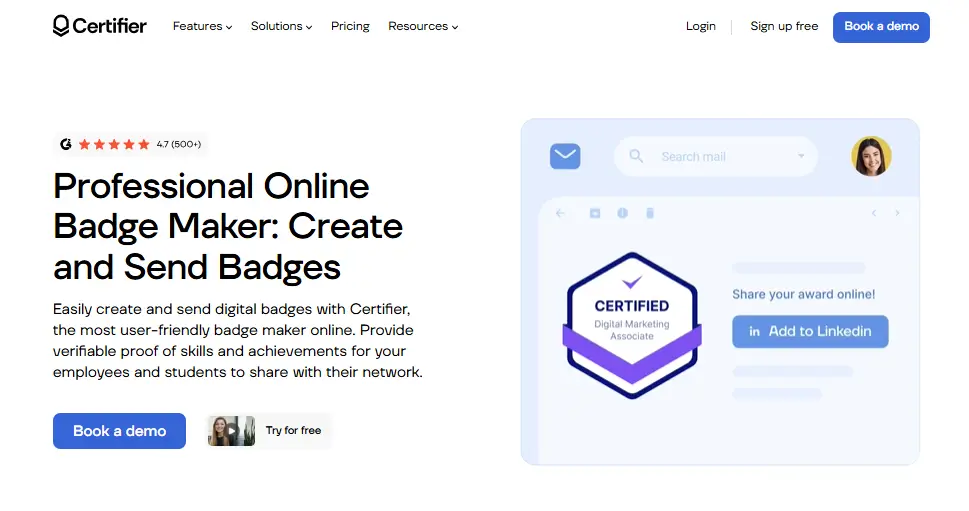

Certifier offers a free plan that lets you issue hundreds of badges or certificates per year, making it realistic for small courses, nonprofits or pilot programs.
You don’t just get basic PDFs. You get full-featured digital badge issuance: customizable badge image, embedded metadata and shareable credentials.
Because it’s genuinely usable (not artificially limited), Certifier lets you keep issuing professional badges long-term; no surprise paywalls or sudden shutoffs.
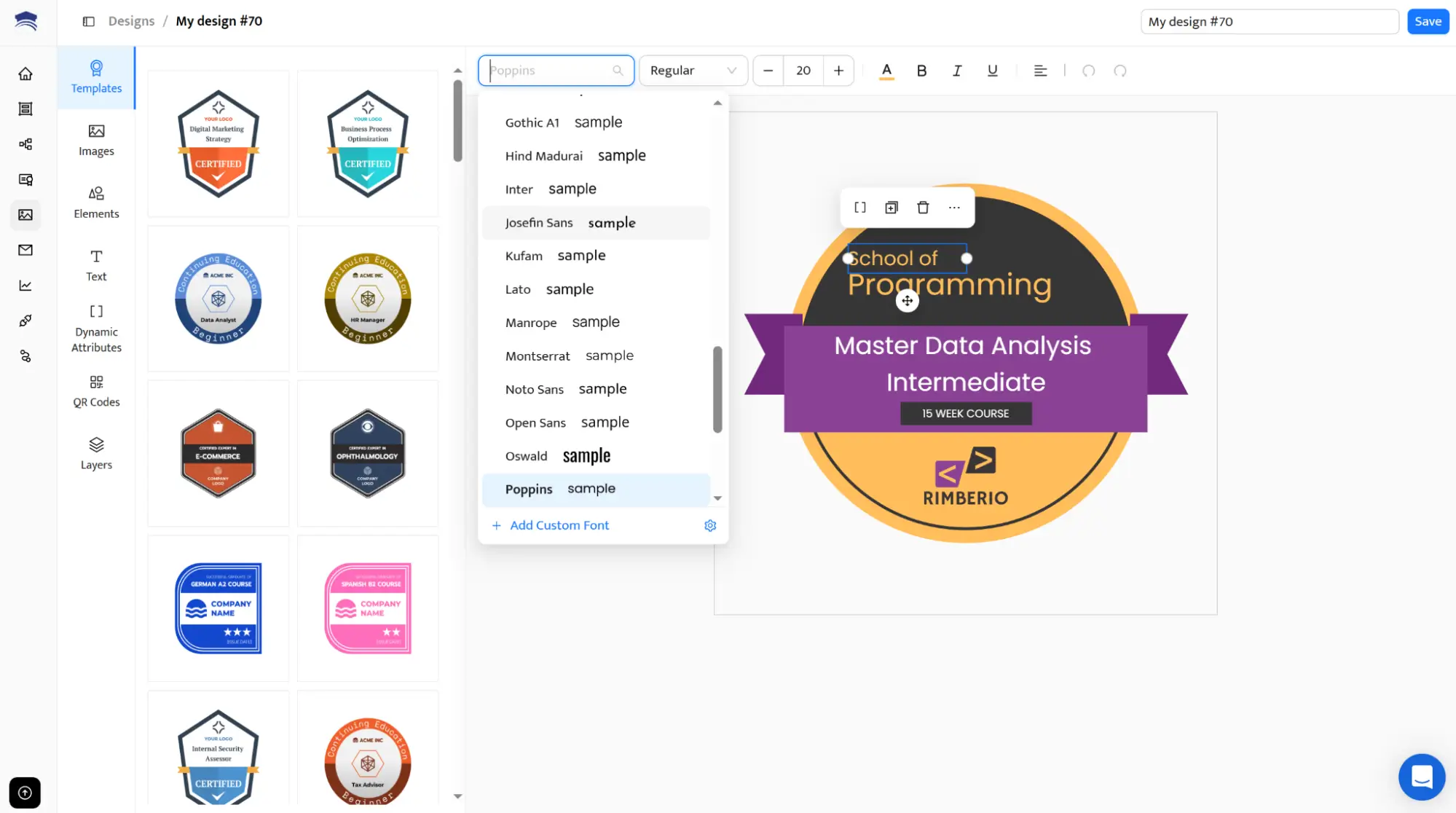
With Certifier’s badge builder you can customize digital badge designs, fonts, logos, layout, enabling on-brand “award badges” and certificates without design skills.
Whether you run a small course or a large program, you can create badges quickly, send them in bulk or manage credentials at scale, with no LMS lock-in.
Certifier works as a standalone digital badging platform, so you’re not tied to a specific LMS (unlike Badgr → Canvas).
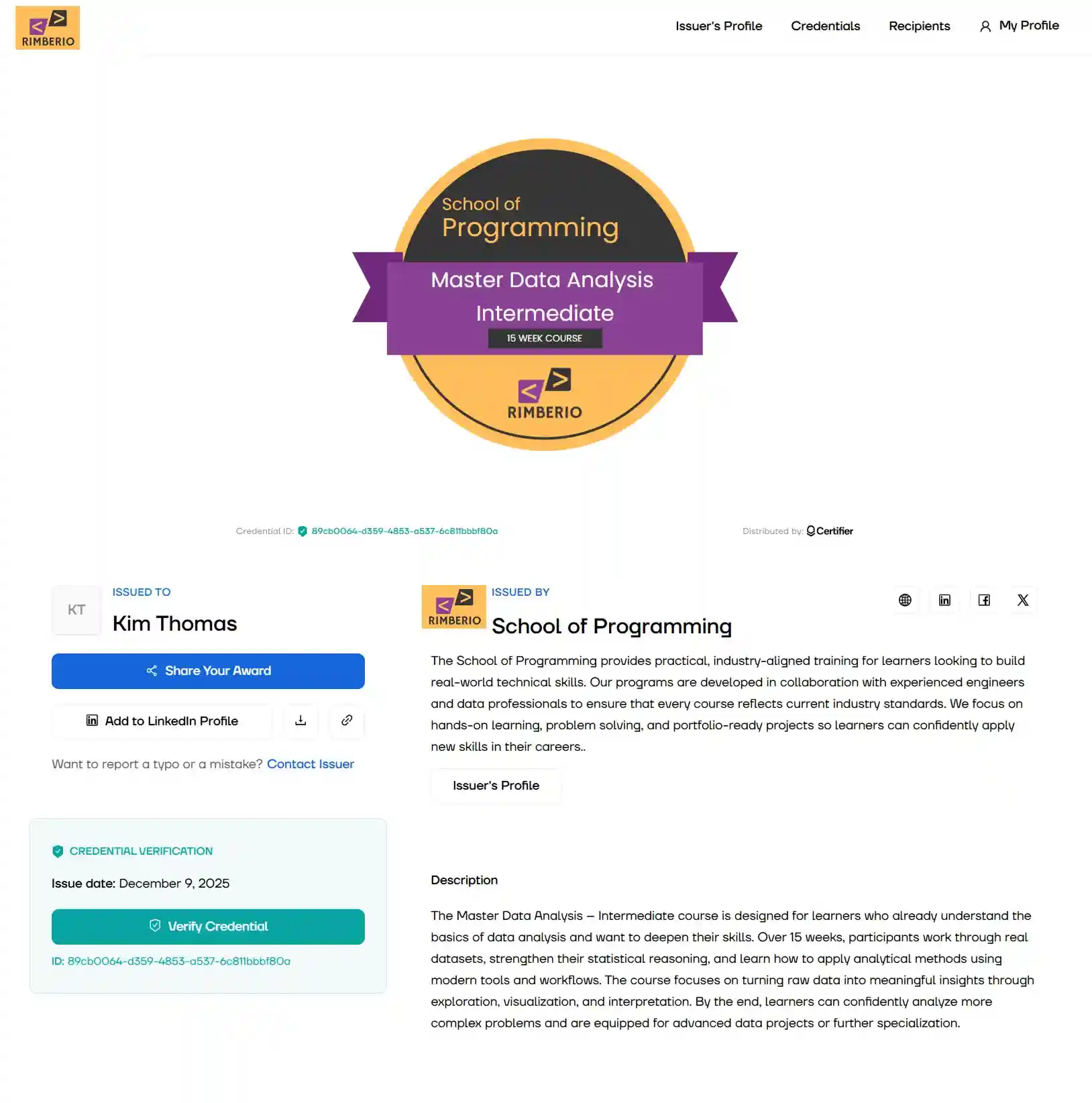
Credentials issued can be exported or shared via public links. That means if your program evolves or you switch tools later, your learners keep their badges.
Because badges follow open-standard practices (e.g., as defined under digital badge specifications), they remain portable across systems.
Recipients can share their credentials on professional networks, job platforms or resumes, turning “certificate PDFs” into real, verifiable digital credentials that carry value.
Badges and certificates come with metadata (issuer, skill, date, unique ID): the kind of structured info that employers or third-parties expect from a proper credential.
Whether you’re issuing a few dozen badges or managing hundreds per cycle, Certifier adapts:
It supports bulk issuing, automated distribution and dynamic credential generation, so you don’t spend hours on manual work.
As your program grows, you can switch plans, without losing past credentials or surprising learners with broken badge paths.
Select the perfect plan for your needs or stick to the free one if that's what you prefer.
With Badgr gone as a stable, free option and Parchment shifting to enterprise-first, Certifier offers what many need now:

A real free tier with meaningful badge/certificate volume
Full badge and certificate creation with design flexibility
Portability, shareability and verification for learners
No LMS lock-in → full standalone credential platform
Scalable workflows for both small and large user groups
If your priority is issuing verifiable digital credentials without risking shutdown, vendor lock-in or opaque pricing, switching to Certifier is a strategic move.
The story of Badgr–from open-badge pioneer to rebranded enterprise tool under Parchment–is more than corporate reshuffling. It shows a structural risk in relying on a free vendor-controlled credential platform.
For anyone building credentialing workflows now, this means: prioritize control, portability, transparency and flexibility. Choose tools that respect data ownership, support open standards, offer export options and allow you to scale on your terms.
If you treat credentials as long-term assets, then using a platform built for sustainability is key. Use this moment of change as an opportunity: export what you have, reassess what you need and build a credential strategy that won’t wobble when vendors change direction.
Certifier can be exactly what you need for digital credentialing. Sign up for Certifier for free now!
Get to know the answers to the most frequently asked questions regarding Badgr digital badges.
Only theoretically. Badgr was acquired by Instructure in 2022 and since then rebranded into Canvas Badges/Canvas Credentials. As of October 31, 2025, Canvas Credentials becomes Parchment Digital Badges: same product, new name.
No. According to the official release notes, the change is branding-only: workflows, integrations, API endpoints and user experience remain unchanged.
Free issuing will be fully discontinued after December 31, 2025: no new badges can be issued under free accounts.
Based on current documentation, yes: earned badges and their metadata remain accessible through Parchment Digital Badges backpacks. But for long-term record safety, exporting data is strongly advised.
If you need continued verification options, consider using platforms that support QR code certificate verification, such as Certifier.
They should export their credential data, plan for migration and evaluate alternative tools that offer transparent free/freemium plans and data portability, especially if they only issue small numbers of badges.
You can start by reviewing a trusted Certifier alternative to continue issuing credentials without disruption.

- SaaS Growth
- Digital Credentials
- APIs
- Product Marketing
- Company Operations
CEO and Co-Founder
Sergey is CEO and Co-Founder of Certifier, a Forbes 30 Under 30 honoree building digital credential infrastructure for 2,000+ organizations worldwide and shaping the future of credentialing.


 Most popular