
Trusted by:
University of Southern California
Warner Bros.
Volvo
Amazon
Stanford University
Updated: August 21, 2026
12 min read
Digital badges become marketing assets when recipients are proud to share them on LinkedIn. To get the full benefit, the badge must carry visible issuer branding and every share must point back to a verifiable credential page.
Research with AI:
Many badge programs follow the same pattern: issue, send and hope recipients share. The credential lands in an inbox, the recipient might add it to LinkedIn, and that's where the story ends for most organizations issuing digital credentials. Not looking beyond this point is a missed growth opportunity.
Digital badges for marketing can turn every learner into an organic distribution channel. LinkedIn had 1.3 billion members as of October 2025, per Statista, so every LinkedIn post or profile addition can land you a branded impression in a professional feed at zero ad spend. That’s additional visibility for your brand for free.
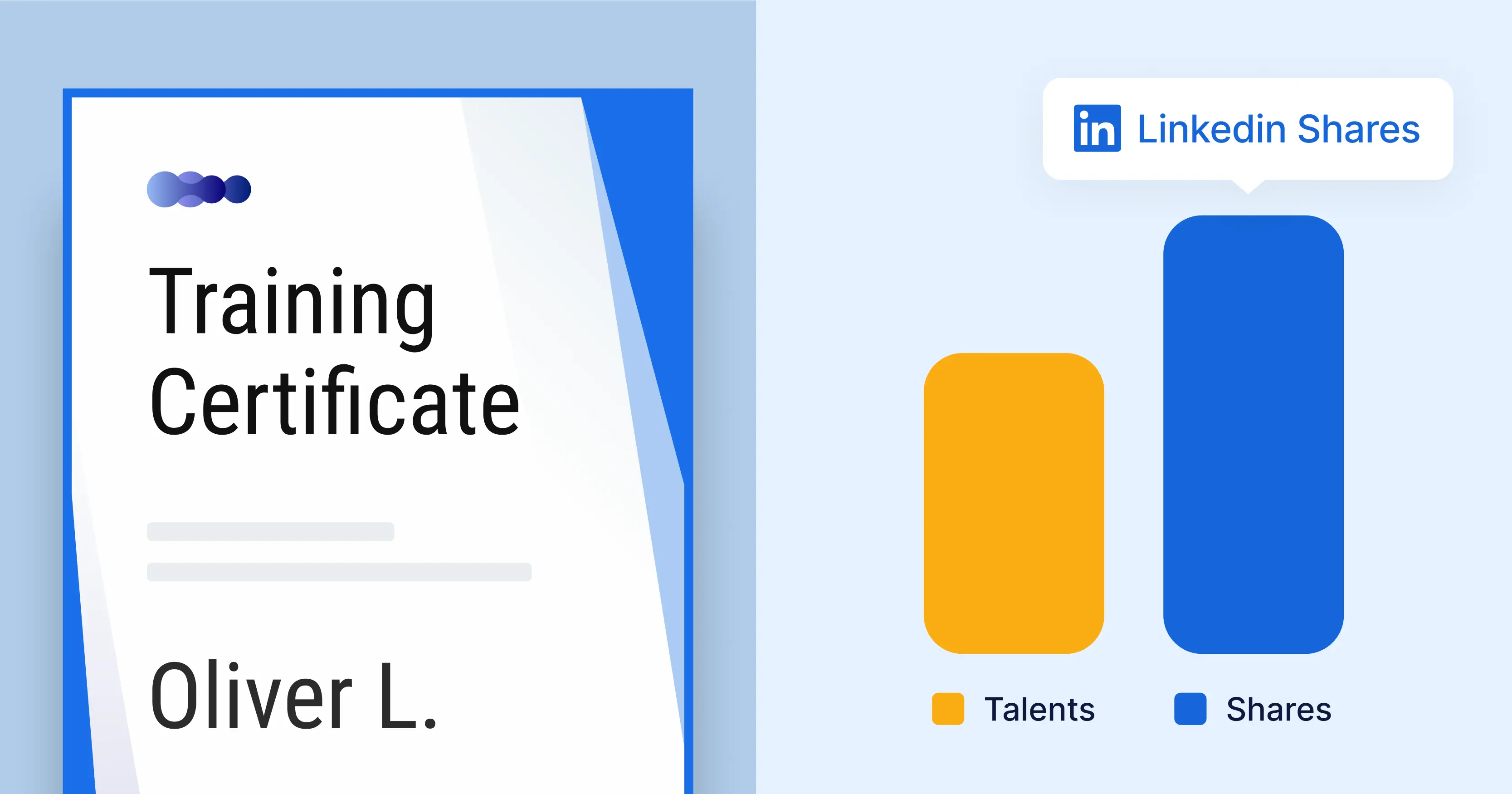
The compounding effect is simple: a badge shared as a LinkedIn post can create feed visibility, while adding it to Licenses & Certifications creates a persistent talent signal on the recipient’s profile.
Certifier's digital badges platform helps teams manage that loop, from branded delivery to one-click LinkedIn sharing with built-in analytics. This article shows how badges work as a marketing channel and what makes a program perform.
Digital badges for marketing work best when recipients want to share their achievement and the issuer makes sharing easy.
LinkedIn visibility comes from feed posts reaching wide networks and profile credentials added to profiles under Certificates.
Talent signals embedded in metadata can make credentialed professionals more discoverable to recruiters.
Certifier automates one-click sharing and branded delivery with full tracking analytics.

Most organizations still treat credentialing as a back-office function. The badge gets issued when a course ends, and the job is done. That framing misses the most valuable part, namely that a badge can keep working after issuance.
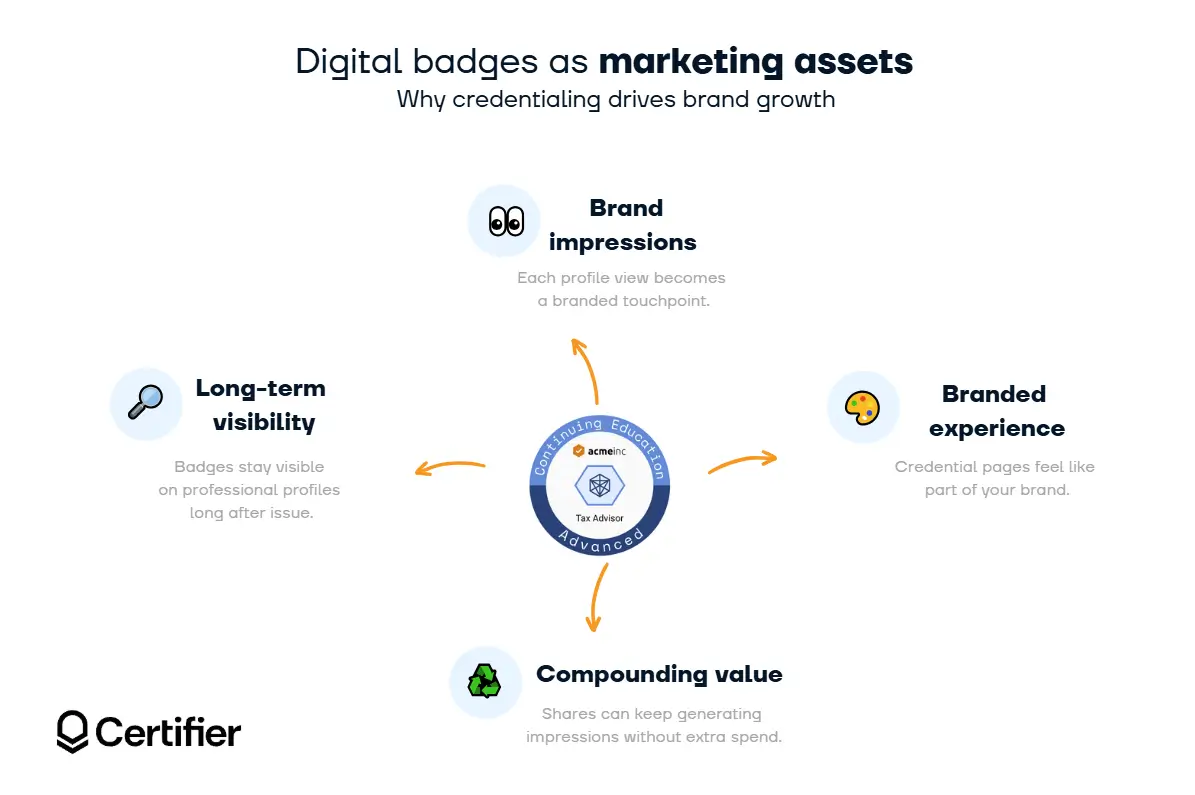
A digital badge is a branded asset that can live on a recipient's LinkedIn profile, social feed, email signature, and credential wallet indefinitely.
Every profile view becomes a brand impression, especially when viewers see the organization’s name, credentials’ name, who issued it, issue date, expiration date where relevant, credential ID and URL, depending on how the recipient enters the info and how LinkedIn displays it.
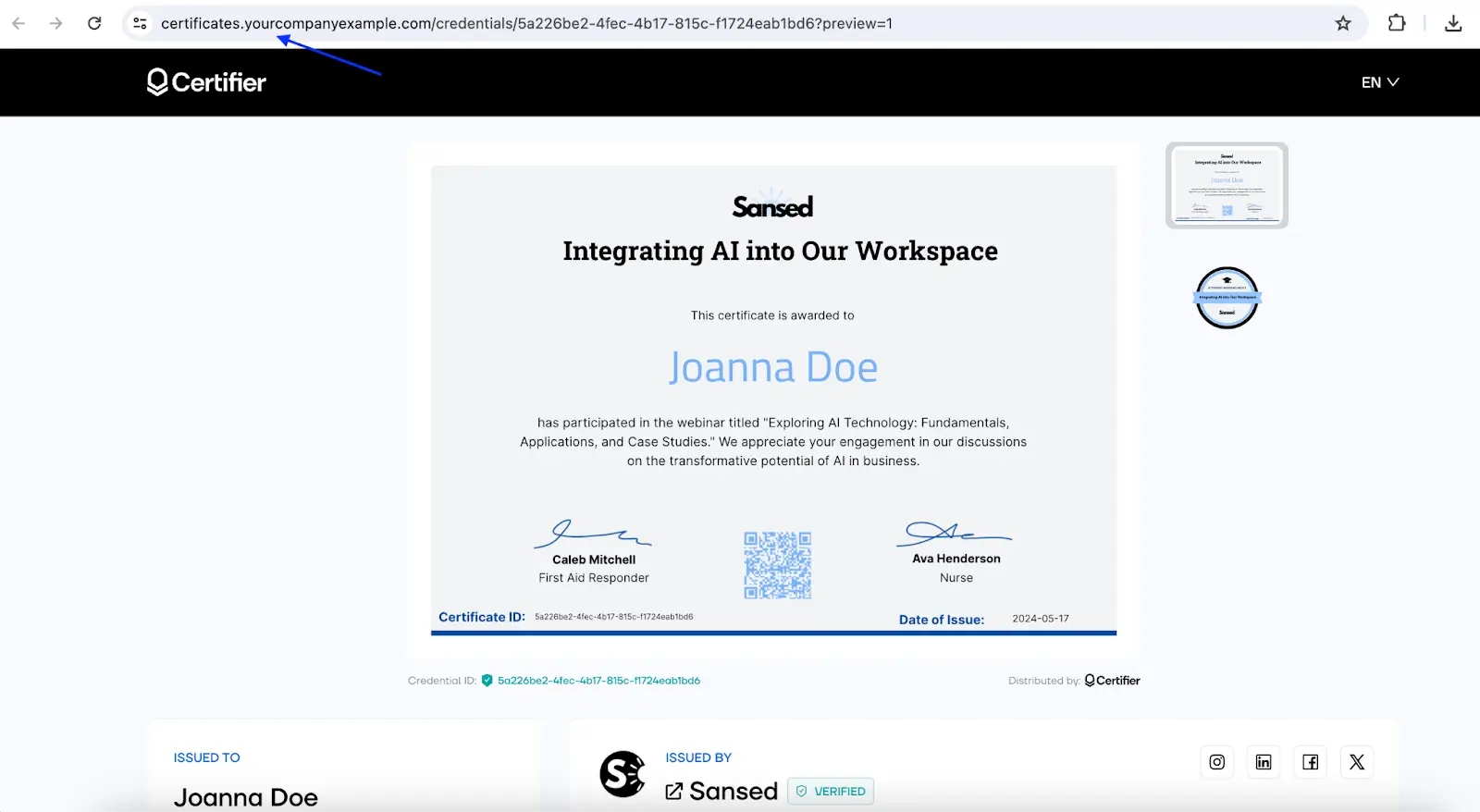
When you use a custom domain for your credential pages, the whole experience feels like part of your brand ecosystem.
The benefits of digital badges extend well past recognition into measurable marketing outcomes. Unlike a paid ad that stops working when the budget runs out, a shared badge continues to produce impressions as long as the earner's profile remains active.
The reframe is simple: credentialing investment is marketing investment that compounds over time.
A digital badge can create LinkedIn visibility in two ways: when recipients share it as a post and when they add it to the Licenses & Certifications section of their profile.
The mechanics behind these two visibility methods work differently. Posts create feed visibility, while profile credentials act as persistent proof that viewers can find at any point. We discuss both of these approaches in our detailed visual guide, so feel free to check it out and follow along:
How can digital badges enhance social proof for skills? Each badge shows who issued it, what the earner achieved and how others can verify it. When recipients share badges on LinkedIn or in email signatures, employers and peers see evidence instead of claims.
A badge can create two types of value: short-term visibility from a LinkedIn post added to the feed, and long-term credibility from a profile credential.
When recipients add a badge to their Licenses & Certifications section, they can include the issuer name, credential name, issue date, expiration date where relevant, credential ID, and verification URL.
That makes the achievement easier to check than a static badge image alone.
Personal profiles also generate roughly 561% more reach than company pages on LinkedIn so a shared badge from a recipient's account outperforms anything you'd post yourself from your company profile.
But don’t assume LinkedIn will notify a recipient’s entire network when they add a certification. Profile-update notifications depend on user settings, update type, and LinkedIn behavior.
The safer model for marketing growth is being able to share badges as posts, which creates feed visibility, and then adding it to Certifications for persistent visibility. The associated credential URL gives viewers a way to easily verify the achievement.
That way, badge sharing becomes valuable without relying on volatile algorithm claims.
Certifier gives the recipients the credential information and verification URL they need to add a badge in the Licenses & Certifications section.
The badge criteria can also sit in the Open Badge 3.0 metadata embedded in the credential itself, which gives viewers more context about what the recipient achieved and how the credential can be checked than a static image or PDF can.
A LinkedIn certification badge from Certifier also includes a one-click share button. You get a template LinkedIn post with a badge image and a verification link, so recipients can share without copying anything manually.

You can browse LinkedIn digital badges examples to see how social media badges can support business credibility, and how they might look across different program types and industries.
A talent signal is a verifiable data point that communicates a candidate's competency to recruiters. Digital badges become strong talent signals when they include:

issuer identity
clear achievement criteria
skills or competency context
verification URL
LinkedIn profiles can then surface credential details such as the issuer, credential name, relevant dates, and associated skills if added. A badge on a recipient’s profile can make their achievement easier to understand and discover in a professional context.
According to the OECD’s Bridging Talent Shortages in Tech report, assessing and validating candidates’ skills is reported as one of the biggest hiring challenges for employers using skills-based hiring. Verified badges can reduce uncertainty when they clearly explain criteria, issuer, and showcase proof.
This matters for digital badges for professional development specifically. Recipients share credentials when this helps them look credible and relevant.
According to Jobscan, certifications and licenses add professional weight to a resume and 50.6% of recruiters use them as ATS filters when reviewing candidates.
When earners like to showcase their credentials because of a perceived, measurable career value, your program turns into a self-distributing marketing engine.
The employer-side benefit is direct: when your organization is the issuer of credentials recruiters recognize, your digital badging program can create a verified talent pool on a network where prospects and partners spend a lot of time at no additional cost.
Digital badges for employees can support brand visibility because the message comes from the person who earned the credential, not only from the organization that issued it. That makes the share feel more personal than a standard brand post.
The numbers behind digital badges for employees on LinkedIn are worth understanding before designing a program.
For instance, if a 500-person certification cohort sees 40% of recipients share their badge on LinkedIn, the issuer gains 200 recipient-led organic posts.
Each one reaches people connected to the recipient, likely adjacent to their role, industry, or learning path, and they do so with the credibility of a personal endorsement, not a brand broadcast.
When your organization is visibly issuing credentials that learners and employers recognize as valuable, prospective hires notice. Badge programs designed for sharing become a passive employer brand channel.
There’s also a brand control effect that most issuers underestimate. Certifier’s custom domain feature lets you host credential pages on your company’s domain, so the recipient and viewer experience stays aligned with your brand.
The digital badges market reflects this shift in how organizations think about credentials. According to Mordor Intelligence's 2025 research, the global digital badges market reached an estimated $237 million in 2025 and is forecast to hit $529 million by 2030.
Growth in the digital badges market reflects this shift of treating badges as workforce branding tools, not just completion records.
The gap between a badge program that drives visibility and one that disappears after issuance usually comes down to three friction points.

Sharing is too hard. If recipients have to download an image, copy a link, and write a post, most won't bother. A one-click share that pre-fills the LinkedIn post with the badge image and verification link removes that barrier entirely.
The badge design doesn't motivate sharing. A generic credential with the platform's logo prominent and minimal issuer branding gives recipients little reason to display it. A polished badge that leads with your branding and clearly communicates what was earned is worth sharing because it reflects positively on the earner.
Delivery misses the motivation window. Recipients are most likely to share immediately after earning. If the credential arrives in a plain system email days later, the moment has passed. A branded delivery email at the point of completion, with a direct share button included, captures the spike in motivation.
Certifier can reduce all three friction points. The platform pre-generates the LinkedIn share post, gives you full control of the badge template and triggers branded delivery the moment a credential is issued.
Are you looking for badge and certificate templates optimized for social media sharing? Check out our broad gallery of credential templates.
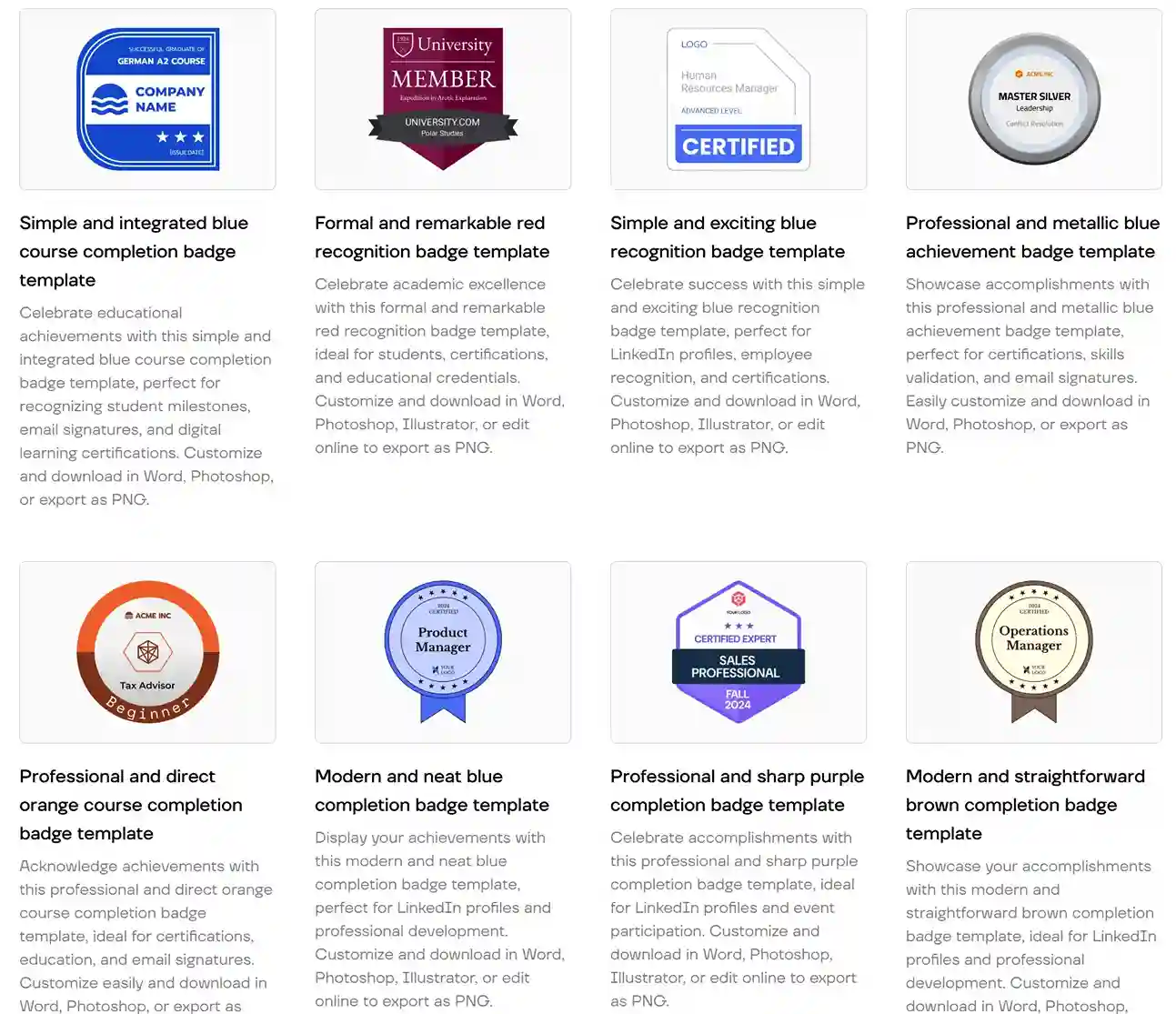
Building digital badging for marketing that actually drive visibility means getting four elements right. Each one corresponds to a drop-off point in the typical badge lifecycle.

Design for sharing motivation. Recipients share things they're proud of. Make the issuer logo clear, keep the credential name legible, and use a professional-looking design. This guide on how to create a LinkedIn certification badge exemplifies the design and issuance steps in detail.
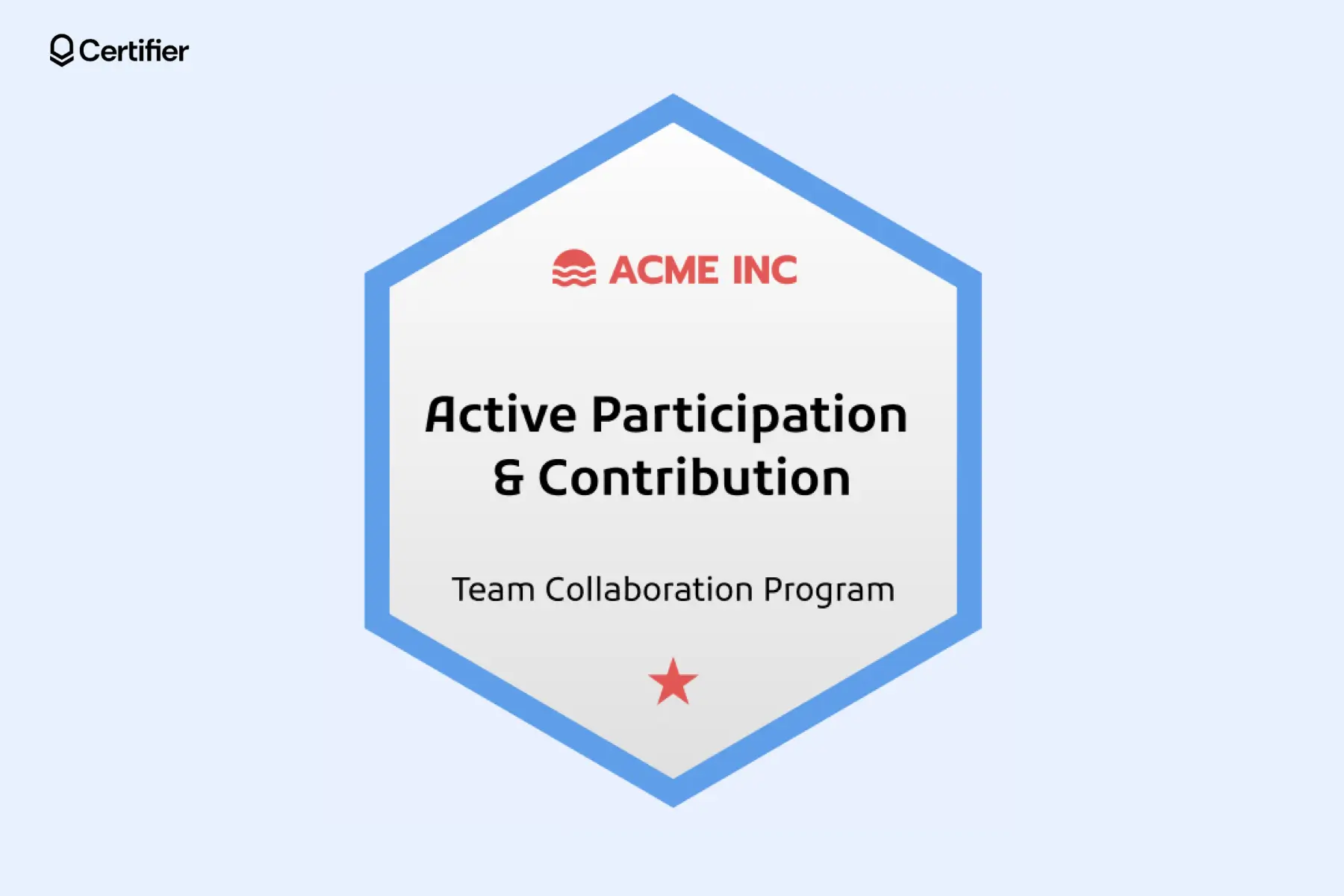
Time delivery for peak motivation. Issue at the moment of completion, not days later. Branded delivery with a direct share-to-LinkedIn link captures the motivation spike, which decays quickly.
Embed meaningful earning criteria in the metadata. A badge that says "Completed [Course]" communicates less than one specifying which skills and competencies were validated. Rich metadata makes credentials more useful to the earner's network and more searchable in recruiter tools. Real-life examples of strong programs include skills badges tied to specific competencies, not generic participation markers.
Track what happens after issuance. Credentialing ROI is invisible without data. Track shares, credential views, verification clicks and engagement by badge type or cohort to optimize over time and justify continued investment.
For a practical walkthrough, use this step-by-step video tutorial on creating digital badges for online courses that make it easy to share on social media like LinkedIn.
For organizations running badge programs at scale, the most valuable Certifier features are the ones that reduce friction between issuance, sharing, verification, and measurement:
One-click LinkedIn credential sharing. Certifier auto-generates a pre-filled share post with the badge image and a verification link. Recipients share with a single click.
Branded email delivery of a badge. Every can credential arrives in an email carrying your branding. Recipients see your logo at the moment of digital achievement recognition, not a generic platform notification. Branded delivery also extends to email signatures, where recipients display their badge across every message they send.
Custom domain and credentials portal. You can host credential pages on your own domain and keep the recipient view aligned with your branding. That makes each shared badge feel like part of your organization’s credentialing experience.
Analytics dashboard. Certifier shows share rates and verification clicks by credential type and cohort. You see which badge types drive the most activity and which earner groups are your strongest amplifiers.
Open Badges 3.0 metadata. Every badge complies with the Open Badges 3.0 standard, which means structured skill data carries across platforms like LinkedIn and can surface easier in search.
Certifier enterprise features extend further with API access, SSO, and a white-labeled recipient experience for organizations that need full platform control over their digital credentialing workflow.
Digital badges become marketing assets when they are built for distribution.
The organizations getting the most from their badge programs treat badge design and delivery with the same rigor they'd apply to any marketing campaign, then track results the same way.
Certifier handles the full workflow: from creating digital badges and issuing digital badges in bulk to hosted verification, tracking shares, and providing digital proof of value back to leadership.
If you want to turn certified learners into a source of brand visibility, give Certifier digital badges a try or start for free–the first 250 credentials cost nothing and setup takes about ten minutes.
Absolutely! Credential and badge sharing on social media is possible when you issue with Certifier. Recipients can do it with just one click from their digital credential wallet.
A digital badge in marketing is a verifiable credential used as a branded asset that recipients share on platforms like LinkedIn. Each share can introduce the issuer’s brand to a relevant professional network.
Linkedin badges turn earners into visible advocates who carry your name into networks you'd otherwise pay to reach, provided the badge looks credible and links to a verification page.
Digital badges work as marketing assets in three main ways:
Distribution. When earners share their badges, your brand reaches their professional network organically.
Talent signaling. Badge metadata makes recipients easier to search for by skill, which feeds your credentialing program directly into the recruiter pool.
Brand consistency. With Certifier’s custom domain feature, credential pages can use your company’s domain, so every shared badge leads to a branded experience.
Yes. If recipients choose to share the badge as a LinkedIn post, it can appear in their network’s feed and invite engagement. When they add it to Licenses & Certifications, it stays on their profile as persistent proof that’s easy to verify.
There's also a step-by-step guide on adding badges to LinkedIn and other social media if you want to walk recipients through it.
A talent signal is structured skill data embedded in a credential's metadata. When a badge appears on a LinkedIn profile, the platform reads the issuer name and skill tags, making the holder discoverable by credential type.
For badge issuers, this means their program can create a more visible group of credentialed learners whose achievements are easier for employers and peers to understand.
You need a post-issuance analytics dashboard. Certifier enterprise features show you:
Which recipients shared their credentials and on which platform
How many credential views or verification clicks a badge generated
Which cohorts drive the highest engagement
Patterns by badge type, so you can optimize design and delivery over time
Without this data, your badge program is hard to optimize.
Two things consistently drive sharing of digital badges for professional development. Recipients share badges that look polished and prominently feature the issuer's branding rather than the platform's.
They also share when the share mechanism is frictionless and delivery catches them right at the moment of achievement. Generic badges with weak design and delayed email delivery get shared far less than well-designed credentials issued at the peak motivation window.
Certifier generates a pre-filled LinkedIn post for every credential it issues. The post includes the badge image and a direct verification link. Recipients click once to share.
Recipients can also use the credential details and URL from Certifier when adding the badge in LinkedIn's Licenses & Certifications section, including issuer name and a verification URL routing back to your branded credential page.

- Content Strategy
- SEO & AEO/GEO strategy
- Conversion Rate Optimization
- Organic Growth
- Buyer Psychology
Head of Content
Vlad Melnic leads content at Certifier, bringing 10+ years of experience in SEO content marketing and conversion-focused content. His focus is turning complex product value into clear benefits.
Mordor Intelligence
https://www.mordorintelligence.com/industry-reports/digital-badges-market