

Trusted by:
University of Southern California
Warner Bros.
Volvo
Amazon
Stanford University
Updated: May 20, 2026
11 min read
Discover and compare free LinkedIn digital badges you can customize for courses, certifications, employee training, events and recognition programs. See how the examples below stack up for each use case, why they work on LinkedIn, and what you should customize before issuing it with Certifier.
Research with AI:
Organization-issued credentials can come with a digital LinkedIn badge you can use to showcase verified achievements and stand out in the crowd of buzzing talented pros.
If you're a training provider, certification team, education institution or association, you can use digital badges to enrich your attendees' LinkedIn profiles and increase your brand's presence at the same time.
A good LinkedIn badge does three things: it names the achievement, identifies the issuer, and points viewers towards verification. If one of those is missing, your badge might look polished, but it fails as a credential.
Use the examples below to choose a badge style, then browse LinkedIn badge templates when you are ready to customize one.
Readable title. The viewer should understand the achievement without opening the full credential page.
Visible issuer branding. The badge should make it clear who awarded the credential.Specific achievement details. It should include the skill, level, program, completion status, or certification type where relevant.
Verification path. A credential URL so viewers can confirm the achievement from LinkedIn.
Next step. Our page focuses on free LinkedIn badge examples and how to go about template selection.

A LinkedIn badge is a visible signal of a skill, achievement, certification, or completed program. For Certifier users, the most relevant version is an organization-issued digital badge that recipients can add to LinkedIn as a credential and share with their network.
That distinction matters because search results often mix different badge types. LinkedIn skill badges and profile overlays are controlled by LinkedIn or profile tools. Organization-issued digital badges come from external issuers such as training companies, universities, employers, associations, and certification bodies.
University of Phoenix's LinkedIn badge explainer makes the same distinction between LinkedIn skill badges and broader digital badges. For this article, we’ll focus on issuer-controlled credentials rather than personal profile decoration.
When recipients add a digital credential to LinkedIn, LinkedIn's Licenses & Certifications guidance points them toward fields such as issuing organization, issue date, expiration date, credential ID, and credential URL. The credential URL is the trust lever because it gives viewers a way to verify the badge instead of treating it as a static image.
Open Badges 3.0 reinforces that trust model by describing credentials around issuer, achievement, recipient, and verification data. In plain terms, a useful badge carries proof, not just a recognizable design with a clear brand. Of course, it helps if it’s easy to scan and also has a credential URL anyone can verify.
Read our guide on what is a digital badge for a primer.
Choose a badge template for the places it will actually appear: profile sections, small previews, mobile screens, posts, feeds, and email signatures. A design can look impressive at full size and still fail if the issuer, title, or credential meaning disappears when scaled down.
Benchmark | Why It Matters On Linkedin | To Check Before Issuing |
|---|---|---|
Short badge title | Small previews compress details | Can a viewer understand the achievement in a few words? |
Clear issuer logo | Gives the badge credibility | Is the organization visible without cluttering the design? |
Strong contrast | Badges often appear as thumbnails | Do the title, icon, and border remain readable when scaled down? |
Credential URL | Verification turns the badge into proof | Will the recipient receive a shareable credential link? |
Skill or level label | Viewers need to know what the badge proves | Does the badge show the skill, level, completion status, or certification type? |
Expiration date (when relevant) | Compliance and recurring training may expire | Should the credential include an expiration or renewal period? |
Before issuing a badge, preview it at a small size. If the issuer, achievement, or verification path is unclear, don’t be afraid to simplify the design before sending it to recipients. As Steve Jobs and Apple used to say, simplicity is the ultimate sophistication!
The examples below are grouped by issuer use case rather than color variation. For the full gallery, browse the LinkedIn badge templates page.
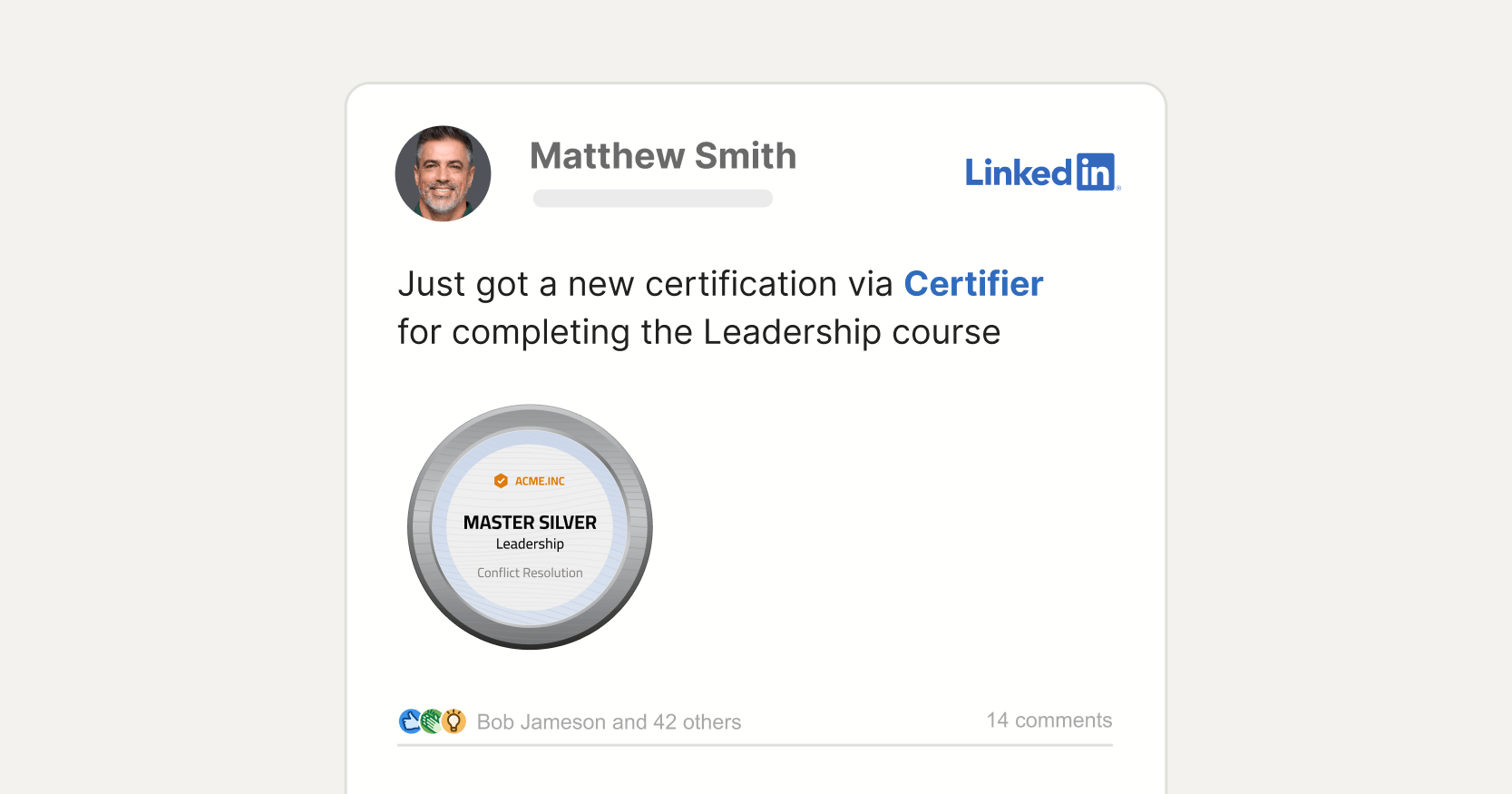
This template is best for online courses, cohort-based programs, bootcamps, and training providers that issue completion credentials.
It works because the clean structure keeps the program name readable and leaves enough space for the issuer logo to register in a profile or feed preview.
You can (and should) customize course title, issuer logo, completion level, brand colors, issue date, and credential URL.
Skip this style for technical certifications that need more visible detail about skill level, assessment, expiry, or renewal requirements.
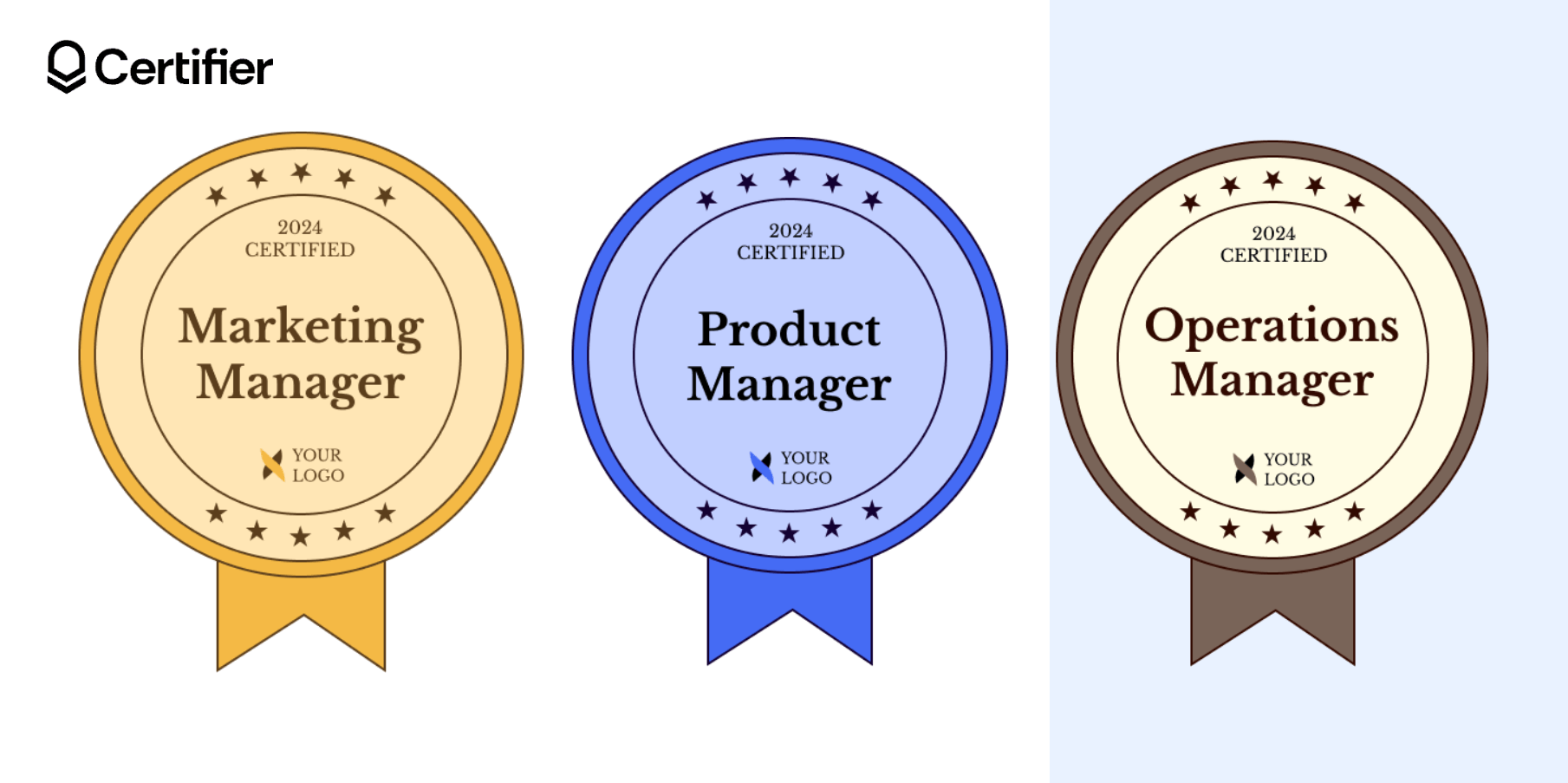
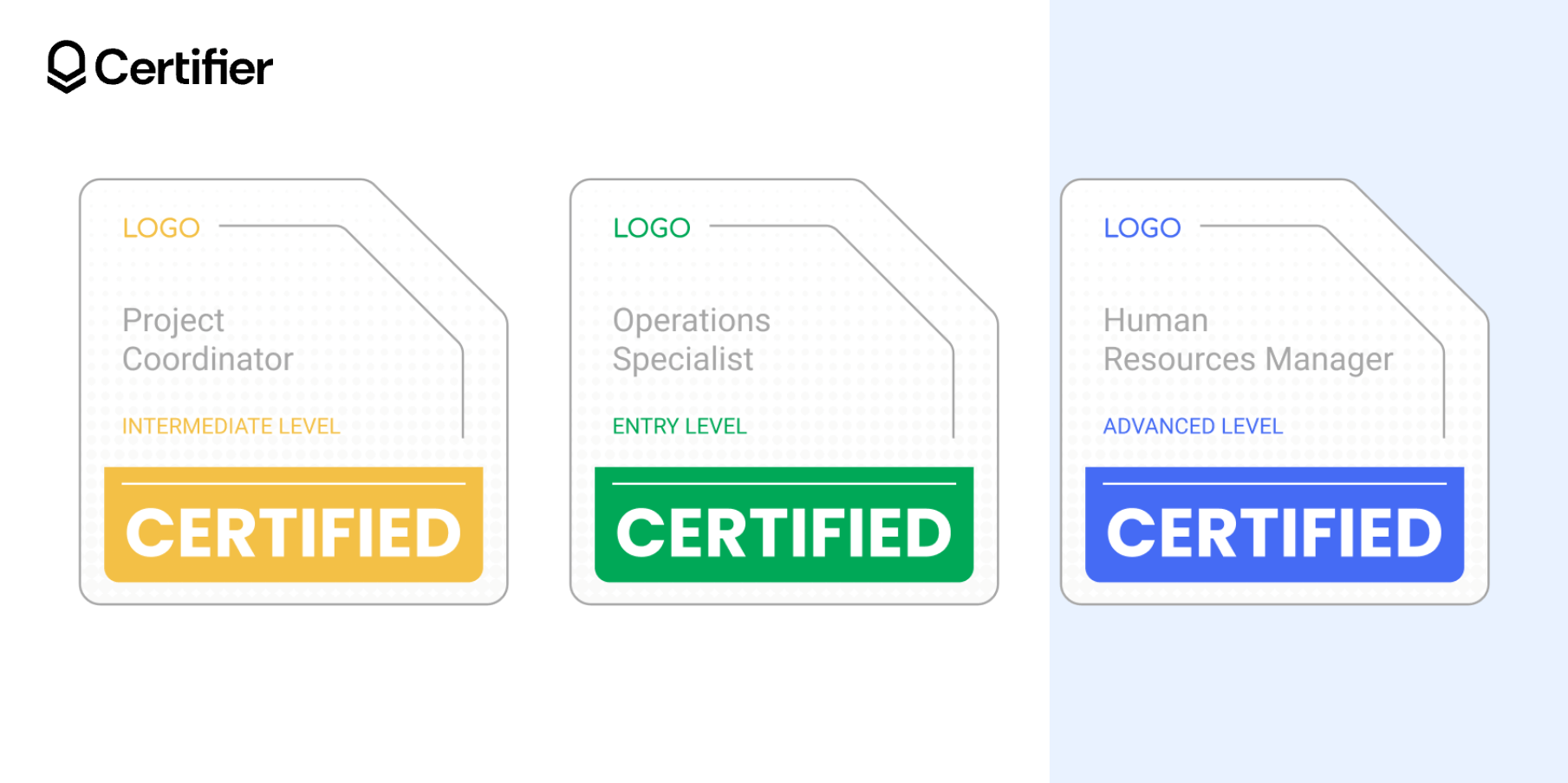
This is best for certification programs, accrediting bodies, professional associations, and continuing education providers.
Why it works: The formal badge shape signals authority, while the central text area can hold a concise certification name.
Customize the certification name, issuer mark, year, level, credential ID, and expiration date if renewal is required for your use case.
Don't force a long certification name into the image. Detailed criteria fit better on the credential page where they can be read and verified.
Customize a LinkedIn badge template for certifying bodies.
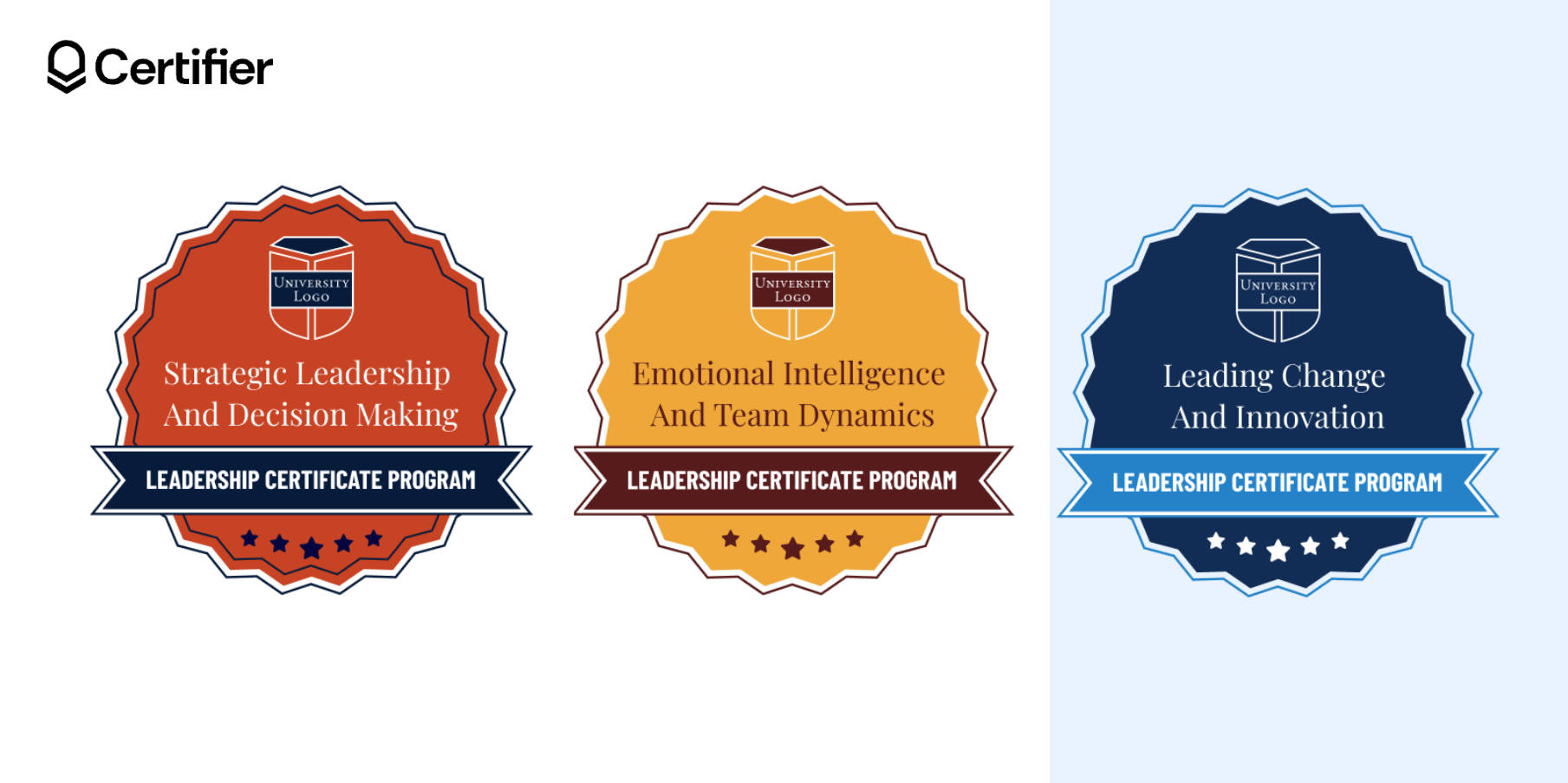
This LinkedIn badge works best for employee training, on-boarding, enablement, compliance refreshers, and internal learning programs. The distinctive outline stands out and gives internal training a public-facing credential format without needing a long explanation.
Don’t forget to change the training program name, department or issuer, completion level, cohort year, and compliance or renewal details where relevant.
Consider using another style for high-stakes compliance training where credibility matters more than visual energy.
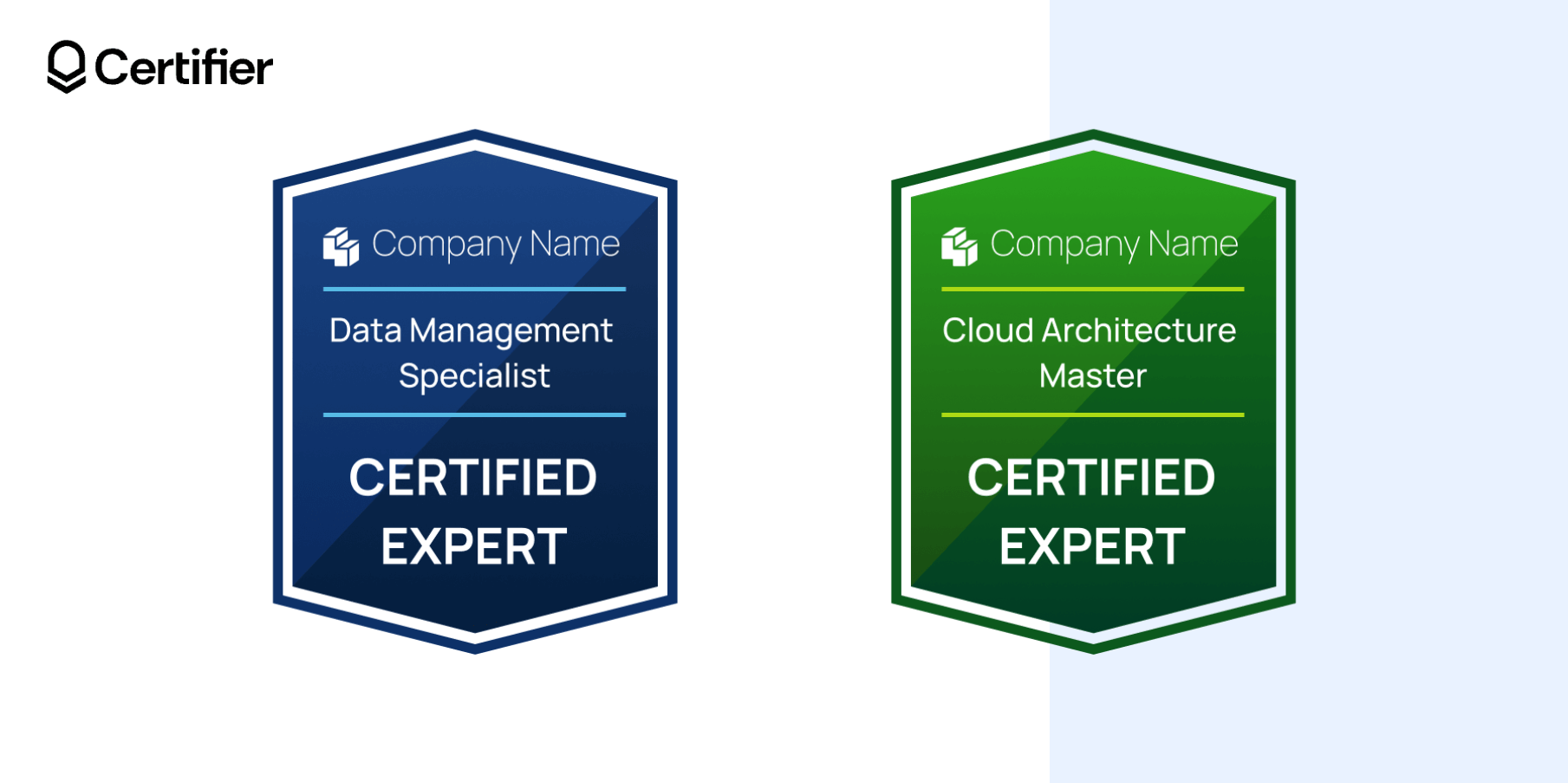
Best for: data analytics, cloud architecture, cybersecurity, coding, AI, and software product education programs.
Why it works: The geometric design signals technical skill while leaving room for a short label such as "Cloud Foundations" or "Data Management."
Customize: Skill name, level, technology track, issuer logo, credential URL, and expiration details if the skill needs renewal.
Avoid this style for broad participation awards where a simpler, warmer design may communicate completion faster and more appropriately.
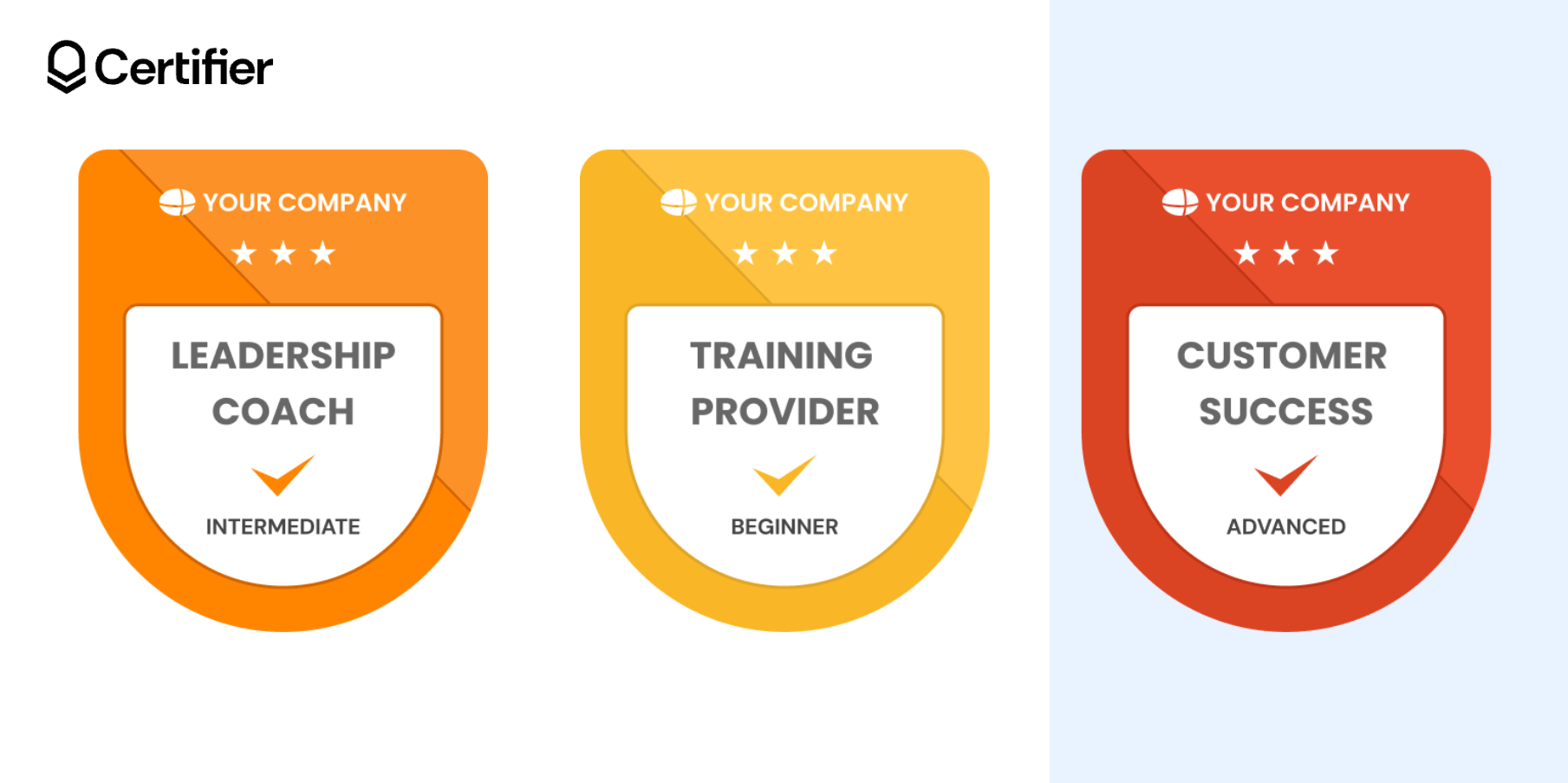
This one is commonly used for webinars, workshops, conferences, community events, and short professional development sessions.
It works because event badges need to travel well in social feeds so as to give recipients a timely reason to share what they attended or learned, which isn’t normally glamorous or particularly viral.
Change the event name, session title, year, organizer logo, attendee role, and a credential URL that confirms participation or completion.
Consider another style when full certification enters the picture, unless the event included assessment or credential criteria.
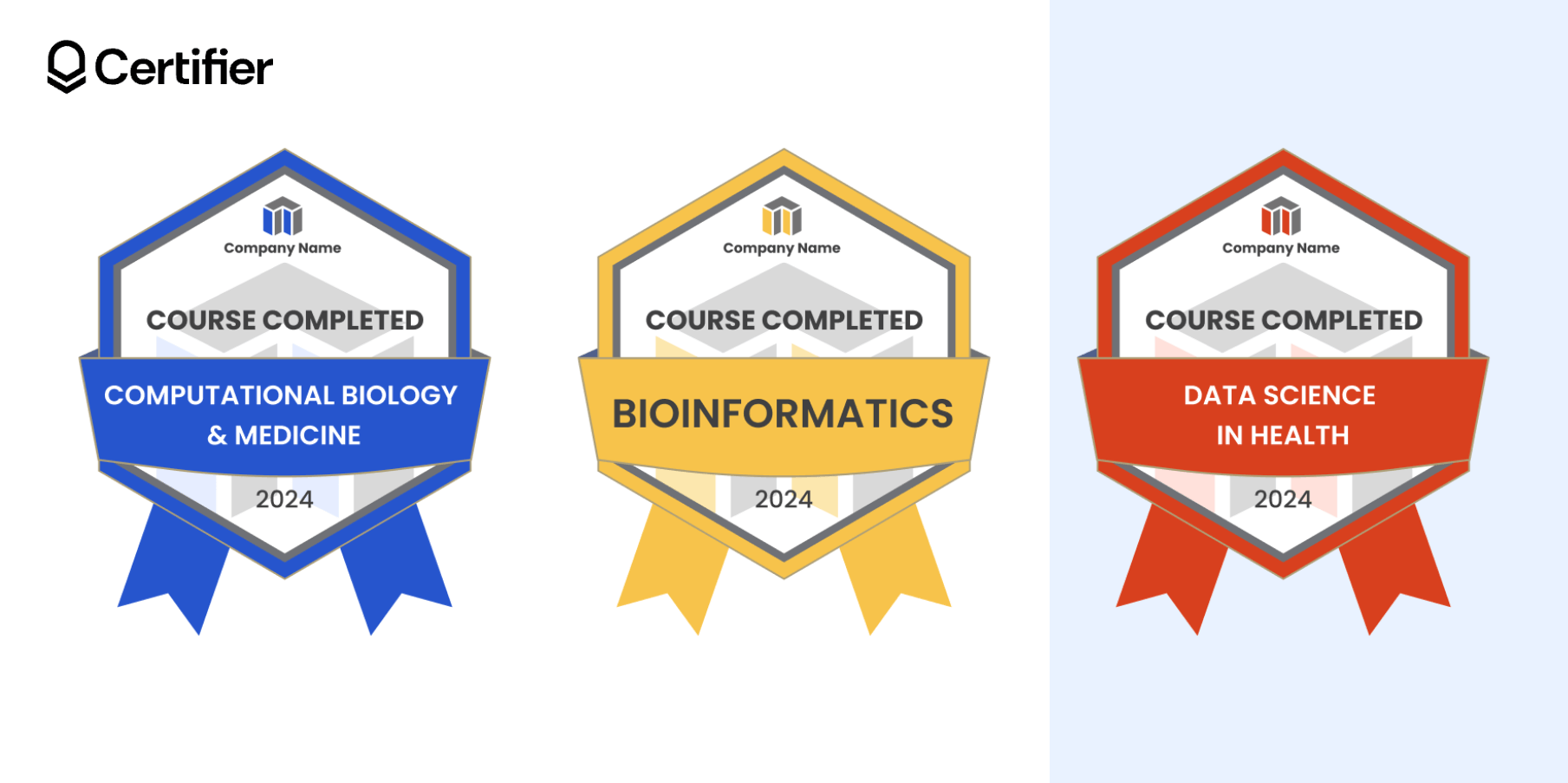
These skill-level badges are best for continuing education, professional development, skills pathways, and multi-level learning programs.
A level label helps viewers understand whether the recipient completed a beginner, intermediate, advanced, or expert track.
You can customize the skill area, level label, issuer, completion date, credit information, and renewal requirements where applicable.
We wouldn’t use star ratings or level labels for programs that don’t have a clear assessment or progression model baked in.
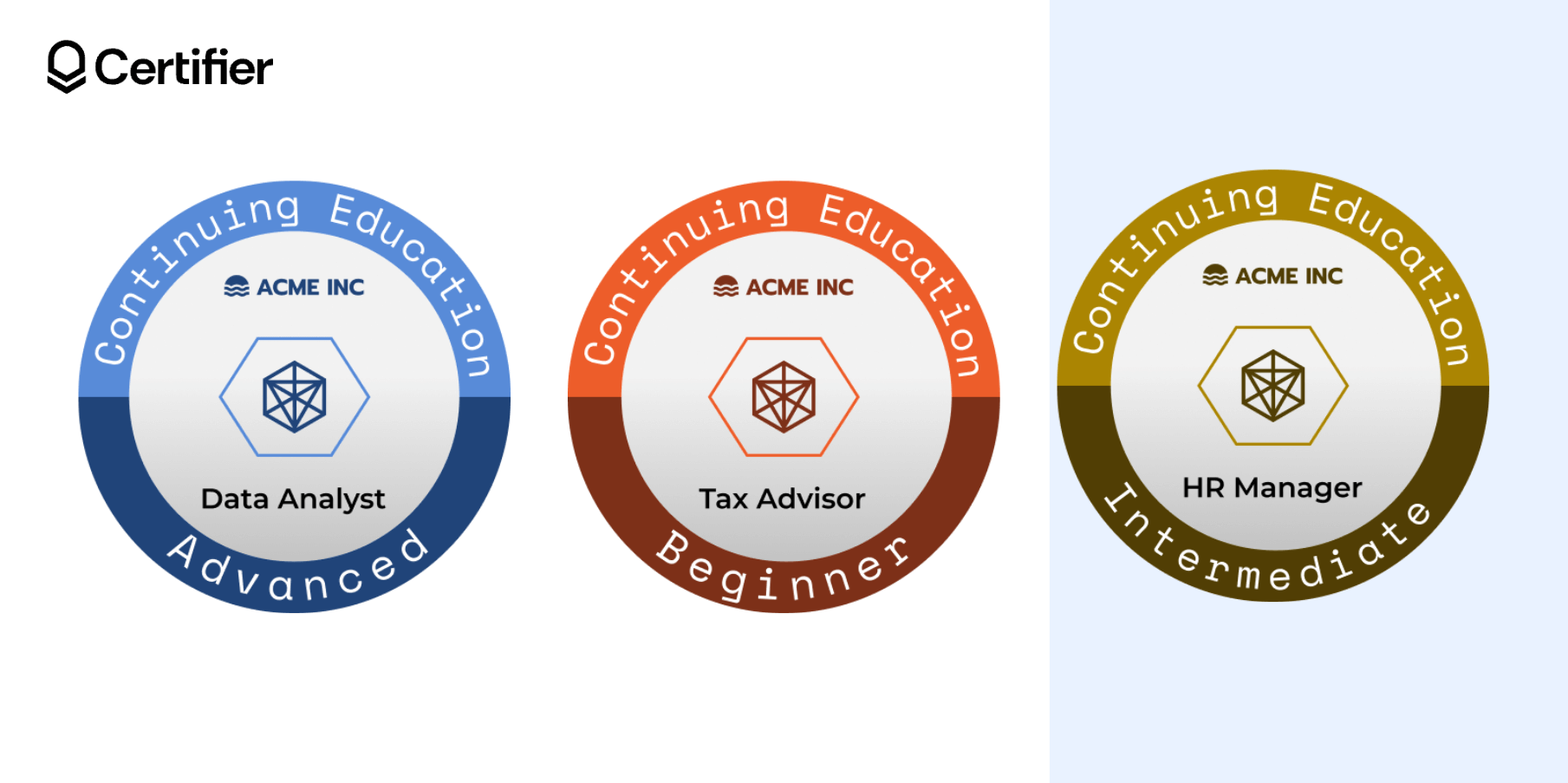
Best for: customer education, partner training, product academies, sales enablement, and platform certification programs.
Why it works: Recipients can show product knowledge, while the issuer gains branded visibility each time the credential is shared.
Customize: Product or academy name, certification track, role, issuer branding, credential ID, and credential URL.
Use another style when: Avoid vague labels like "Certified User" unless the badge also names the product, level, or capability it proves.
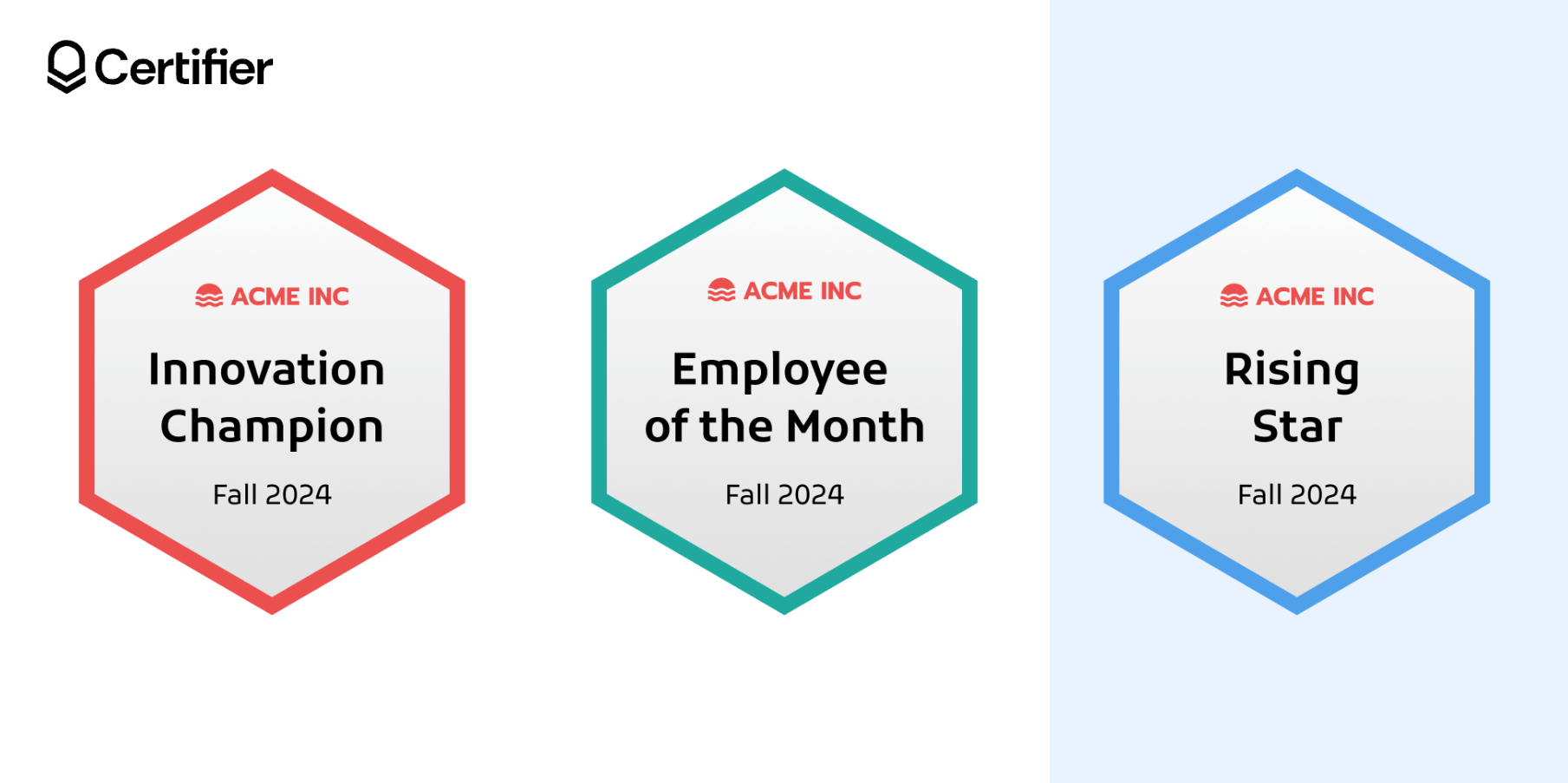
We’d use these templates for employee recognition, mentor programs, community leadership, ambassador programs, and role-based achievements.
Why it works: Recognition badges turn internal achievement into a shareable milestone and help organizations make contributions visible outside the program.
Achievement title, recipient role, team or community name, issuer logo, colors, and a credential page that explains the recognition criteria can all be customized.
Lean towards a stricter certification-style badge for regulated credentials where viewers need to clearly understand eligibility, assessment, or compliance criteria.
Can You Add Free Linked Badges to LinkedIn?
Yes, you can add the digital badge through LinkedIn's Licenses & Certifications section.
Enter the issuing organization, issue date, expiration date if relevant, credential ID if available, and credential URL. The credential URL is the most important field for verification because it lets viewers confirm what the badge represents.
For the full workflow, read our guide on how to add a digital badge to LinkedIn.
If you are still building the credential itself, our guide on how to create a LinkedIn certification badge will be helpful.
A badge gives viewers a quick signal that the recipient completed a course, certification, training program, or achievement, serving as a visible proof of skills.
Recipients can make learning milestones easier to understand on LinkedIn, which strengthens their professional profile, whereas a credential URL gives recruiters, peers, and employers a place to confirm the achievement.
Finally, recipients can share the credential beyond a single LMS, course platform, or internal system, which makes the recognition portable.
On the issuer’s side, each shared badge can put the issuer's brand in front of the recipient's LinkedIn network, while attracting attention to the program and strengthening the issuer’s brand.
Moreover, templates make it easier to issue badges for cohorts, recurring courses, employee programs, and events, so there’s an element of easier workflow as well.
Lastly, there’s a motivational component because public recognition gives recipients a reason to complete programs and share progress.On the issuer’s side, a badge connected to a credential URL is stronger than a static image because viewers can verify the achievement.
For a deeper look at the strategic value, read our guide to the benefits of digital badges.
Certifier helps credential issuers turn a badge design into a working credential workflow. Start with a LinkedIn-ready template, customize the design and metadata, add recipient details, send the badge, and give recipients a credential they can share on LinkedIn.
Browse our LinkedIn badge templates hub when you want a ready-made design and you’re ready to create and issue LinkedIn-ready badges at scale.
You can also explore Certifier's broader digital badge platform if you need a repeatable credentialing workflow for courses, training programs, events, or employee development with transparent self-serve pricing.

Content designer. At Certifier, Ola crafts user-friendly content that makes complex information easy to grasp.


