

Trusted by:
University of Southern California
Warner Bros.
Volvo
Amazon
Stanford University
Updated: May 31, 2026
15 min read
Compare the best digital credential service providers. See how they differ in verification, automation, integrations and why many teams choose Certifier.
Research with AI:
What makes one digital credential service better than another when all claim secure, verifiable credentials? Before choosing a platform, you need to understand which tools actually deliver on automation, integrations and verifiability.
This piece breaks down key criteria and ranks the leading platforms so you can confidently pick the right one—including why many teams prefer Certifier.
Digital credential services make issuing and verifying certificates and badges instantly verifiable.
Digital credentials improve portability and trust compared with traditional paper certificates for learners and professionals.
Certifier is the best digital credential service––stands out as a balanced choice with flexible design tools and intuitive integrations for everyday workflows.
Top providers vary in automation, integrations, scalability and verification features to suit different organisational needs.
Choosing the right service reduces admin work and simplifies long-term credential management.

A digital credential service is an online platform that lets organisations design, issue, store, verify and manage digital certificates, badges and credentials without paper-based workflows. These services replace traditional certification systems with secure, verifiable digital alternatives that can be shared across the web and checked instantly.
Digital credentials include badges, certificates, microcredentials and other verifiable records that contain metadata about who earned them, why and how they were issued.
Unlike PDFs or scanned documents, these credentials are tamper-resistant and often built on open standards that make them interoperable across platforms.
At its core, a digital credential service enables a workflow where:

Issuers create and customise credentials with branding and metadata.
Holders receive and store credentials securely in online wallets or portfolios.
Verifiers—employers, institutions, or partners—can check authenticity with one click or scan.
These services often include tools for automation, integration with LMS/HR systems, analytics dashboards and secure verification methods such as QR codes or cryptographic signatures.
Tip: A reliable digital credential service not only issues credentials but also ensures they remain verifiable and trustworthy long after they’re created—a key requirement for education, professional development and compliance-driven industries.
Before comparing platforms, start by defining your own needs for issuing digital credentials. Clarify whether you need academic credentials, training certificates, digital badges or a mix of multiple credentials and how you expect credential recipients to verify and share them. This helps narrow down options quickly.
A strong digital credential service should support secure, tamper-proof credentials with easy verify credentials workflows that protect against fraud and reduce manual verification processes.
Real-time verification via QR codes or verifiable links is a must for credentials that need to be trusted by employers or institutions.
Consider your audience and volume early. For example, higher education institutions and training providers often need bulk issuance, integration with student information systems or LMS and the ability to manage academic credentials over time.
Corporate teams may prioritise HR integration, credential analytics and automation workflows for employee certifications.
Use the following criteria to compare digital credential platforms effectively:

Verification processes. Ensure the platform offers instant, tamper-proof verification for employers and other third parties—often via scannable QR codes that link to a live credential page. Learn how to embed QR certificate codes for verification into your credentials.
Automation and integrations. Look for connectors with LMS, HRIS, CRM and API support to automate credential issuance.
Credential design and branding. Strong platforms let you customise badges, certificates and portal experiences to align with your institution’s identity.
Portability and sharing. Credentials should be easy for recipients to share on social networks, portfolios or professional profiles.
Pricing and scalability. Transparency in pricing models matters—especially for high-volume issuing or long-term credential storage.
Tip: Create a simple scorecard listing these criteria and grade each platform to spot which solutions align best with your use case; whether you’re a training provider, university or professional association.
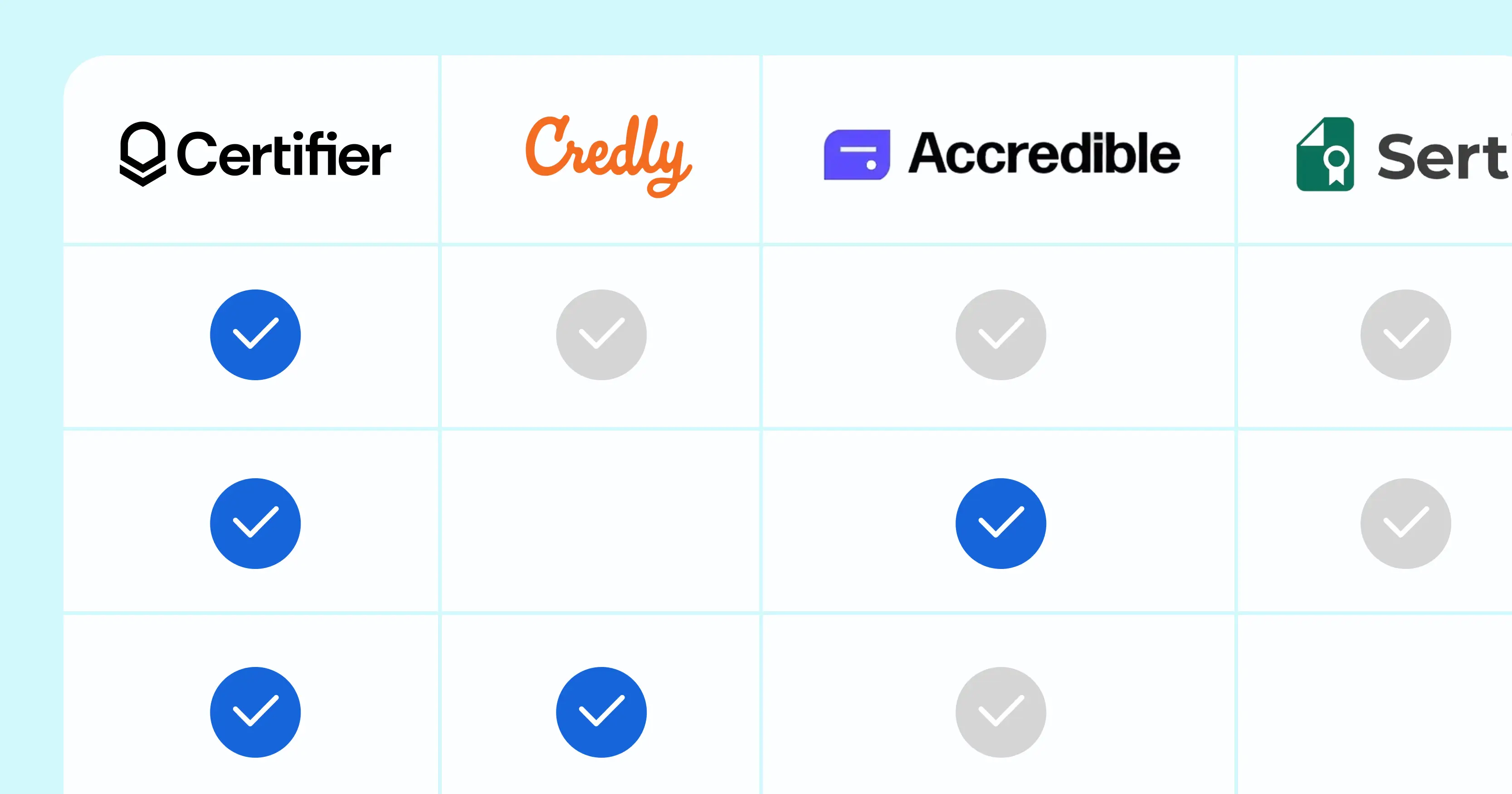
Platform Best For Certifier Most balanced choice for designing, issuing, automating and verifying digital credentials across use cases. Credly Enterprise and professional networks with strong integrations and badge sharing. Accredible Customization and authentication for badges and certificates, great for training & education programmes. Sertifier Educational organisations and LMS-centric workflows. Certopus Verification-centric platform with strong security and analytics. CertifyMe Simple, user-friendly automation and templates for certification workflows. Parchment Academic diploma and higher education credential service (no free tier). SimpleCert Affordable, gamified certificate and badge creator for small teams. CredSure Blockchain-powered service emphasising data integrity and secure credential management. Virtualbadge.io Virtualbadge.io EU-focused platform with verifiable badges and strong GDPR compliance.
Some platforms offer transparent, self-serve pricing with free tiers (Certifier, SimpleCert), while others rely on quote-based enterprise pricing (Credly, Accredible, Parchment).
If you’re issuing credentials continuously rather than once per year, predictable pricing matters more than feature breadth.
Certifier is the best digital credential service that enables organisations to design, issue, verify and manage digital certificates and badges at scale without complex setup or heavy developer dependency.
It supports branded credentials, automation and multiple other ways to reach credential recipients.
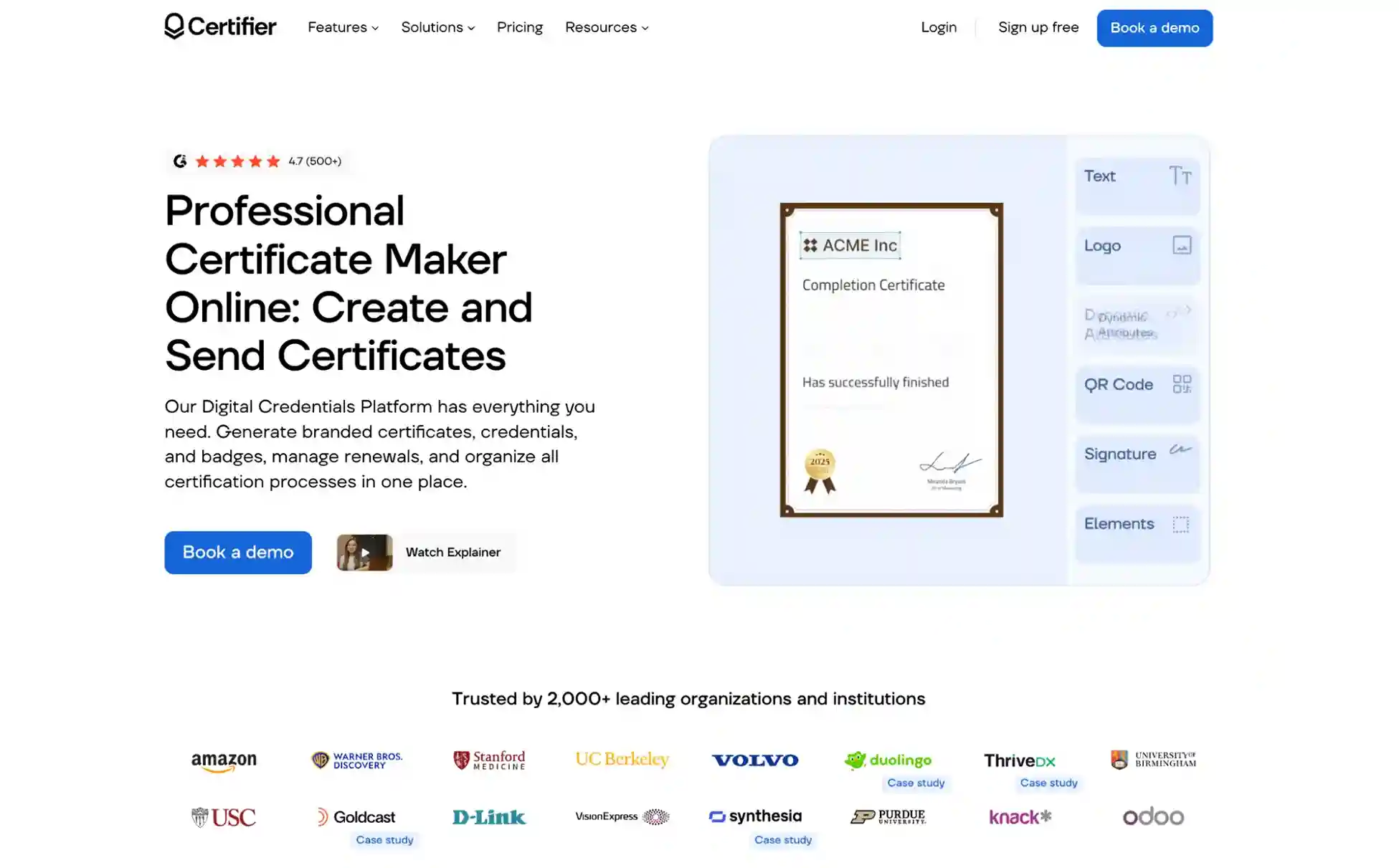
Certifier simplifies the entire credential lifecycle with capabilities that matter for education, training, associations and professional programs.
With Certifier, you can:
Design professional credentials with customizable templates and a visual builder that lets you create polished certificates and badges in minutes—no design or coding skills needed.
Issue digital credentials at scale using bulk generators, automated workflows and integrations that accelerate delivery to recipients.
Verify credentials instantly by generating shareable URLs and QR codes that credential recipients and third parties can check without logins.
Automate credentialing workflows by connecting Certifier with Zapier, Make, LMS, CRM or custom systems so triggers like course completion automatically generate and send credentials.
Enable credential portability and sharing by letting recipients export certificates as PDFs or share them on LinkedIn and other channels directly from their credential wallets. This makes Certifier one of the best Badgecert alternative solutions.
Track credential engagement with analytics dashboards that show delivery, interaction and performance insights to help you optimise your credential strategies.
Certifier adjusts to the needs of diverse organisations–from training providers and higher education institutions to professional associations–by bringing automation, secure verification and professional credential workflows together in a way that fits how real teams operate.
Best for: teams that need an all-round digital credential platform capable of credential creation, automated issuing, verification, integrations and analytics.

Full credential lifecycle support with intuitive design tools.
Broad automation and integration options (Zapier, API).
Strong verification workflows with QR codes and click-to-verify links.
Easy sharing and export options for recipients.
Curious how Certifier compares to other popular tools? See how its features stack up against a competitor in the Parchment Digital Badges vs Certifier comparison.

More features than entry-level issuance tools, which means a little ramp-up time for configuration.
Requires selecting the right plan for higher issuing volumes (though free tier and scalable plans help).
Users don’t just like Certifier. They write about real results that matter.
Many G2 reviewers highlight how quickly they went from zero to issued credentials without confusion or technical headaches. One user said they created and sent their first badge in minutes, comparing Certifier’s intuitive tools to familiar apps like Canva.
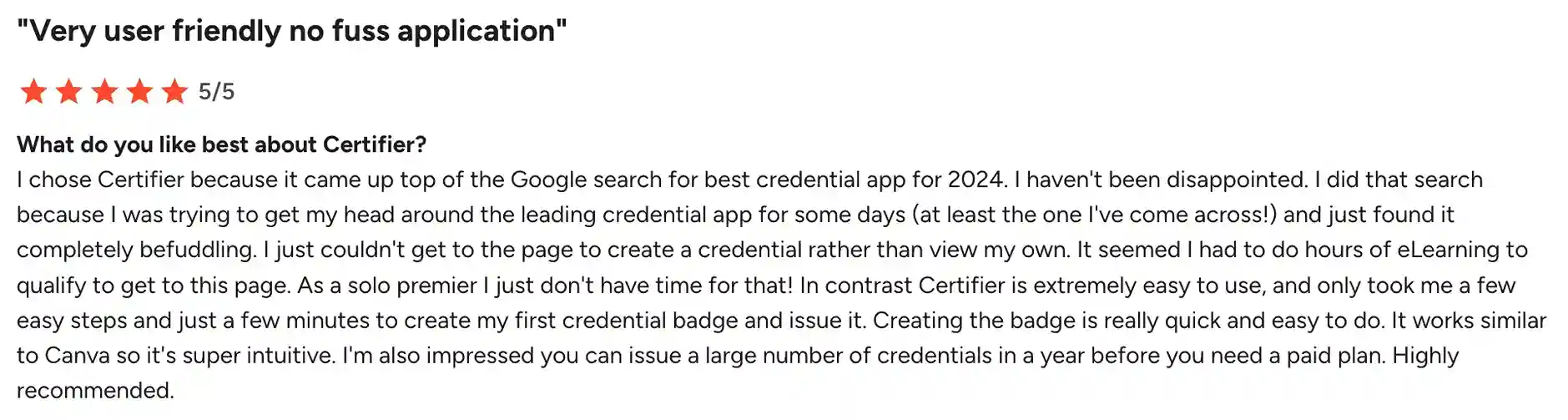
Time savings show up again and again in real feedback. Training teams report that bulk issuing and automated workflows cut hours of manual work and QR-based verification turned slow audits into single scans. Another reviewer specifically noted that Certifier “scales with our training pipelines,” meaning it works even when issuance volume grows.

Integration reliability is a recurring theme too. Users appreciate that Certifier links cleanly with LMS and CRM systems, so credentials are issued automatically when learners complete courses—without babysitting the process. Support also gets high marks, with reviewers describing fast, friendly help that keeps their credentialing programs running smoothly.
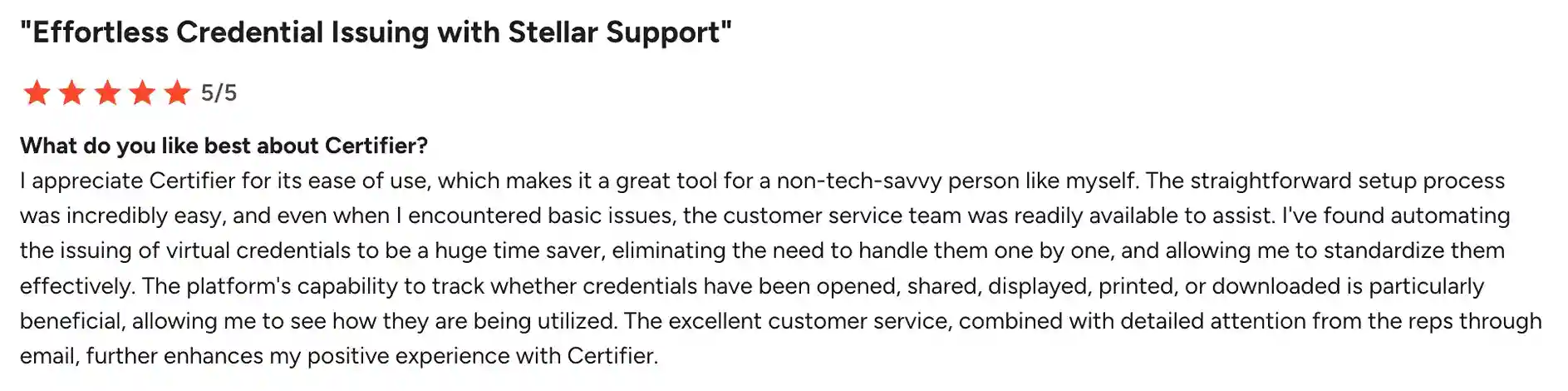
Taken together, the user voice backs up the value story: Certifier is not just functional; it actually makes digital credentialing easier, faster and more dependable in real organizations.
Credly is a digital credential platform widely used by educational institutions to issue share digital badges that represent verified skills and learning achievements.
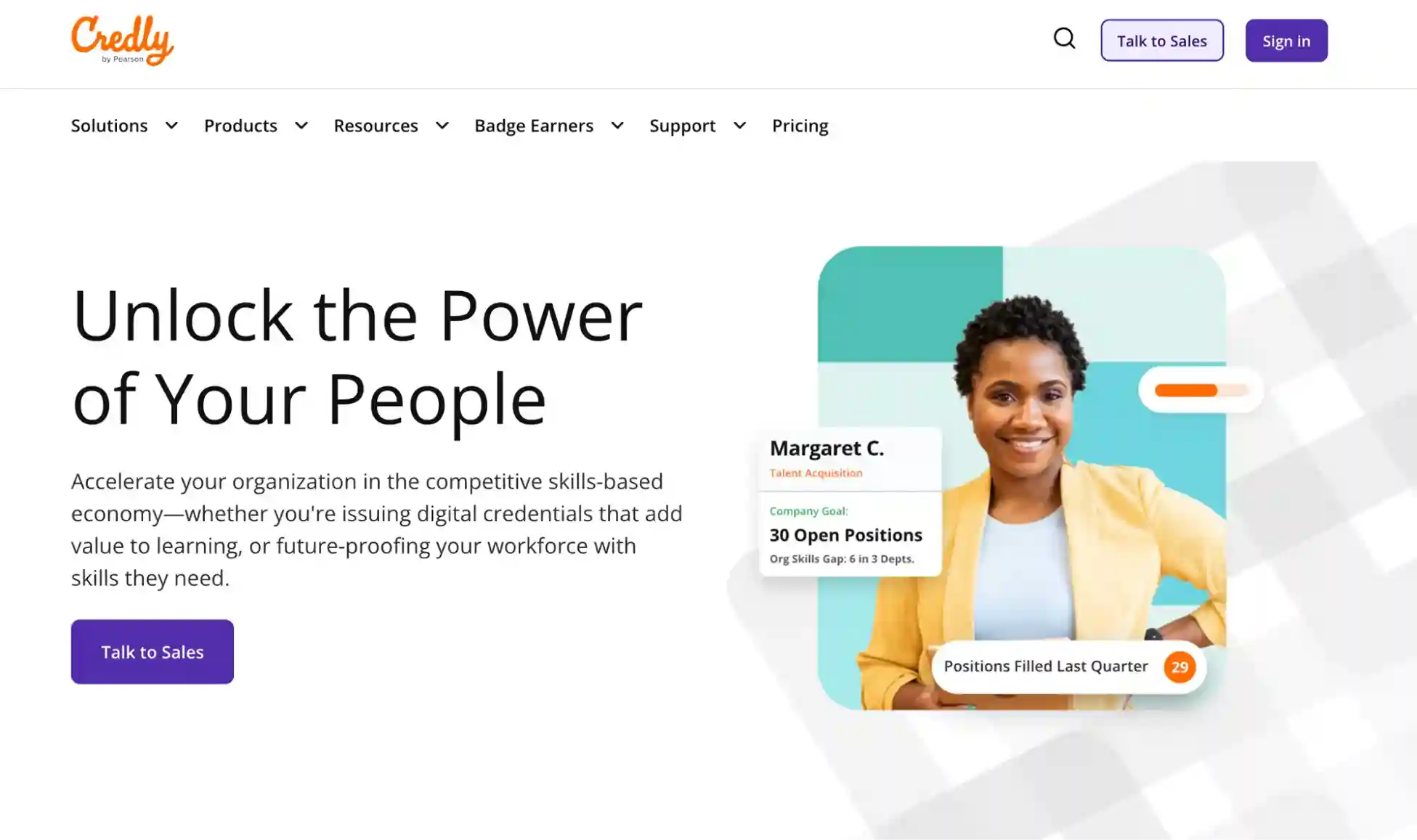
It supports badge distribution at scale and makes it easy for credential holders to display achievements on a global scale, helping expand visibility for skills and competencies.
Provides a user-friendly interface that many issuers find straightforward to learn and operate.
Strong support for badge sharing across LinkedIn, Facebook, Twitter and other social media platforms, helping recipients showcase achievements.
Credentials include rich metadata and are designed to be verifiable and tamper-proof, improving trust over traditional credentials.
Pricing and detailed feature access are not publicly listed, making it hard for enterprise teams to evaluate costs or trial before purchase.
The focus on badges and large-scale implementations can feel heavy or over-engineered for smaller programs or institutions that also need certificate support.
Some users find that deeper analytics and admin workflows could be improved for day-to-day credential management.
Credly excels as an enterprise badge network and provides institutional credibility and data security features that appeal to large organisations, but its badge-centric orientation and quote-based pricing may be less ideal for smaller teams or use cases that lean equally on certificates and virtual badges.
Accredible is a well-known digital credential service provider used by educational institutions, certification bodies and training organisations to issue, manage and verify digital credentials such as certificates, badges and blockchain-compatible credentials.
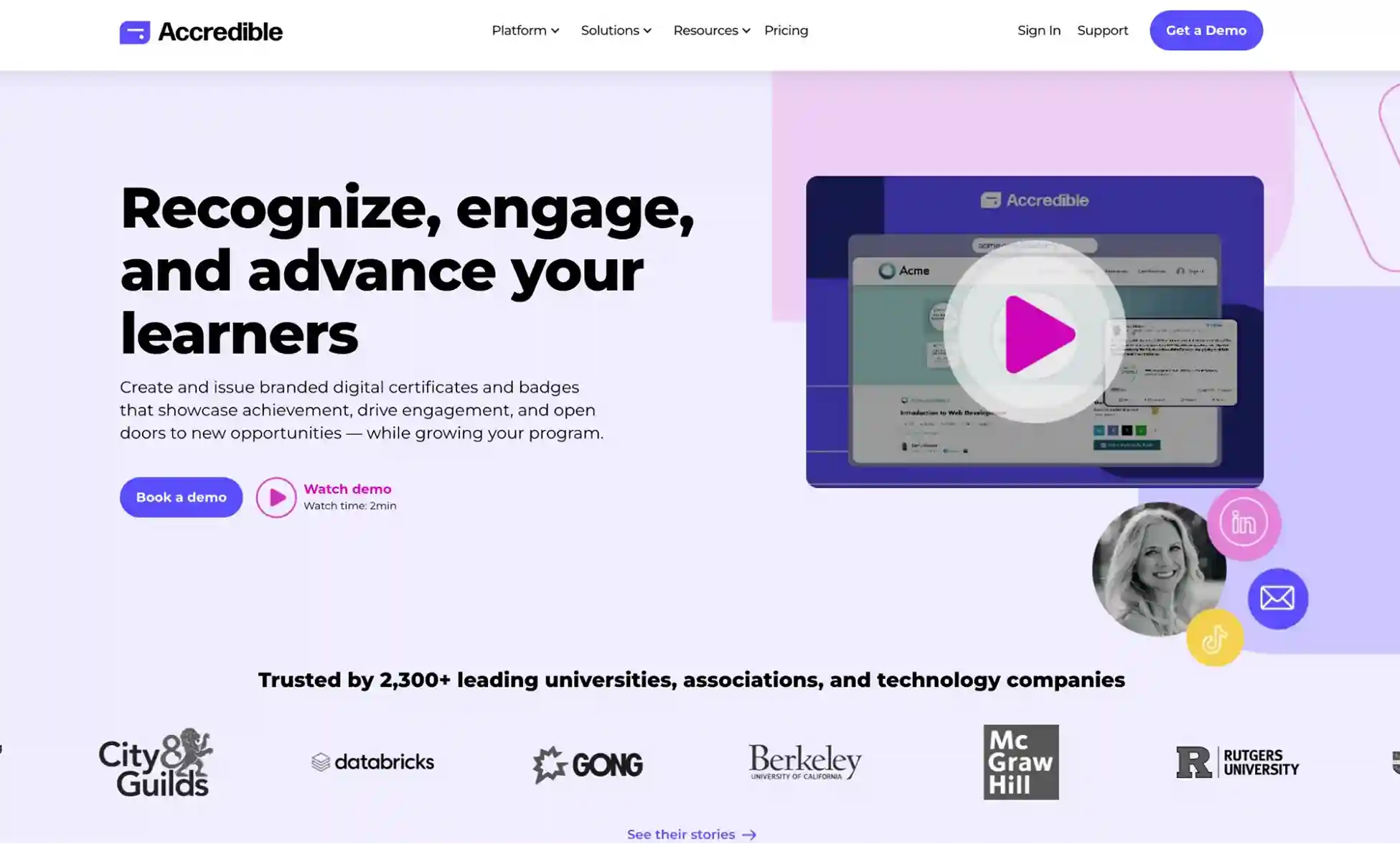
It focuses on rich credential metadata, branded outputs, integrations with LMS and support for digital wallets, helping credential holders store and share achievements.
Manage credentials easily with a user-friendly interface and tools that streamline creation, bulk issuance and oversight of certificates and badges.
Support digital wallet delivery and sharing so learners and professionals can store verified achievements and distribute them on social networks and professional profiles.
Security and verifiability are built into the platform with tamper-resistant credential records that can be checked anytime.
Higher cost compared with simpler tools, with pricing and full features often requiring a custom quote or demo, which can be a barrier for smaller teams.
Performance and navigation can feel slow or clunky when managing large credential collections or complex workflows.
Feature depth may not suit all programs, especially those that want lightweight options for certificates and badges without extensive setup.
Accredible has strong capabilities for academic and enterprise settings where lifelong learning records, verifiable digital certificates and badge shareability are key priorities. However, organisations seeking leaner, more cost-transparent credentialing workflows might find its value proposition heavier than needed.
Sertifier is a digital badge platform that helps training providers, educational institutions and organisations create, issue and verify digital certificates and badges through a straightforward, user-friendly interface.
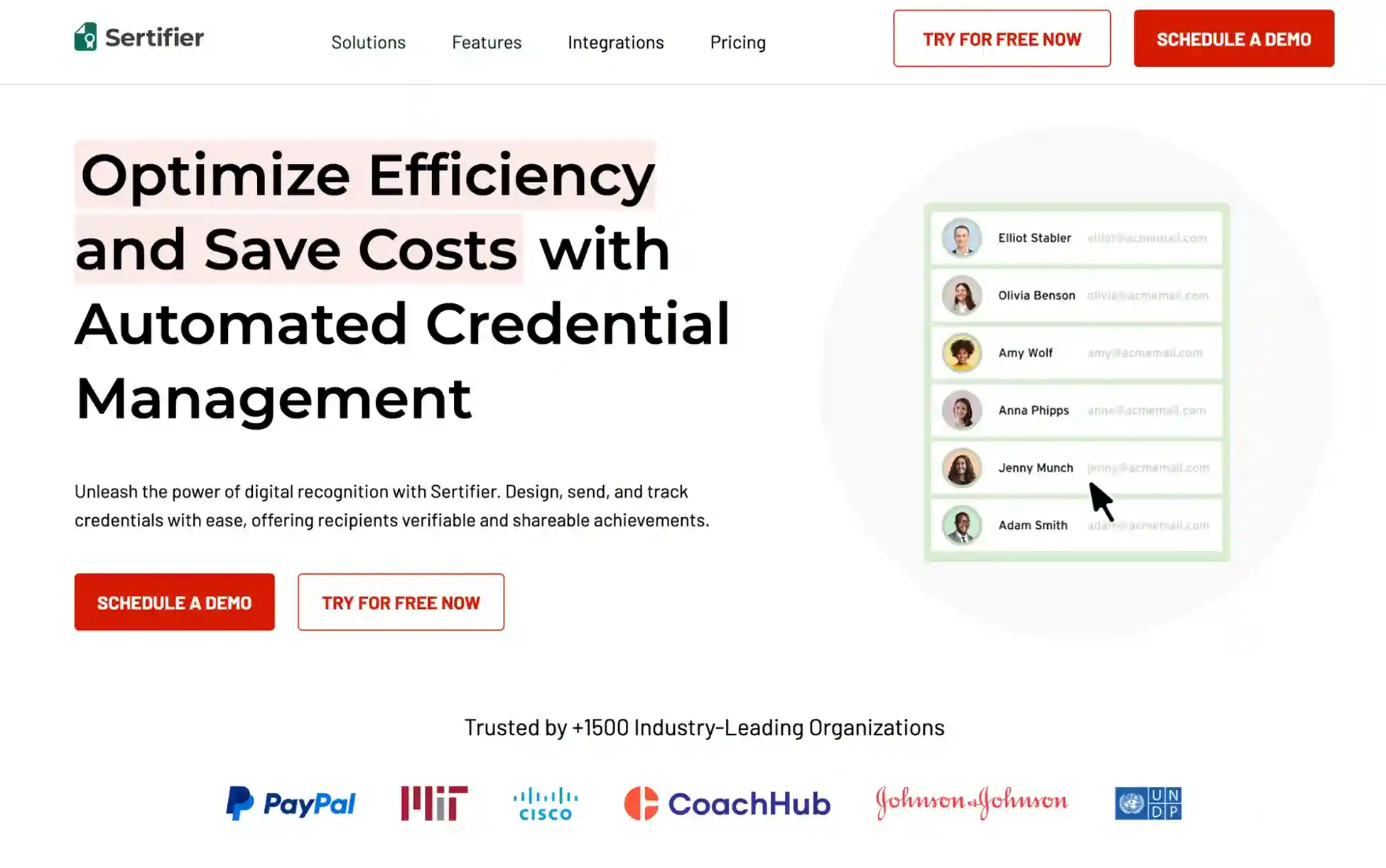
Save time on credential workflows with an intuitive setup and simple step-by-step issuance that gets you from design to delivery fast.
Include professional touches like template customisation and white labeling so certificates and badges fit your brand.
Support learners and professionals with instant verification and sharing options that help credential holders display achievements on professional sites.
Feature depth is limited compared with larger platforms; advanced automation, APIs and deep integrations can be missing or less mature.
Design flexibility can feel basic for teams that need highly custom or complex certificate layouts.
Analytics and reporting are light compared with enterprise-grade rivals, making it harder to derive insights from credential programs.
Sertifier works well for organisations that want to digitally move away from paper credentials and streamline certificate management, but teams with larger scale needs or plans for professional licences, lifelong learning tracking or deep integration into existing systems may find its capabilities too basic long term.
Certopus is a digital credential service provider that helps organisations design, issue, manage and verify digital certificates and badges for use in online course completions, training programs, events and more.
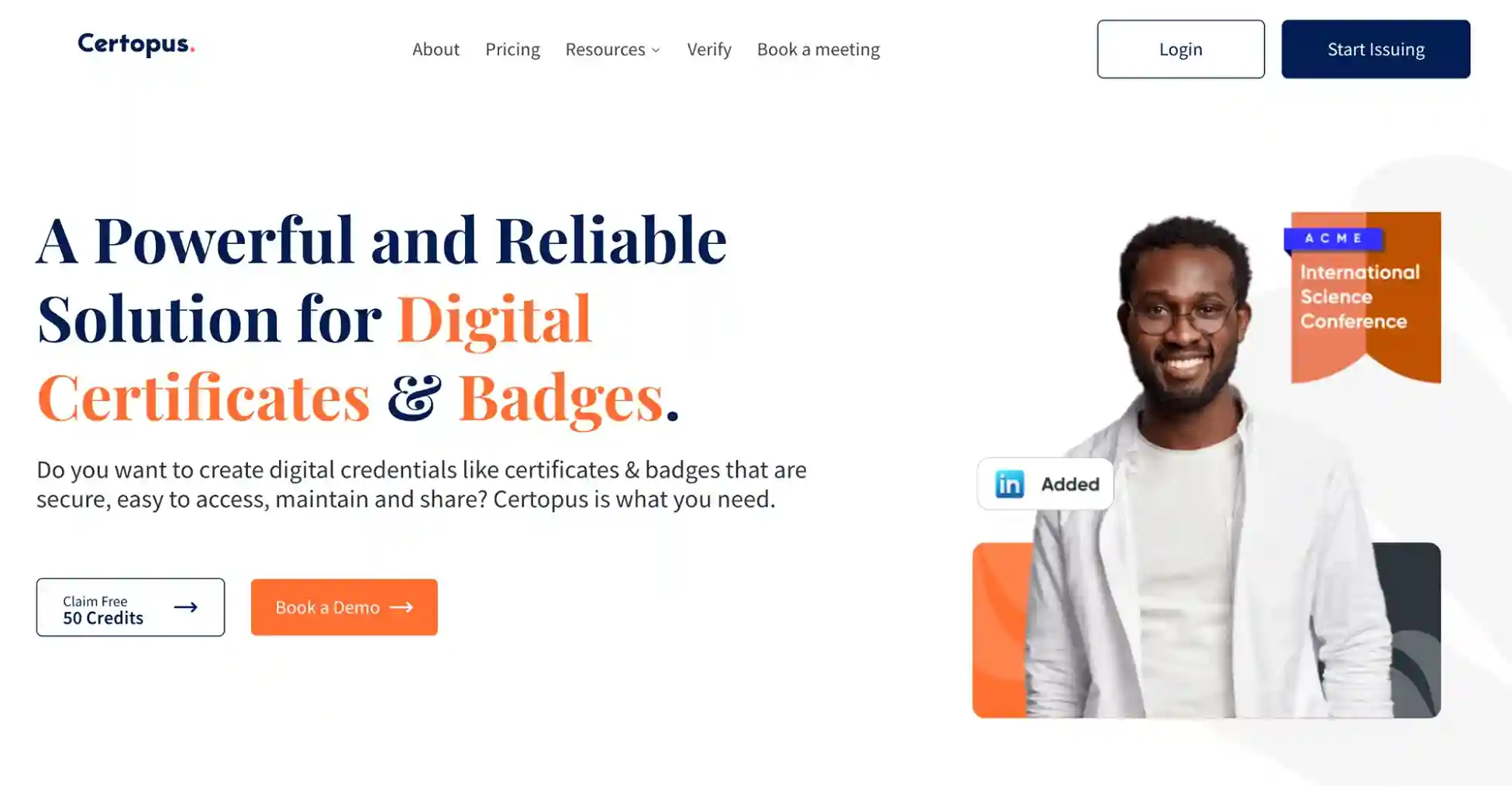
It combines bulk generation, branded delivery and basic analytics in a way that appeals to teams looking to modernise beyond traditional credentials.
Issue credentials quickly and at scale using bulk generation, integrations with LMS platforms and automation hooks that reduce manual intervention.
Support shareability and visibility by enabling credential holders to post badges and certificates to social media platforms like LinkedIn, expanding reach and new networking opportunities.
Offer white-label branding and trust with templates and branded credential delivery pages that reflect organisational identity.
Limited advanced features compared with some enterprise platforms—deeper API options or heavy customisation can feel relatively basic.
Less focus on professional licenses or regulated credentialing workflows, which can matter for organisations issuing formal professional qualifications.
Analytics and insights are useful but less robust than specialised reporting tools that larger organisations may require.
Certopus works well for teams focused on online courses and training programs, delivering branded, on-the-spot credentials, though its feature set may feel light for organisations with strict compliance or deep enterprise needs.
However, organizations that need stronger API reliability and deeper enterprise customization may require a more advanced platform. See the Certifier vs Certopus comparison to evaluate how the two platforms handle these capabilities.
CertifyMe is a credentials software that lets trainers, educators, HR teams and event organisers organize digital certificates and badges with a simple, intuitive interface and features designed to help credential holders show their achievements worldwide.
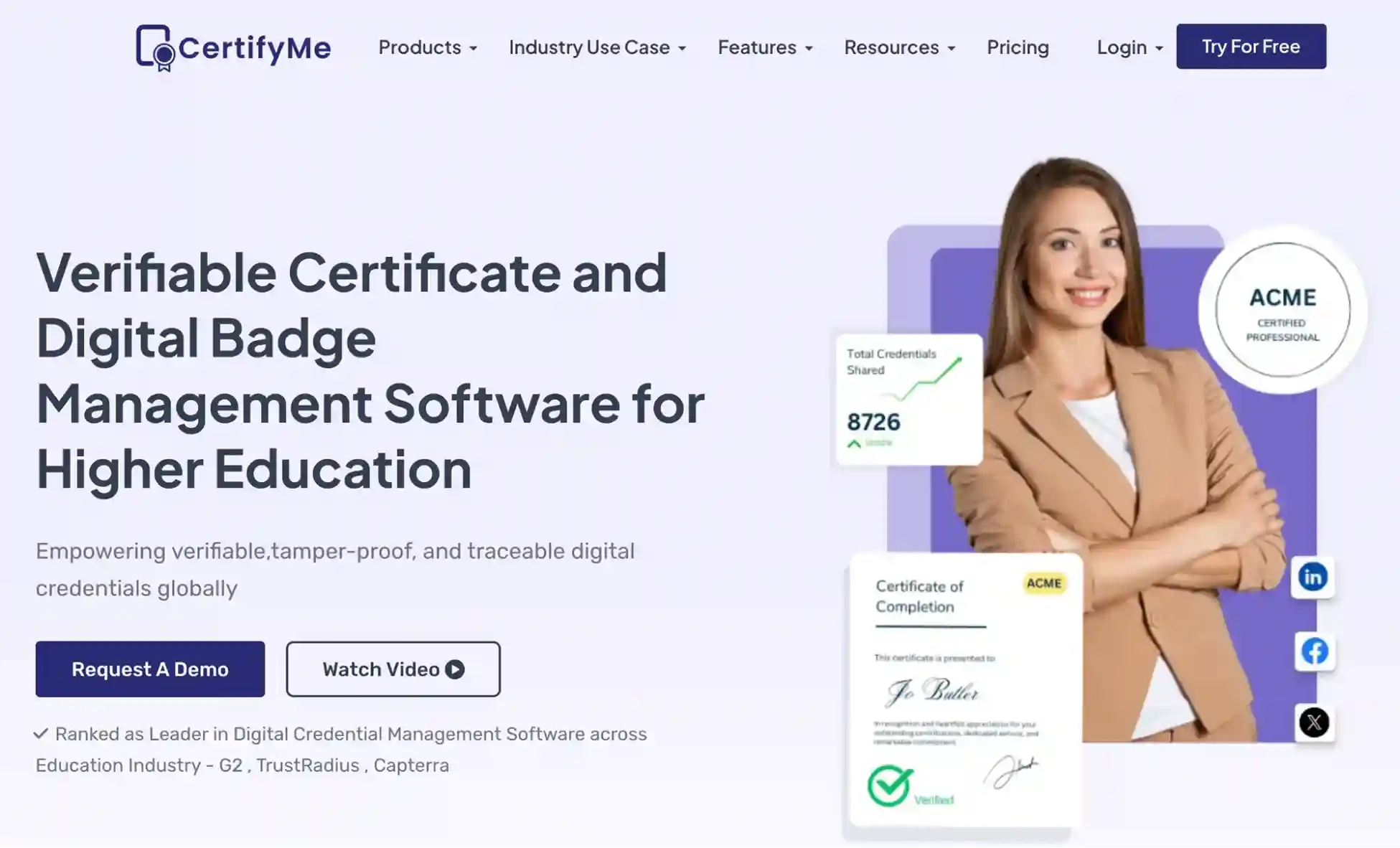
It supports tamper-proof credentials with cryptographic signatures, bulk issuance and strong integration with existing LMS or publishing tools, making everyday workflows easier.
Issue shareable, verifiable credentials that recipients can post on social media platforms and professional profiles with one click.
Save time with simple bulk uploads, automated email delivery and a streamlined credentialing workflow, reducing manual work for organisers.
Brand your credentials with white-label pages, custom URLs and branded templates that reinforce your identity and look polished in recipients’ wallets.
Feature depth can be limited for teams that need advanced automation, rich analytics or highly custom workflows beyond the basics.
Design flexibility is modest, which may be restrictive if you want highly custom layouts or unique credential formats.
Blockchain credentials aren’t a core differentiator, meaning organisations seeking decentralized credential proofs for future-focused use cases may find this offering lighter than competitors that emphasise blockchain verification.
CertifyMe delivers fast credential delivery and reduced admin work for training programs, but falls short for organisations with advanced automation or integration needs.
If you like the simplicity of CertifyMe but need more advanced automation and design flexibility as your program grows, you can see a direct feature breakdown on this Certifier vs. CertifyMe comparison page.
Parchment is a digital credential service focused on helping issuing organisations such as universities and schools securely manage and verify official academic records for credential earners.

It’s a trusted platform in the world of academic credentials, built to support traditional credentials and evolving digital experiences without replacing institutional governance.
Support credential earners throughout lifelong learning by centralising official academic records so learners can access and share them with potential employers or further education programs.
Deliver strong data privacy and security for sensitive student information, with established safeguards and compliance for academic environments.
Open doors to new opportunities by offering verified digital transcripts and certificates that help learners showcase achievements worldwide.
Manual processes persist in some workflows, such as ordering and record retrieval, which can slow down the recipient experience compared with more automated platforms.
Limited customisation compared with newer digital credential services that support blockchain-based credentials or open badges by default.
Mixed support feedback. While many users value excellent customer support, others report slower responses or reliance on phone calls and ticketing, especially outside core academic hours.
Parchment excels for institutions focused on formal academic credentialing and secure record exchange, but organisations seeking real-time automation and diverse credential formats will prefer other solutions.
SimpleCert is a digital credential service built around simplicity and efficiency.
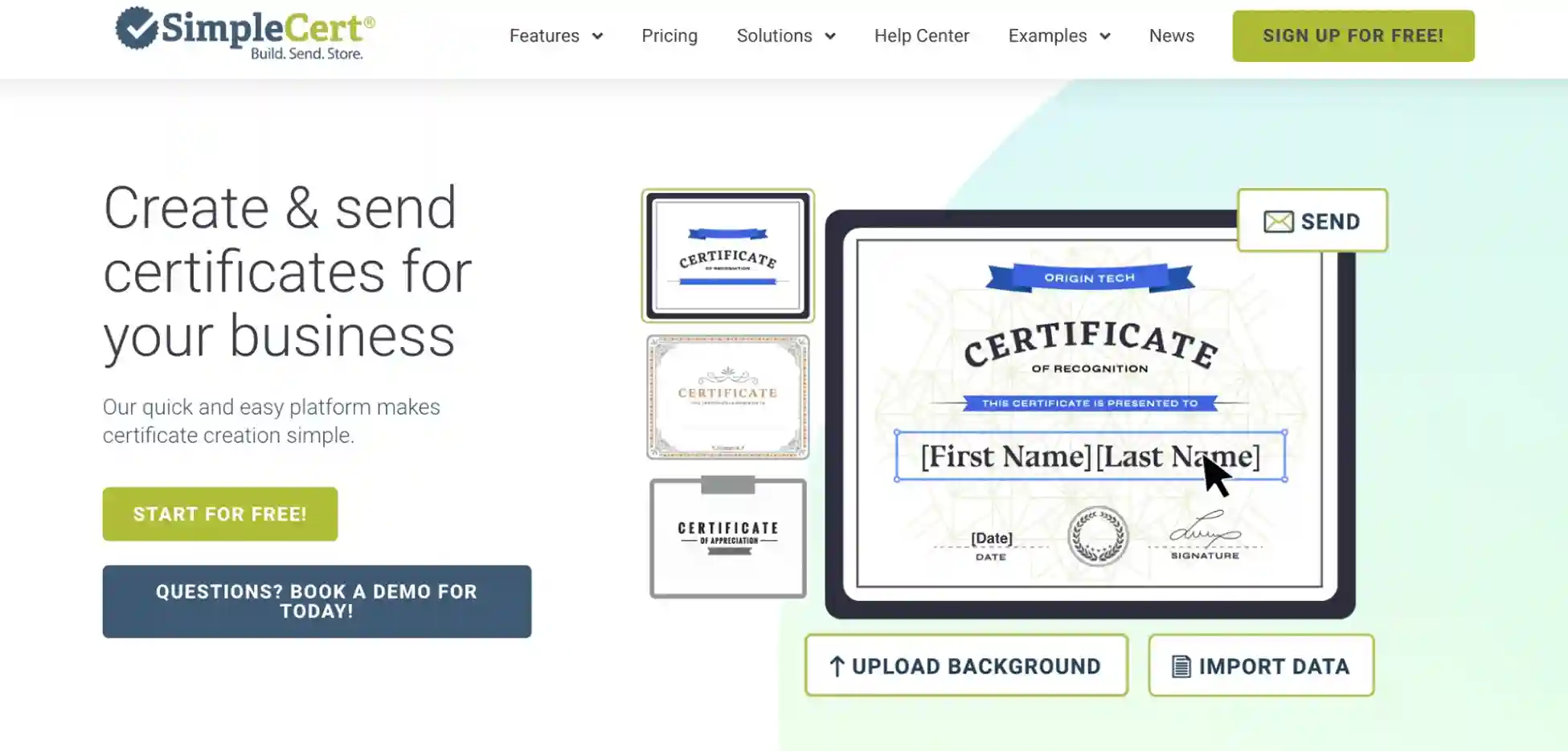
It’s particularly appealing for teams and educators who want to save time compared with older, manual processes and don’t need heavy automation or enterprise-grade features.
Streamline credential issuing by building certificates with custom data and bulk distribution, reducing hours of repetitive work.
Offer clear access and storage for credential earners through an online portal, helping recipients find and download certificates easily.
Provide strong support resources with attentive customer help and straightforward documentation that assists teams in setup and daily use.
Limited advanced technology compared with other tools—it doesn’t support blockchain-based credentials or rich verification metadata out of the box.
Deliverability and scaling issues can arise, where some certificates require manual resends or additional tracking after send-outs.
Basic integration landscape means connecting with LMS, CRM or automation platforms may need workarounds or external tools like Zapier.
SimpleCert is a practical choice for organisations that need to get certificates out quickly, but teams seeking future-ready credential formats, deeper integrations or advanced data security via emerging technology may want to consider other platforms in this space.
CredSure is a digital credentialing solution built around blockchain technology for issuing and managing tamper-proof digital certificates and badges that can be instantly verified anywhere in the world.
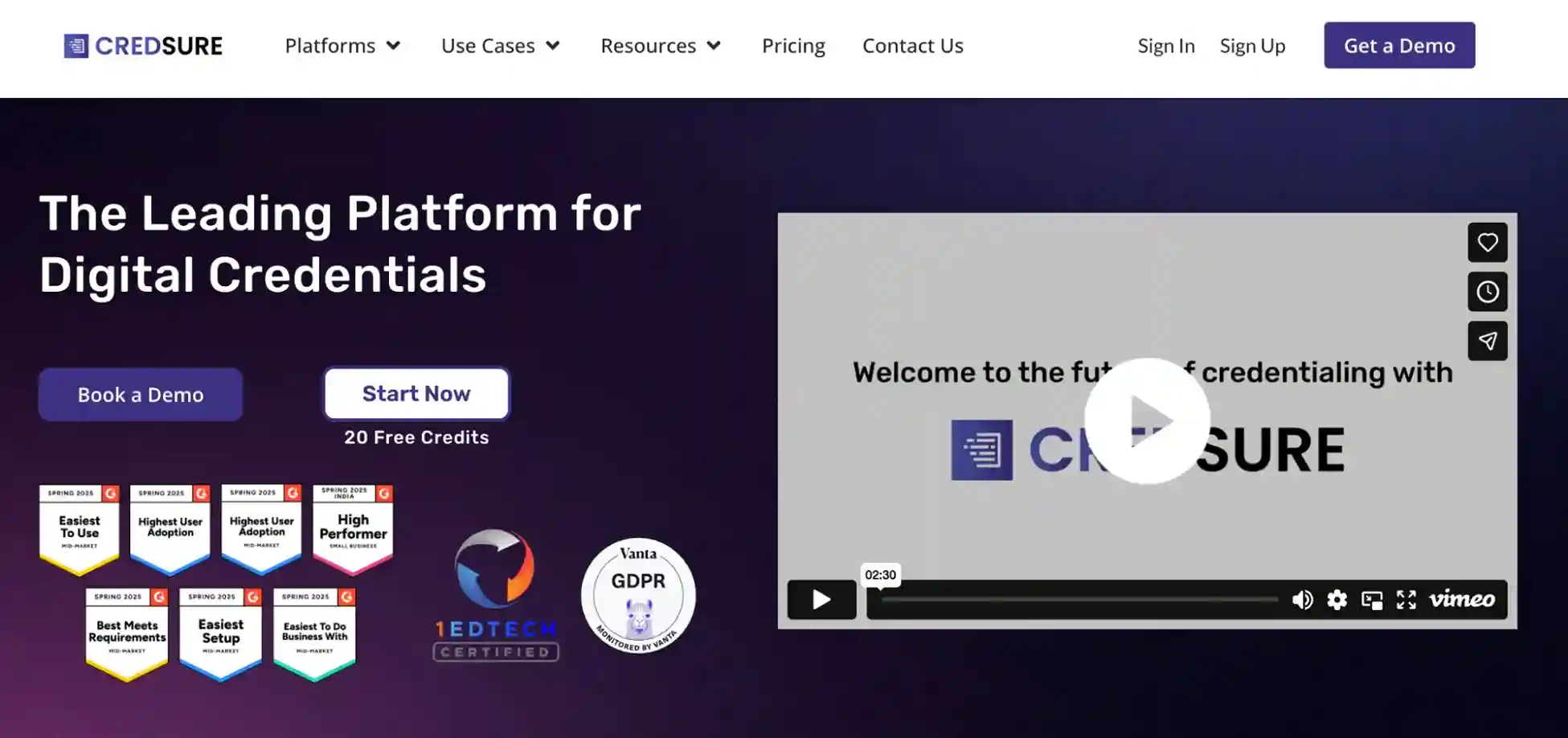
It’s positioned as a secure and scalable platform that helps issuing organisations reduce fraud, streamline workflows and support credential earners with verifiable, shareable outcomes.
Issue immutable credentials on blockchain, so the credential earners can get verifiable records with proof of ownership and resistance to tampering.
Make credentials easily shareable with public verification links and QR codes, helping recipients present achievements to potential employers or partners with confidence.
Built for security and transparency, leveraging decentralized infrastructure so organisations can help credential earners and verifiers trust the authenticity of digital records.
Feature complexity and pricing are on the premium side, which can feel heavy for smaller or simpler use cases that don’t need full blockchain-level security.
Less focus on lightweight workflows, so organisations that want to use a simple certificate maker may find it more than they need.
User onboarding can require training and adjustment for teams unfamiliar with blockchain credentials or verification procedures.
CredSure’s emphasis on blockchain credentials and verifiability aligns with trends in credential trust and security that are becoming increasingly important as more organisations seek tamper-resistant records.
However, its depth and cost profile make it a better fit for teams that need those guarantees rather than casual or low-volume credential programs.
Virtualbadge.io is a digital credential service provider that enables organisations to create, issue and verify certificates and badges with an intuitive interface and built-in shareability to social networks and professional profiles.
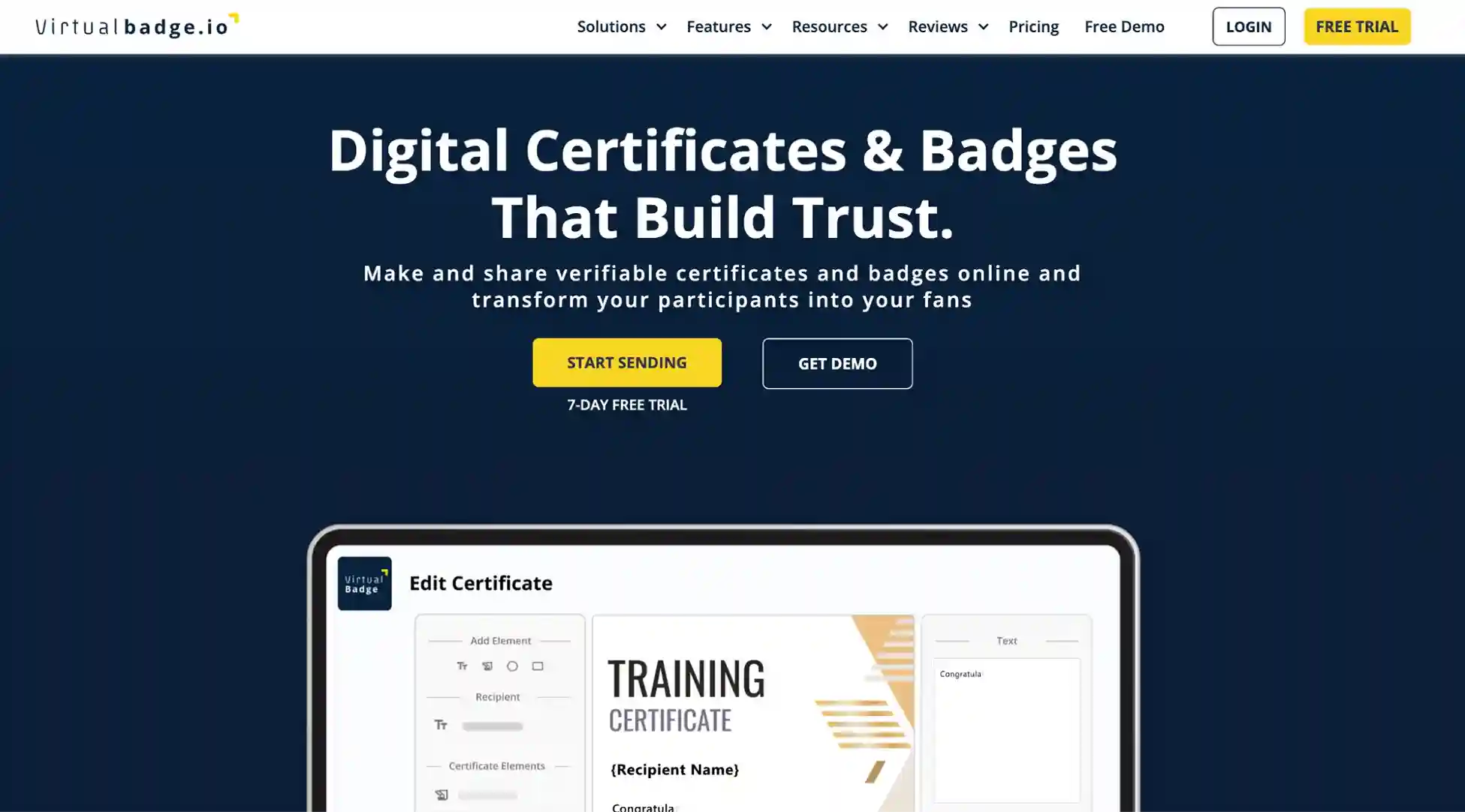
It emphasises ease of use and quick setup, making it a practical choice for teams that want to recognise achievements in a way that resonates with participants and their networks.
Enable users to issue professional digital certificates and badges quickly with a drag-and-drop designer, templates and simple bulk upload, helpful when you want to reduce manual processes and get credentials out fast.
Encourage sharing on social media and professional platforms such as LinkedIn with built-in QR-based verification and easy share buttons, helping credential earners showcase their achievements and spread recognition for the issuing organisation.
Track engagement and certificate impact with analytics that show when credentials are claimed, shared or downloaded, giving insight into how recipients interact with their credentials.
Less advanced security or blockchain-linked features compared with solutions that leverage emerging technology for tamper-proof or decentralized credentials.
Feature depth is basic compared with larger platforms, with limited options for deep automation, professional licence workflows or enterprise-grade verification.
Customisation and integration limits may appear for teams that want more complex workflows or tighter connections to LMS/HR systems out of the box.
Virtualbadge.io scores highly on usability and customer satisfaction in real reviews, with many users calling the platform easy to use and praising the support experience.
If you’re still comparing platforms, focus first on verification and automation. If you already know you’ll issue credentials at scale, pricing transparency and integrations matter more than feature depth.
Now that you’ve seen how the top digital credential services stack up, you’re in a strong position to pick the right tool for your context.
Think about what matters most for your issuing organization–whether it’s automation, branded outputs, verifiable credentials for professional licences, or workflows that help credential earners unlock new opportunities.
If your priority is a balanced, scalable solution that supports design, issuing, verification and automation without heavy setup, Certifier stands out as a strong choice—with transparent pricing, robust integrations and tools that help you manage credentials from start to finish.
Read answers to the most common questions about digital credential service providers. Dive deep into the topic!
There isn’t a single “best” service for every organisation. The right choice depends on your needs—for example, enterprise programs might prioritise deep integrations and badge networks, while smaller teams might value ease of use and transparent pricing.
Tools like Certifier, Credly, Accredible and others each excel in different areas such as automation, verification, branding, scalability and LMS/HR integrations.
A digital credentialing service is a web-based platform that enables organisations to create, issue, manage, share and verify digital certificates, badges and other types of credentials.
These services replace paper documents or PDF certificates with secure, verifiable digital versions that recipients can share online or in digital portfolios and that can be automatically checked for authenticity.
Credential services refer to tools and platforms that support the full lifecycle of digital credentials: from design and issuance to storage, sharing and verification. They help organisations streamline credential workflows, integrate with systems like LMS or HR software and ensure recipients and verifiers can trust and reuse earned credentials.
Start by clarifying your goals: what types of credentials you need to issue, who will receive them and what verification and integration requirements you have.
From there, evaluate platforms based on key criteria such as verification methods (QR codes, tamper-proof metadata), automation and integrations, design flexibility, sharing and portability, pricing transparency and scalability. Creating a simple scorecard against these criteria lets you shortlist and compare services effectively.

- Content Strategy
- Content Writing
- Digital Credentialing
- Keyword Research
- Content Editing
Senior Content Specialist
Valerie leads Certifier's content strategy, creating SEO-optimized guides and resources on digital credentialing best practices for educators and training providers.


