
Trusted by:
University of Southern California
Warner Bros.
Volvo
Amazon
Stanford University
Updated: June 22, 2026
13 min read
Learn how stackable credentials work in practice and how education providers can implement and manage them across flexible learning programs. See examples.
Research with AI:
Stackable credentials help education providers and employers design flexible learning pathways that match how people actually build skills today.
This guide explains what stackable credentials are, how they work in practice and how to manage them at scale using modern credential management tools like Certifier.
Stackable credentials break learning into smaller, verifiable units that can be combined into larger qualifications over time.
Issuers can use stackable credentialing pathways to improve learner engagement, completion rates and program flexibility.
Learners gain faster, affordable proof of skills that aligns with real career progression, not fixed programs.
Platforms like Certifier make it easier to issue, track, verify and manage stackable credentials across the learner journey.
For education providers, corporate L&D teams and training organizations, stackable credentials make it possible to modernize programs.

Stackable credentials are smaller, stand-alone qualifications that learners can earn individually and later combine into a larger, recognized credential. Each credential has its own value, but together they form a clear learning or career pathway.
In simple terms, stackable credentials let people progress step by step instead of committing upfront to a long program with a single outcome at the end.
A real-life example helps clarify this:

A learner starts with a digital marketing microcredential focused on SEO fundamentals
Next, they completed module on the advertising course certificate and the marketing analytics
Finally they receive a marketing course certificate
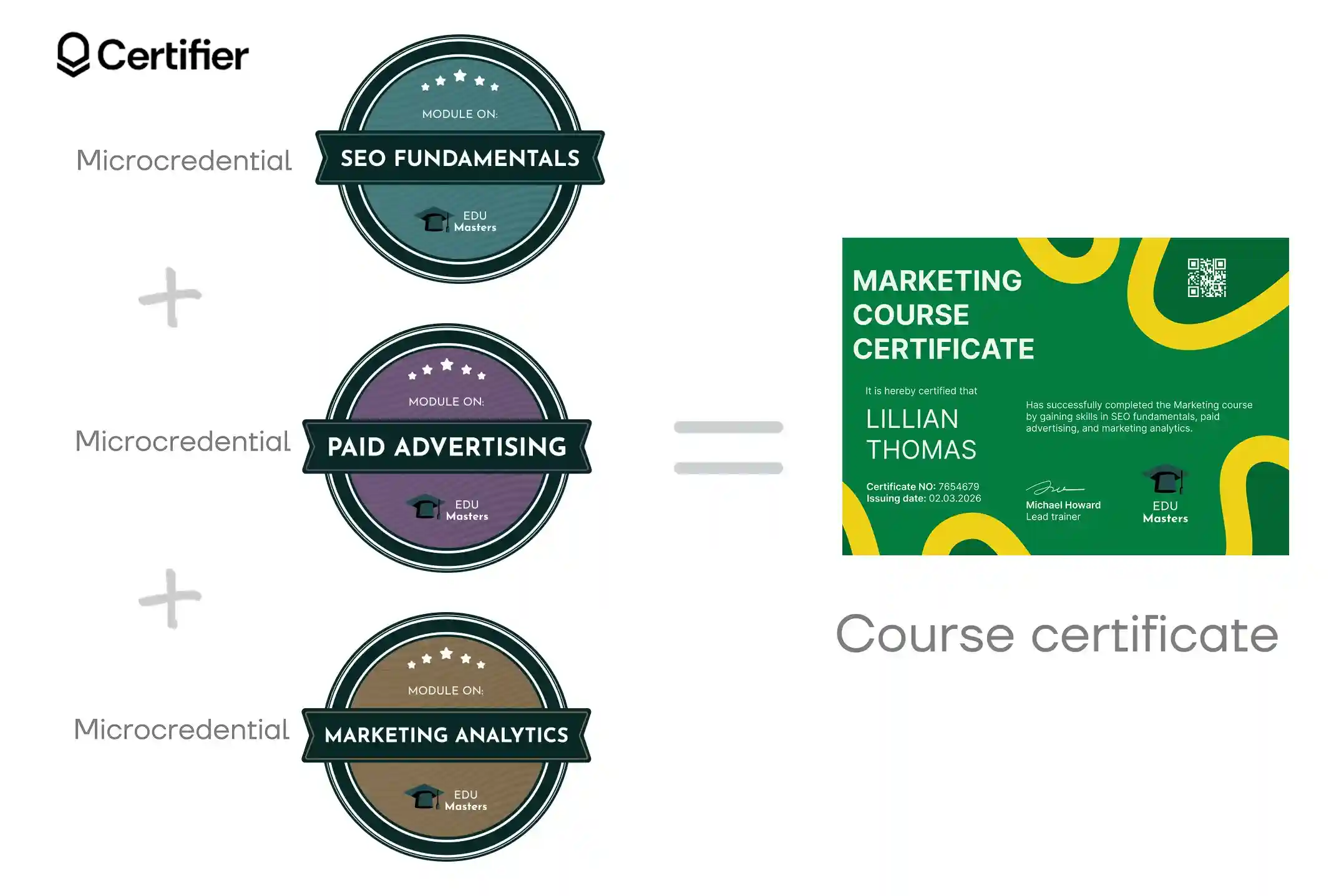
Individually, each credential proves a specific skill. When stacked, these digital credential solutions unlock a broader professional marketing certification or credit toward a formal qualification.
What makes stackable digital credentials different from traditional credentials is their structure. Each step builds intentionally on the previous one. Issuers can issue credentials at multiple stages while still guiding learners toward a final outcome.
From an issuer perspective, stackable credentials are not just content blocks. They require a system that tracks progress and verifies completion across time. Without that structure, credentials remain isolated and difficult to manage at scale.
That is why modern stackable credentialing relies on clear pathway logic and infrastructure that supports automation and long-term visibility across the entire learning journey.
Stackable credential programs come in different forms, depending on how learning is structured and how outcomes connect to a broader educational path or career path.
In practice, most stackable credentials fall into a few common categories that work across higher education, workforce training and professional development.
The key idea stays the same: learners can earn multiple credentials over time, use them independently or stack credentials toward a larger qualification such as a degree or professional license.
Microcredentials are short term credentials focused on a specific skill or competency. They often cover a narrow area of knowledge, such as a tool, method or process aligned with current labor market demand.
These credentials work well in fast-moving fields like information technology, healthcare, engineering technology or advanced manufacturing, where skills change faster than traditional degree programs can adapt.
Learners may complete a microcredential, working full time, then later re enroll to earn additional credentials as their career evolves.
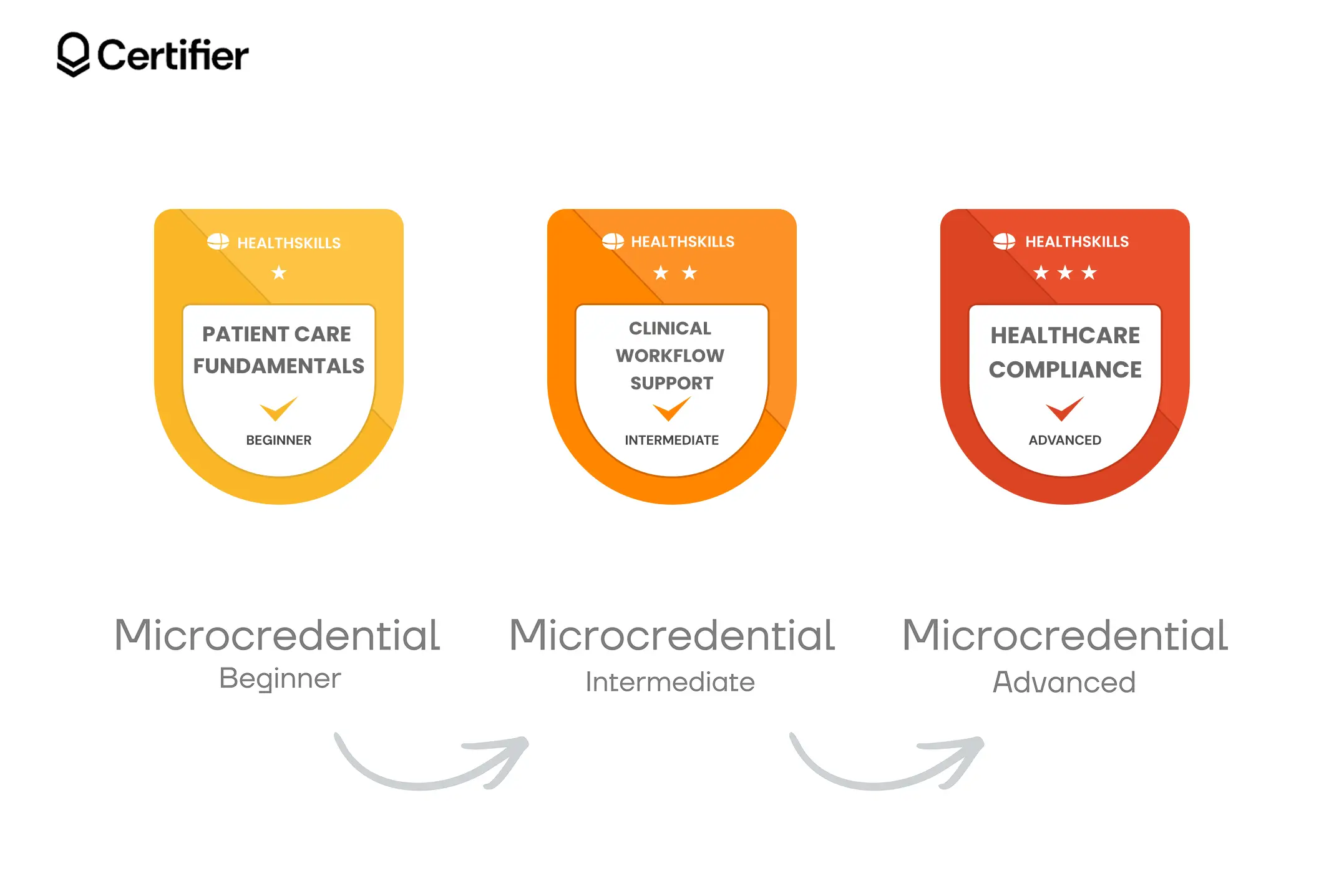
Stackable micro-credentials focus on discrete, skills-based outcomes, while value-added credentials typically bundle broader learning experiences such as leadership, compliance or specialization.
Both can coexist in a stackable system, as long as pathways clearly define how each credential contributes to progression.
Stackable micro credentials are especially valuable for:
Working professionals seeking targeted professional development
Learners testing a new career path before committing to a degree
Institutions responding quickly to high demand workforce needs
Certification programs are more comprehensive than stackable micro credentials and often include multiple courses. Many institutions design stackable certificates so learners can eventually earn college credits that apply toward a degree.
A common model of stackable certificates looks like this:
Undergraduate certificate → academic certificate → associate degree
Professional certificate → graduate certificates → master’s degree
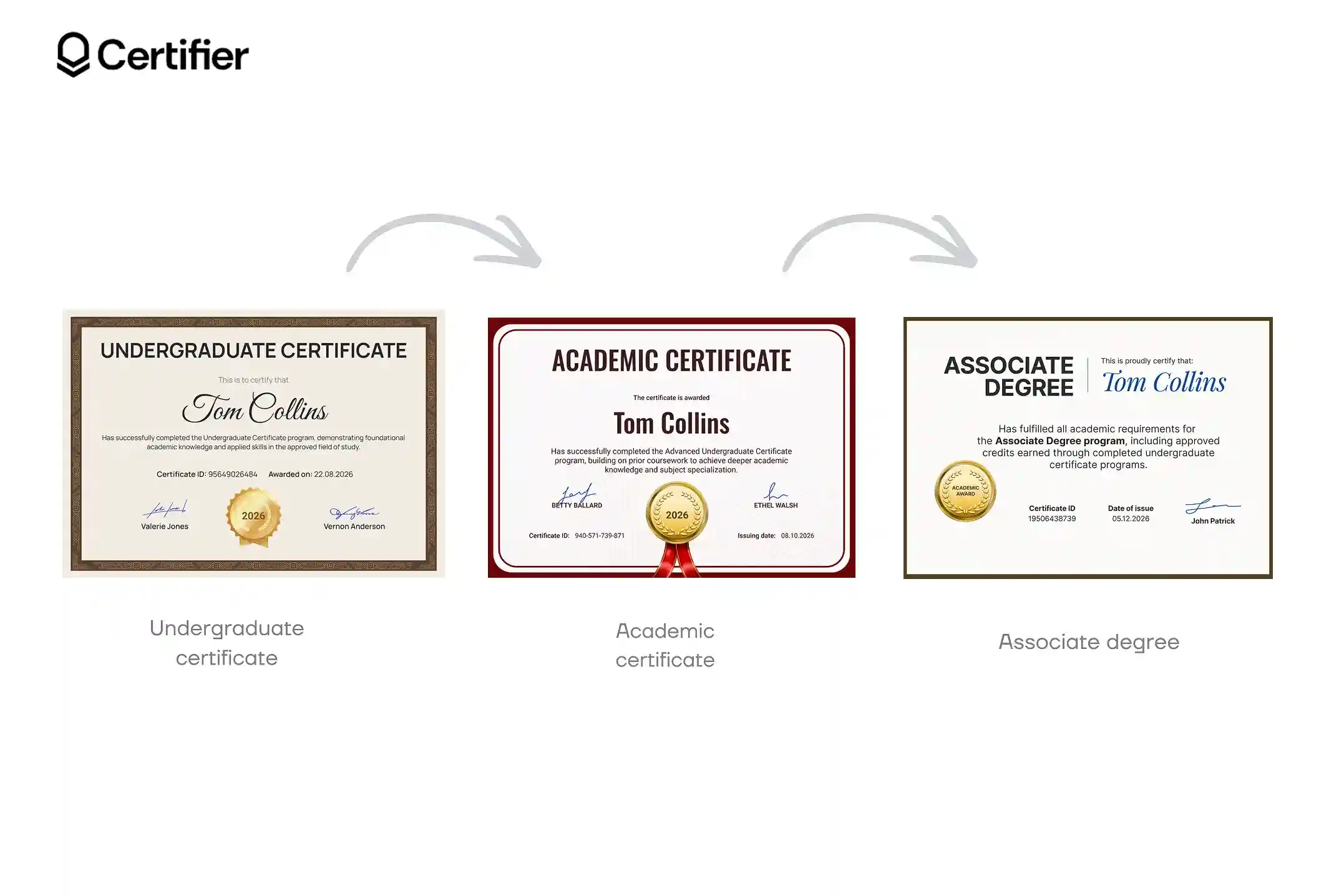
Community colleges play a major role here. Schools such as Miami Dade College and many institutions across several states use stackable certificates to help students build momentum, especially those returning to college after time in the workforce.
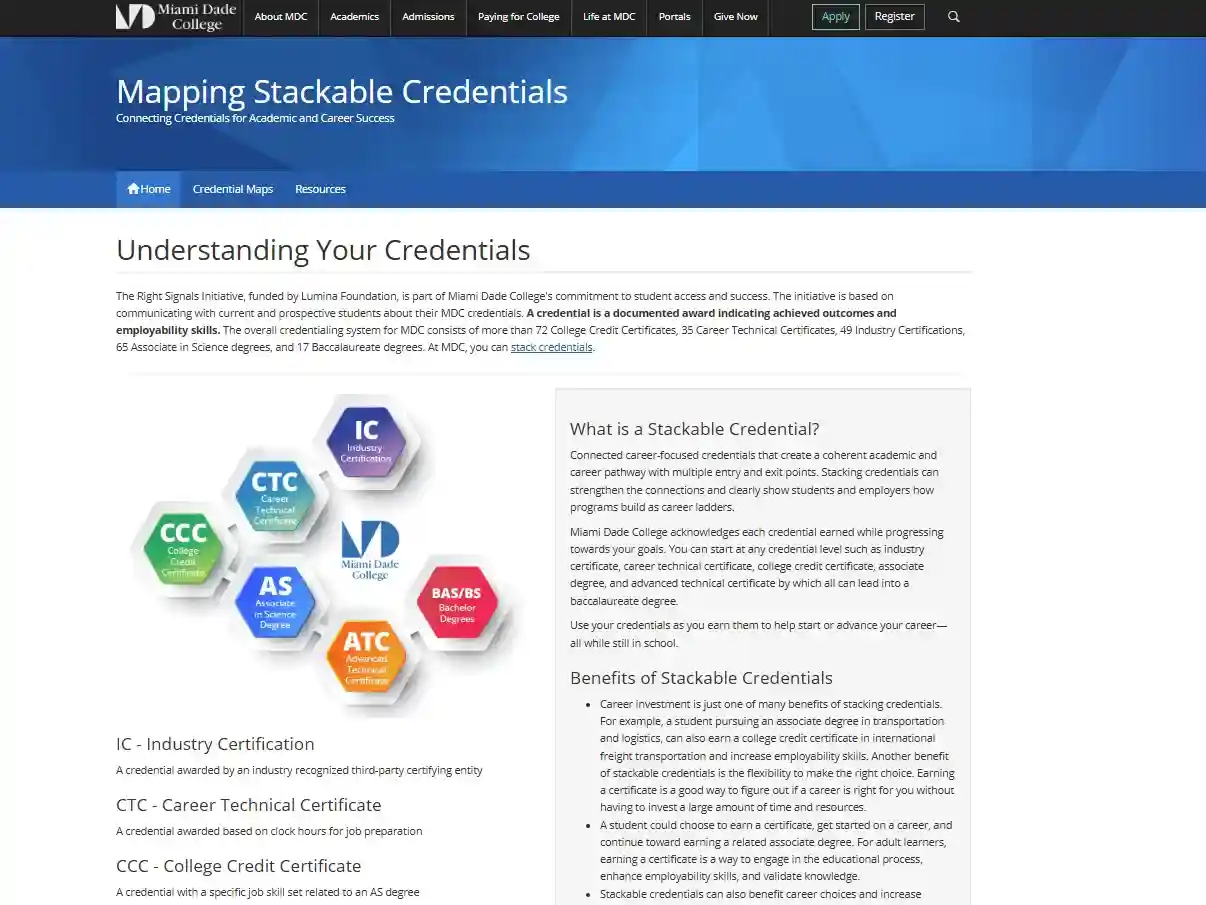
Certificates are widely used in fields like culinary arts, consumer sciences, management and healthcare, where learners benefit from earning credentials along the way instead of waiting years for a final degree.
Industry certifications and professional licenses are often issued or recognized by employers, government agencies or professional bodies. These credentials validate job-ready skills and are closely tied to job prospects.
In stackable credential programs, industry certifications often sit alongside academic programs. A learner might:
Earn an industry certification
Stack it with college coursework
Eventually earn a degree, staying employed
Stackable credentials also exist within formal higher education degree programs. Learners may stack credentials on a vertical stacking path, moving from an associate degree to a bachelor’s degree and later to a master’s program.
Examples of stackable credentials in higher education include:
Associate → four-year degree → master’s degree
Bachelor’s degree → graduate certificate → master’s degree
Institutions such as Harvard Extension School illustrate how adult learners and full time students can advance through modular academic programs, balancing work and life.
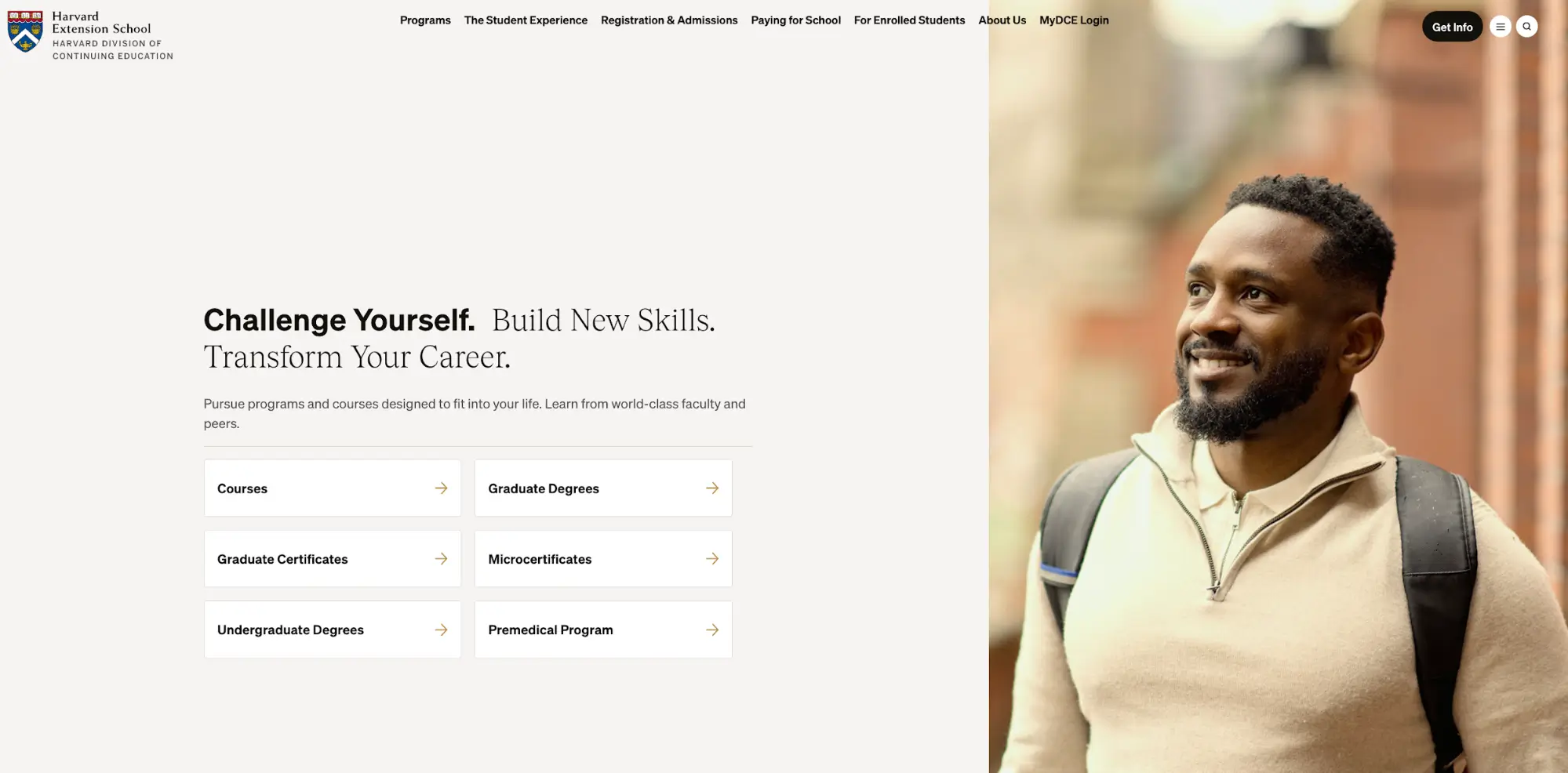
In contrast to traditional degree programs, stackable degrees allow students to pause, return and eventually earn a degree without losing progress.
Digital badges often represent milestones within stackable credential programs. They act as visible proof that a learner completed a course, module or skill set.
While badges are not a credential type on their own, they support stackable credentials by:
Making progress visible
Helping learners share achievements with employers
Encouraging students to continue and advance
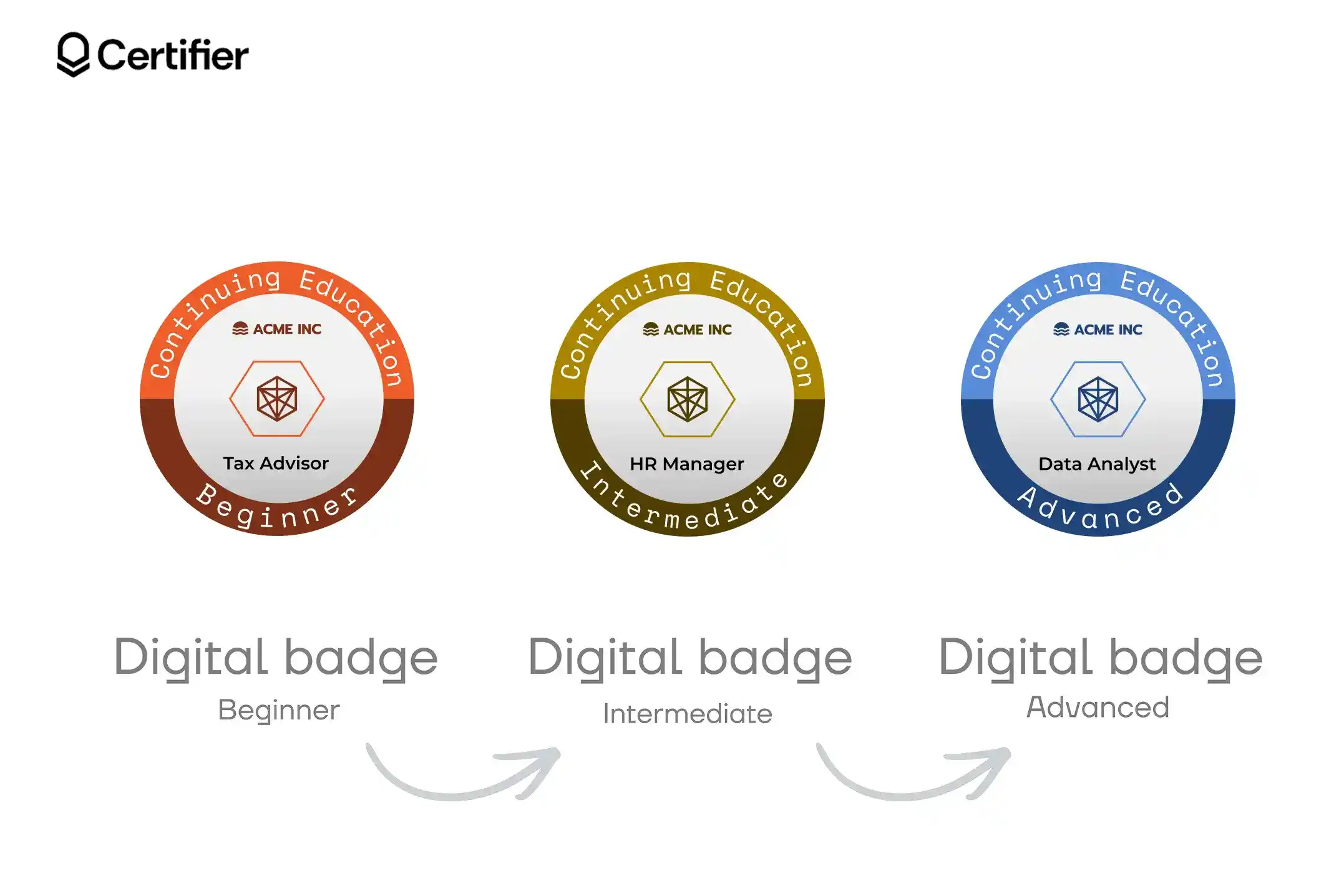
Used correctly, badges reinforce motivation and clarify how credentials connect within a larger system. The most important benefits of digital badges are proof of skills, motivation through progress and quick verification.
Did you know that all the digital badges issued with Certifier are Open Badge 3.0 compliant? It means they’re all secure, easy to verify and portable.
Stackable credentials work because they follow a clear stacking logic. Each credential connects to others in a way that supports progression, flexibility and long-term outcomes. In practice, issuers rely on three main stacking models: vertical stacking, horizontal stacking and hybrid approaches.
Understanding how stackable credentials work at this level is critical. Without a defined model, learners collect multiple credentials, but issuers struggle to manage coherence and students struggle to see a clear career path.
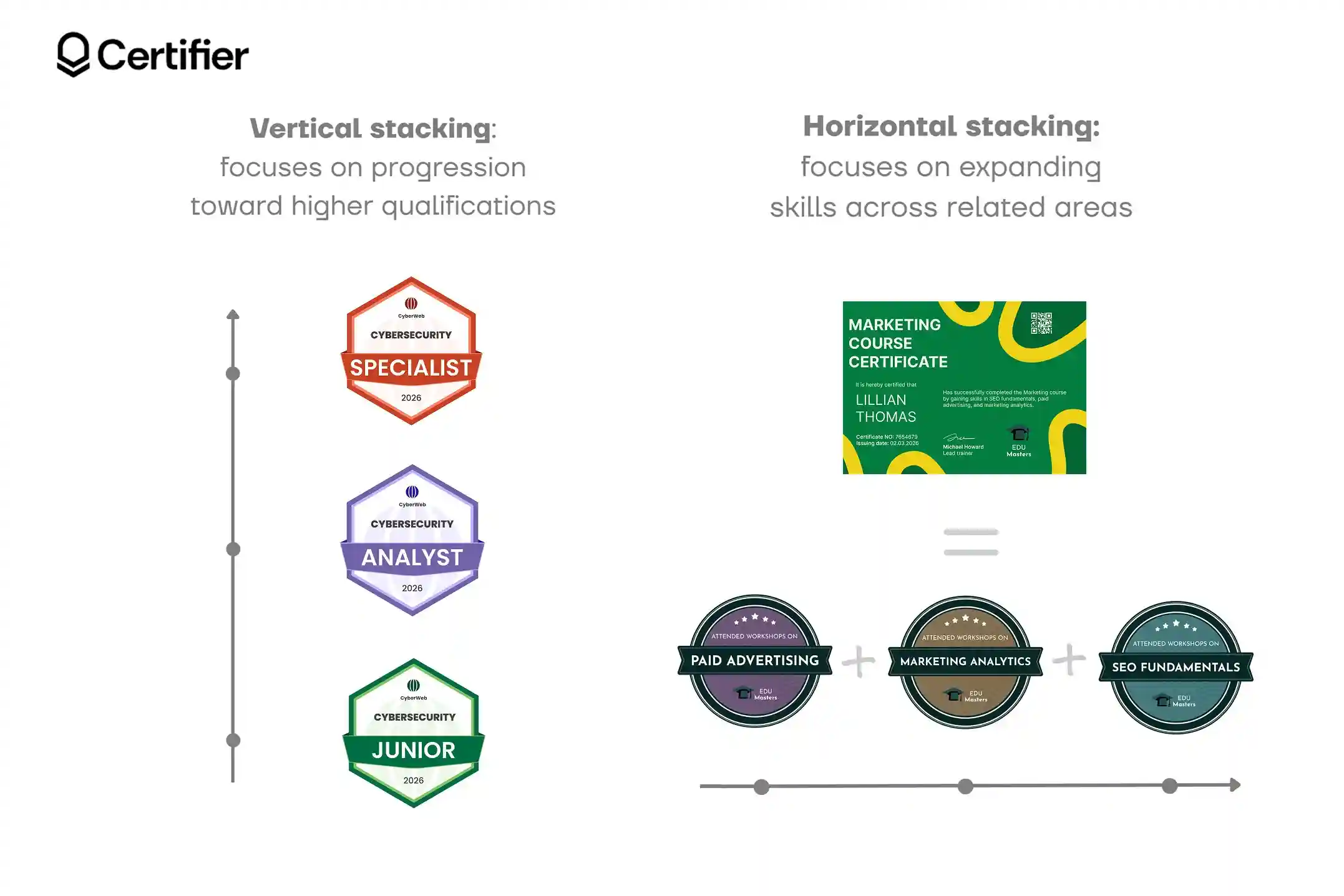
Vertical stacking focuses on progression. Learners move from foundational credentials toward more advanced qualifications over time.
A typical vertical stack might look like this:
Short-term credential → certificate program
Certificate → associate degree
Associate → bachelor’s degree → master’s degree
This model is common in higher education, especially at community college and university level. It works well for learners who want more flexibility than traditional degree programs but still aim to eventually earn a degree.
Vertical stacking supports:
Learners who pause and later re enroll
Students balancing work with study as a full time student is not an option
Institutions responding to long-term workforce needs
Horizontal stacking expands breadth rather than level. Learners earn credentials at a similar level but across different skill areas.
For example:

A marketing professional stacks credentials in analytics, content and paid media
An IT learner stacks cloud, security and networking certifications
A workforce program combines safety, compliance and management courses
Horizontal stacking works well in fields driven by high demand skills and fast-changing labor market expectations.
This approach offers:
More flexibility in professional development
Strong alignment with employer needs
Faster impact on job prospects
Hybrid models combine vertical and horizontal stacking. Learners build breadth first, then advance upward or advance while expanding sideways.
Example:
Multiple short-term credentials in information technology
A professional certificate
Later progression into a bachelor’s degree or master’s program
Hybrid stacking reflects how modern careers develop. Skills accumulate non-linearly, yet still connect to formal qualifications.
Stacking Model | Employer Value | Typical Outcome | Best For |
|---|---|---|---|
Vertical stacking | Advancement | Degree programs or licenses | Learners aiming to eventually earn a degree |
Horizontal stacking | Breadth | Skill diversification | Professionals adapting to changing roles |
Hybrid stacking | Flexibility | Degrees plus applied skills | Institutions serving diverse student needs |
Traditional credentialing assumes a linear path: enroll, complete courses, earn a degree, then enter the workforce. Stackable credentials offer a different model.
With stackable credentialing:
Students earn value at every stage, not only at the end
Credentials align more closely with workforce and labor market demand
Institutions can design programs that encourage students to advance
For learners, this means more control over their educational path. For institutions, it means innovation in how academic programs connect to real-world outcomes.
Stackable credentials offer value on both sides of the learning ecosystem. Learn, how learners and issuers benefit:
For learners, stackable credentials create a more flexible and realistic way to advance skills and careers.

Lower risk and greater flexibility. Learners earn credentials step by step instead of committing to a single long program. Each credential stands on its own and still counts toward a larger goal such as a certification or degree.
Earlier proof of skills for the job market. Verified credentials allow learners to show job-ready skills sooner, not only after a four-year degree or master’s program. In fast-moving fields, employers value demonstrated skills over long timelines. A report from Education Design Lab shows that 63% of employers see micro-credentials as valuable additions to a resume.
Support for non-linear learning journeys. Learners can start with short-term credentials, pause to work and return later to continue stacking. Over time, this path can lead to an associate degree, bachelor’s degree or advanced qualification without losing progress.
Clear recognition at every stage. Using digital badges for recognition of skills and achievements gives learners visible proof of progress as they move through each step of a stackable pathway.
Stackable credentials also benefit:
Working professionals seeking ongoing professional development
Students balancing education with work or family
Learners from historically underserved populations who need affordable, flexible entry points
For issuers, stackable credentials solve structural problems that traditional academic programs struggle with.
Higher enrollment and stronger retention. Short, modular credentials attract learners who hesitate to commit to full degree programs. Clear learning pathways encourage continued progress and repeat enrollment over time.
Faster response to workforce demand. Institutions can launch new credentials quickly and update individual courses. This supports fast-changing fields such as IT, healthcare and advanced manufacturing.
Better visibility into learner progress. Structured pathways make learner progress easier to understand. Issuers can see how learners move through stages and where momentum slows. The visibility supports better program decisions and more timely outreach.
From an operational perspective, stackable credentials:
Support innovation across academic programs and workforce training
Enable partnerships with employers and government agencies
Strengthen institutional reputation through verified, transparent credentials
For issuers, stackable credentials also support long-term retention by creating natural reasons for learners to return and renew credentials over time.
If you want to start creating stackable credentials for your program, Certifier gives you the best infrastructure. It is a certificate management tool that organizations use to create, issue and manage certificates and virtual badges online.
Issuers add learner data, choose the right credential and Certifier delivers it digitally to each recipient. All issued credentials are stored in one system, which makes it easier to connect them into stackable learning paths and manage learner progress over time.
Key Certifier capabilities that enable stackable credentials:
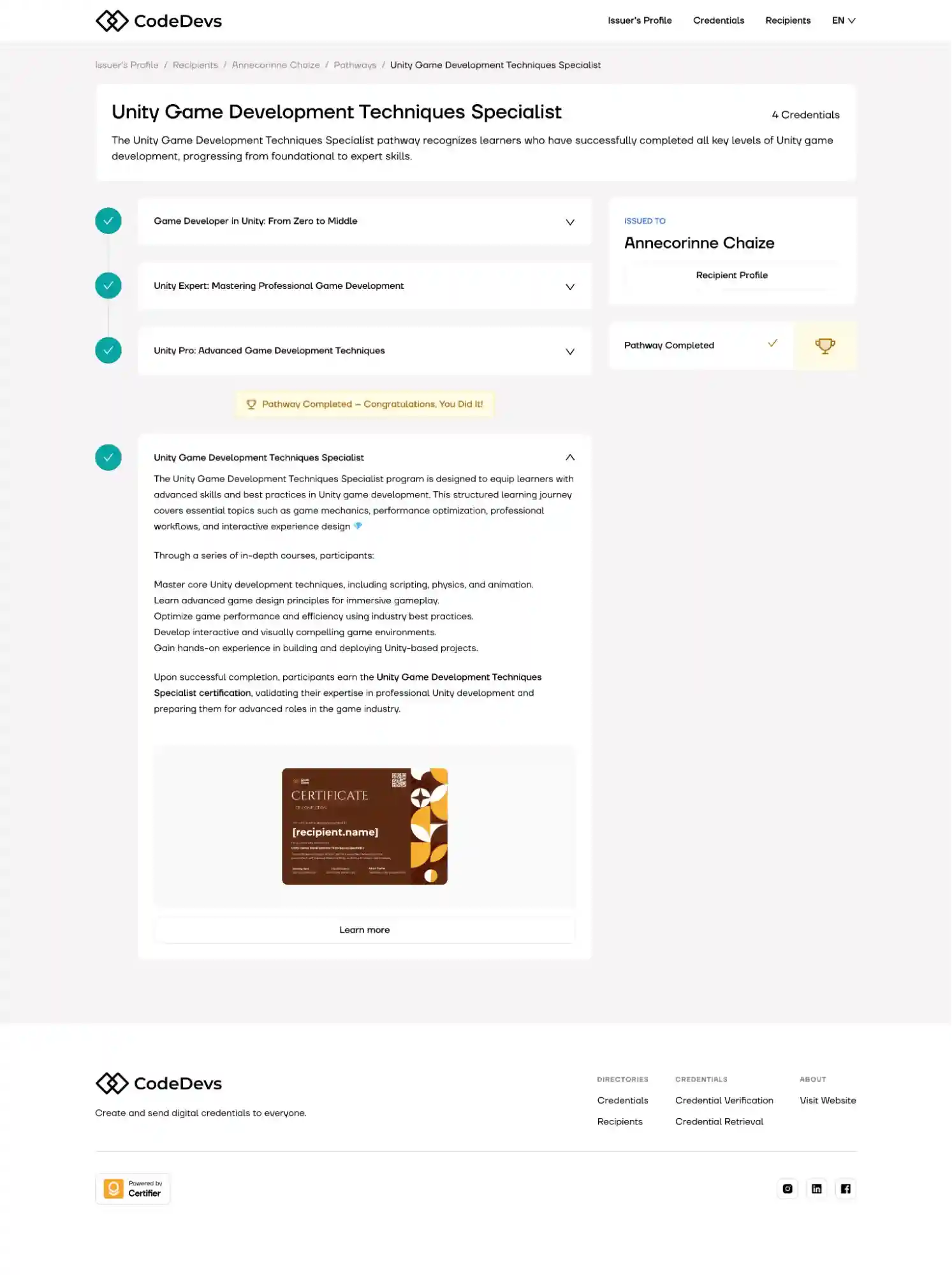
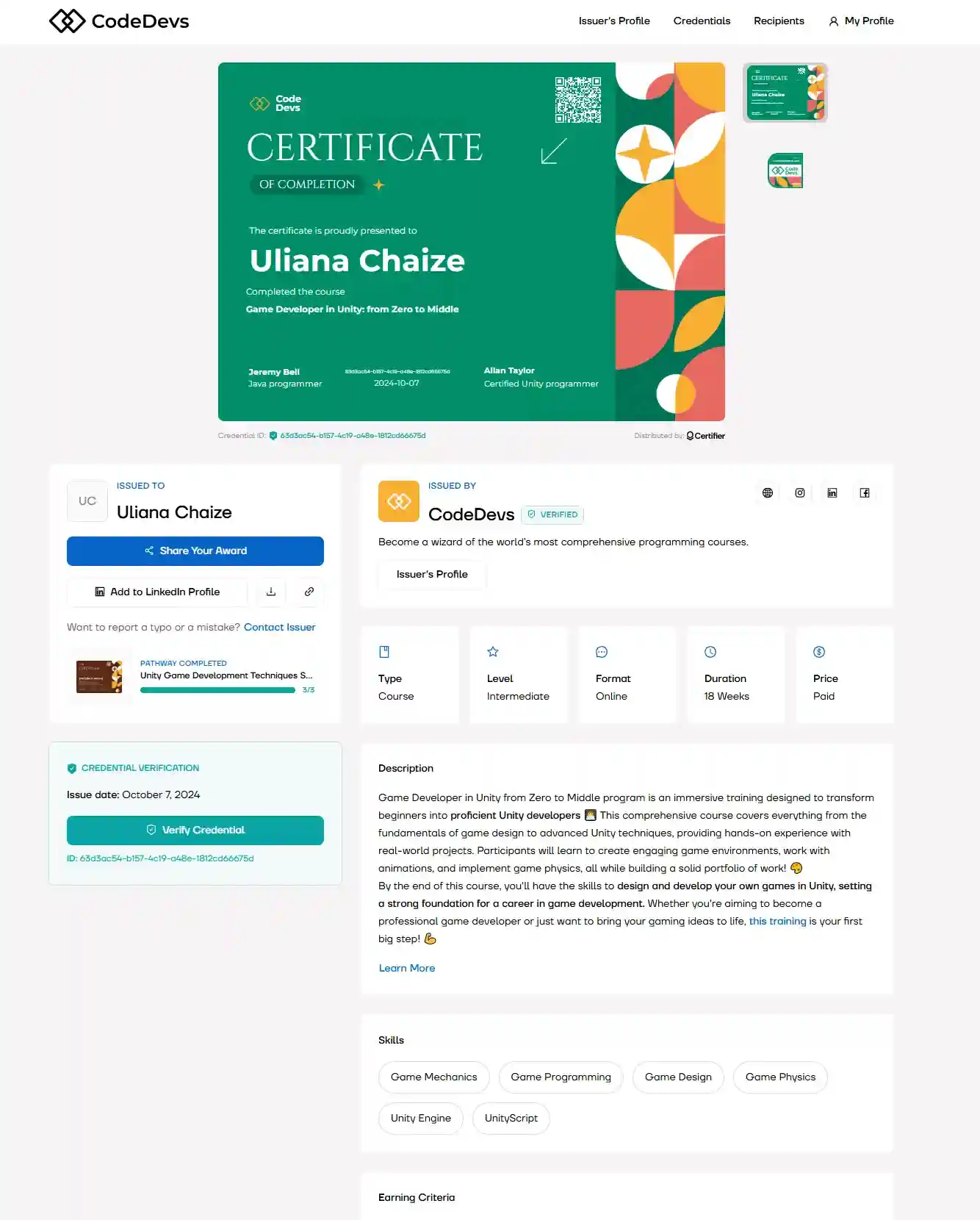
Learning Pathways: Structure stackable credentials into clear learning journeys, from entry-level badges to final certificates or diplomas. Learners see exactly what comes next and how each credential connects to the final outcome.
Automated credential issuance: Issue certificates and badges automatically at every stage. When learners complete required steps, Certifier sends the next credential or the final completion award. You don’t do it manually.
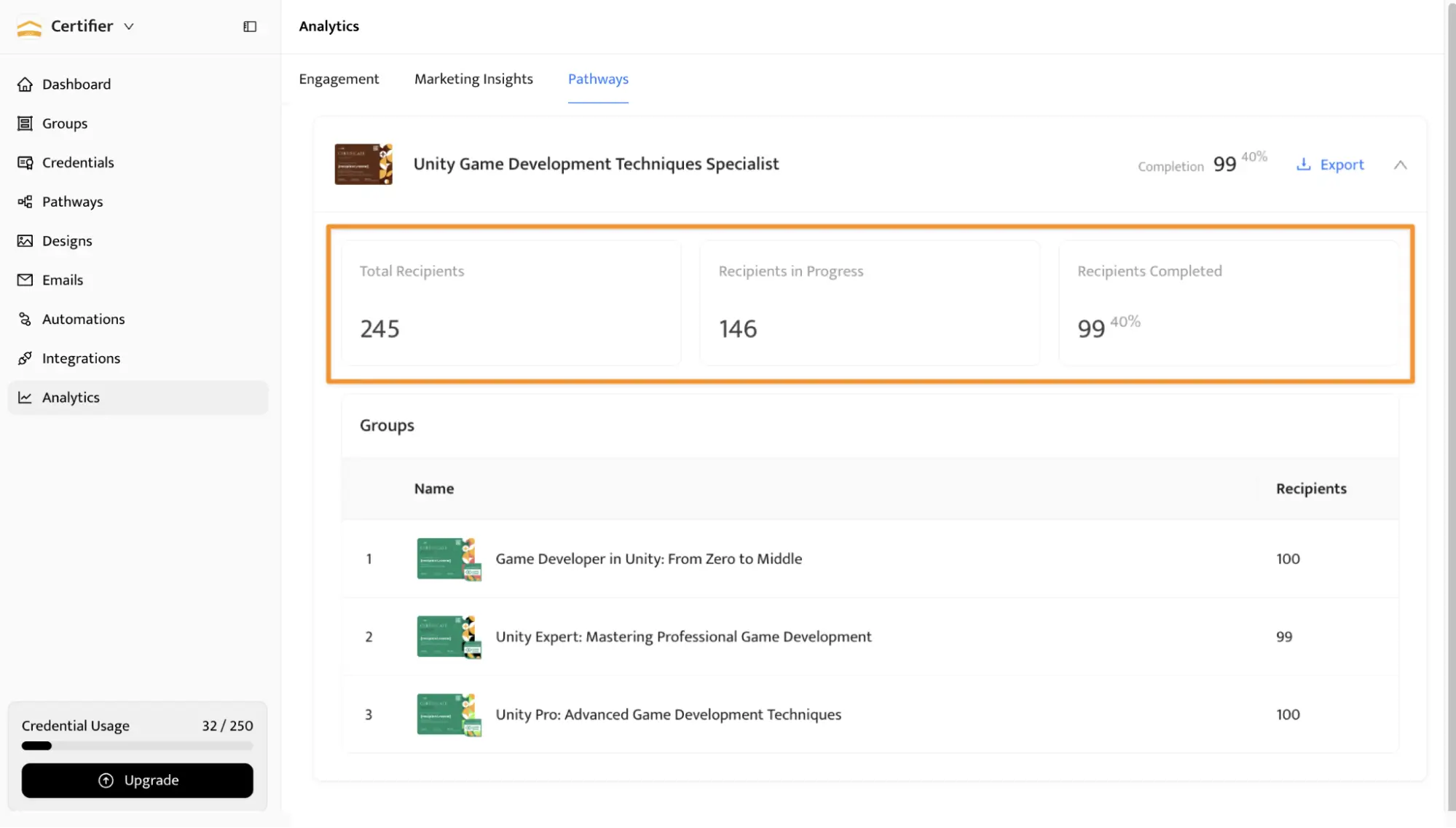
Progress tracking and analytics: Track learner progress across each step of a pathway. See who is in progress, who completed and analyze where drop-offs may occur.
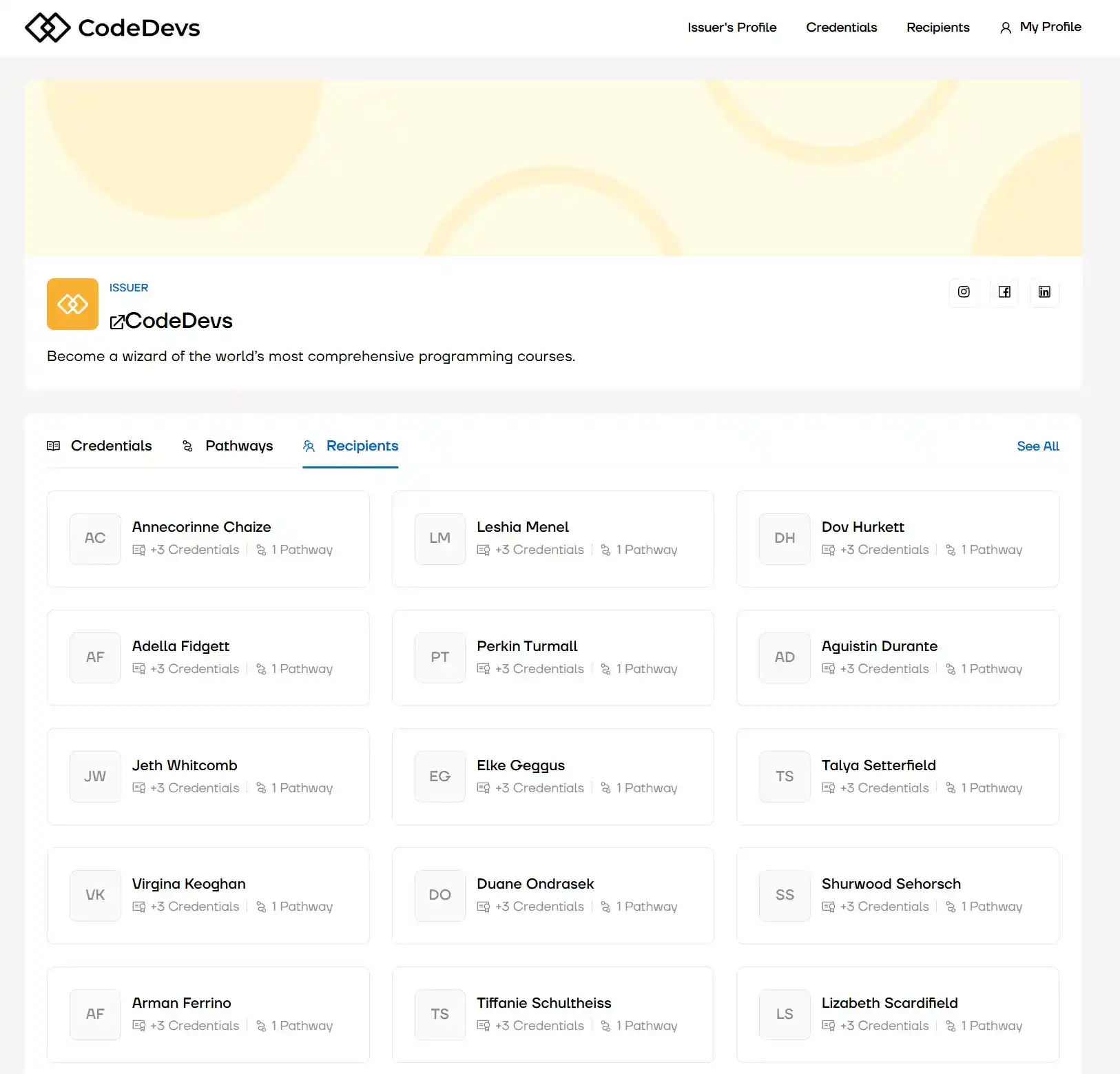
Issuer’s Portal: A central, branded credential hub where you display your organization’s stackable credentials, list all offerings and recipients and provide easy retrieval and verification for learners and third parties.
Credential expiration and renewal management: Set validity periods for credentials and send renewal reminders automatically. Ideal for certifications that require updates or re-training.
Built-in verification layer: You can add a QR code credential verification. Employers and third parties can instantly confirm authenticity when scanning the code.
Sharable digital certificates and badges: Keep every credential secure, branded and shareable. Learners can add credentials to LinkedIn or share them online via digital wallet–a place where credentials are securely stored.
Designing and launching stackable credentials requires intentional planning and clear alignment to outcomes. Done well, a stackable credential program lets learners earn short-term credentials with real labor-market value, building toward degrees or advanced qualifications.
Start by deciding why your institution or organization is offering stackable credentials.
Identify which skills, competencies or career paths you want learners to develop
Engage employers or workforce partners early so the credentials you stack reflect industry certifications or skill needs.
This helps ensure your program is both academically credible and relevant in the labor market.
Stackable credential design begins with a clear map showing how each credential connects to the next.
Determine prerequisites and logical sequencing of credentials (e.g., certificate → associate → bachelor’s)
Identify where short-term certificates, badges or professional licenses fit in the pathway
Ensure each step has clear outcomes so learners know what they can achieve at any point
Mapping also helps learners understand how stackable credentials relate to longer programs and career progression.
Design courses so they can be taken individually or combined over time.
Break larger programs into stackable credential programs that offer multiple exit and entry points
Focus on employer-valued skills and competencies rather than rigid course sequences
Where possible, allow credits earned for one credential to contribute toward the next level to avoid duplication
The modular design supports learners balancing work and education or those who want to earn multiple credentials on their own schedule.
Strong stackable credential pathways are not created in isolation.
Partner with employers, certification bodies and government agencies to ensure credentials meet current workforce standards
Where relevant, embed industry certifications within academic programming so learners can earn credentials recognized by employers and schools alike
This alignment signals to learners and employers that credentials have value beyond the classroom.
Learners need straightforward information on how a stackable credential pathway works.
Use visual maps, progression charts and clear descriptions of what each credential leads to
Highlight flexibility, multiple entry/exit points and the ability to enter the workforce at different stages
Make sure advisors can guide learners on how credentials stack and what opportunities each opens
Clear communication encourages learners to engage with and complete stackable pathways.
Managing stackable credentials at scale demands robust infrastructure.
Use a platform like Certifier to structure learning pathways, automate credential issuance and track progress from first credential to final outcome
Make credentials verifiable with digital features like QR codes so learners can easily share achievements with employers
In fields where skills change quickly or compliance matters, expiration and renewal play a critical role in keeping stackable credentials accurate, current and trusted
Supporting automation and verification helps reduce manual burden and ensures a seamless learner experience.
Before selecting a system, review this comparison of digital credential platforms for higher education. It shows which tools support learning pathways and automated issuance. It also covers long-term verification.
Credentialing pathways and stackable credentials let learners earn meaningful qualifications step by step and enter the workforce at multiple points while still building toward larger outcomes like an associate or bachelor’s degree. They offer more flexibility and responsiveness than many traditional degree programs.
For education providers and employers, stackable credential programs help align learning with real labor market needs and create pathways that meet students where they are.
To make this model work in practice, institutions need tools that connect credentials, track progress and verify outcomes. Certifier support structured pathways letting you create stackable certificates, badges and more.
Sign up for Certifier for free.
Learn more by reading the answers to the most common questions on stackable micro credentials, certificates and more.
The stackable credentials definition is easy: they are modular educational achievements that individuals can earn one at a time and combine over time to build up broader qualifications or demonstrate accumulated skills.
They let learners enter the workforce at multiple points and continue toward larger goals, such as degrees or advanced certificates. Learn about the difference between a certificate, credential and degree.
An example of a credentialing pathways and stackable credentials might begin with a short certificate in information technology, followed by additional certifications and eventually lead to an associate degree or beyond.
Stackable certifications are industry or professional credentials that can be earned separately but also combined strategically toward broader credentials.
For example, a series of IT certifications can be stacked vertically (from basic to advanced) to enhance expertise and support career progression across related job roles.
Learning Pathways in Certifier let issuers structure stackable credentials into clear learning paths. Issuers define which credentials count toward a pathway, set the order of progression and select a final completion credential.
Learners are automatically enrolled when they earn a credential linked to the pathway, their progress updates in real time and the final credential is auto-issued once all criteria are met.
This setup highlights the importance of digital credentials by making each step verifiable, visible and connected within a structured learning journey.
The stackable credentials' meaning differs slightly by perspective. For learners, it represents a flexible way to gain skills step by step while earning credentials that hold value on their own.
For issuers, it refers to a structured approach to building programs in which smaller credentials connect to clear learning pathways and long-term qualifications.

- Content Strategy
- Content Writing
- Digital Credentialing
- Keyword Research
- Content Editing
Senior Content Specialist
Valerie leads Certifier's content strategy, creating SEO-optimized guides and resources on digital credentialing best practices for educators and training providers.