
Trusted by:
University of Southern California
Warner Bros.
Volvo
Amazon
Stanford University
Updated: September 15, 2026
15 min read
Explore top digital badge examples you can use as benchmarks. See what makes professional badges work, customize editable templates to match the best and issue credentials in bulk.
Research with AI:
Digital badges work best when they do more than “look nice.” The strongest digital badges examples combine clear visual design with verifiable data, so anyone can understand what was earned, how and by whom.
This guide walks through digital badges examples used in education, corporate training and professional development, with a focus on how issuers design and deploy them in 2026.
Along the way, you’ll see what makes a badge credible, easy to verify and how similar badges can be recreated with Certifier, an online badge management tool.
Digital badges are now widely used across education, professional development and industry to verify real skills.
The best digital badge examples include clear criteria, issuer details and one-click verification.
In 2026, most badge programs follow Open Badges–aligned standards and support LinkedIn sharing.
You can recreate many of these badge patterns using editable templates and bulk issuing tools in Certifier.

Digital badges are verifiable online credentials that confirm a specific skill, or learning outcome. Unlike static PDFs, digital badges contain embedded metadata: issuer details, criteria, evidence and verification links.
Most modern programs follow the Open Badges 3.0 standard, which allows badges to stay portable and trustworthy across platforms. For issuers, this means badges can scale across cohorts without losing credibility.
Absolutely. In recent years, digital badge issuance has grown from tens of millions to hundreds of millions worldwide, making badges a mainstream credential used by universities and professional bodies.
In the sections below, we focus on the badge types issuers use most often today and show a practical example for each one.
Note: Some of the badges shown below are real-life examples from existing programs. They’re included for inspiration, but they aren’t editable or reusable.
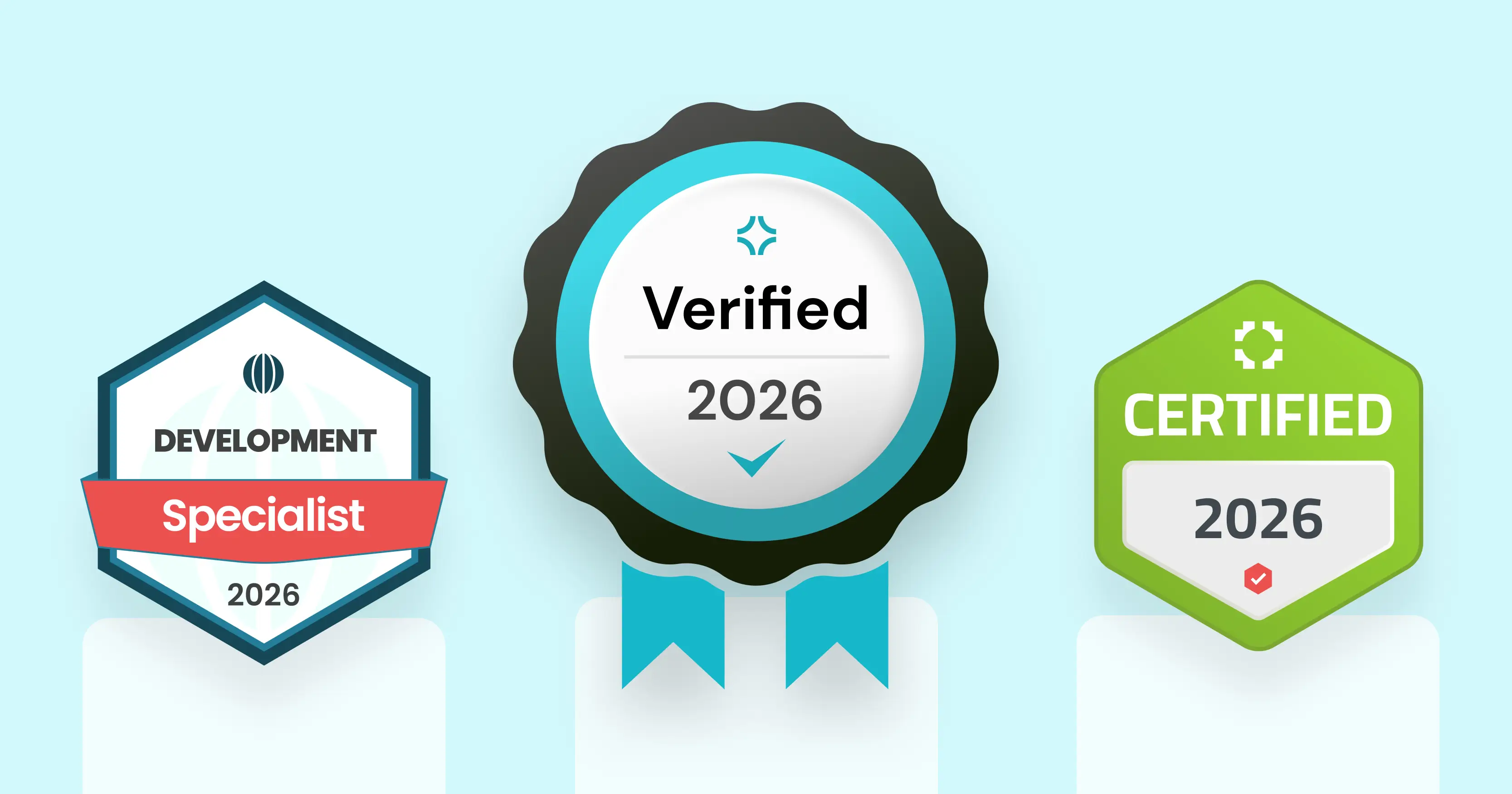
Wherever you see a badge on a blue background, you’ll find an editable badge template. You can open it in Certifier’s online badge maker, customize the design and metadata and issue professional digital badges in bulk.
Achievement badges are awarded when learners successfully complete a defined course, training or learning milestone. These badges represent specific skills or knowledge.
They usually link to metadata that explains what was earned and who issued it, making them meaningful for both learners and employers.
Real-life digital badge example: Engineering and applied science, Toronto Metropolitan University

This digital badge is awarded by the G. Raymond Chang School of Continuing Education at Toronto Metropolitan University for completing a focused engineering course.
It’s a great example of how badges can validate completion of a professional development program and communicate competence in a workplace-relevant skill.
Real digital badge examples: Leveraging AI for strategic HR badge, University of Denver College of Professional Studies
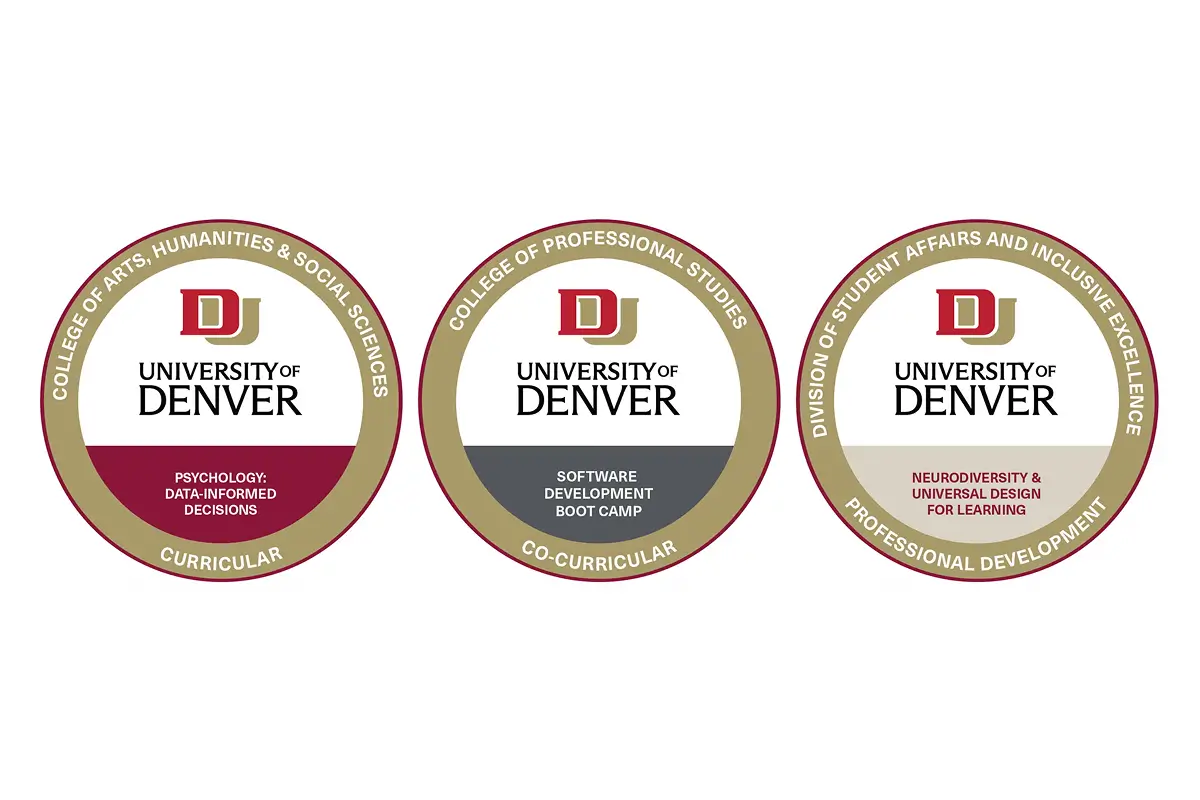
These digital badges for students recognize learners who complete a professional course in AI in HR management. They validate industry-aligned skills and, in many cases, can count toward degree requirements in graduate programs.
Real digital badge examples: Meta Blueprint digital badges
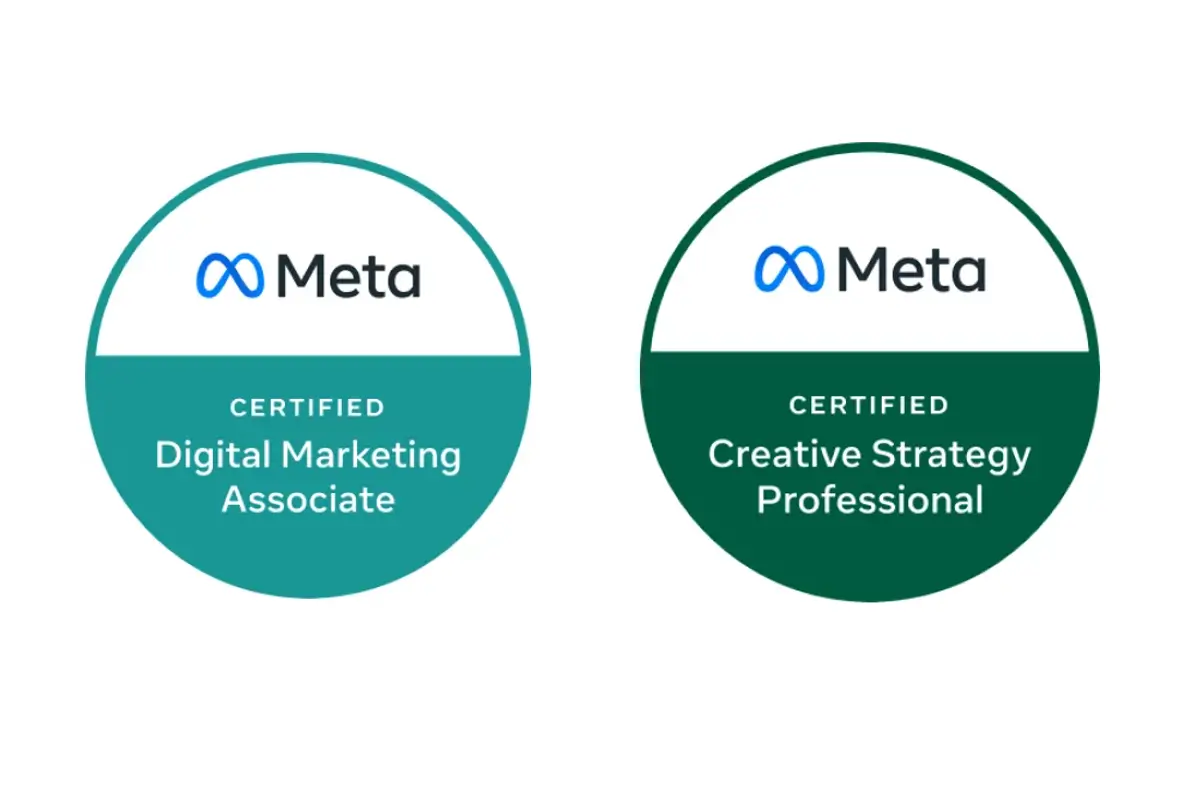
Issued as part of the Meta Blueprint learning platform, examples of digital badges celebrate learners who complete specific modules around digital marketing, platform tools or Meta-specific competencies.
Their simple, professional design and alignment with a major tech ecosystem make it suitable for sharing on LinkedIn or in portfolios.
Editable digital badge example:
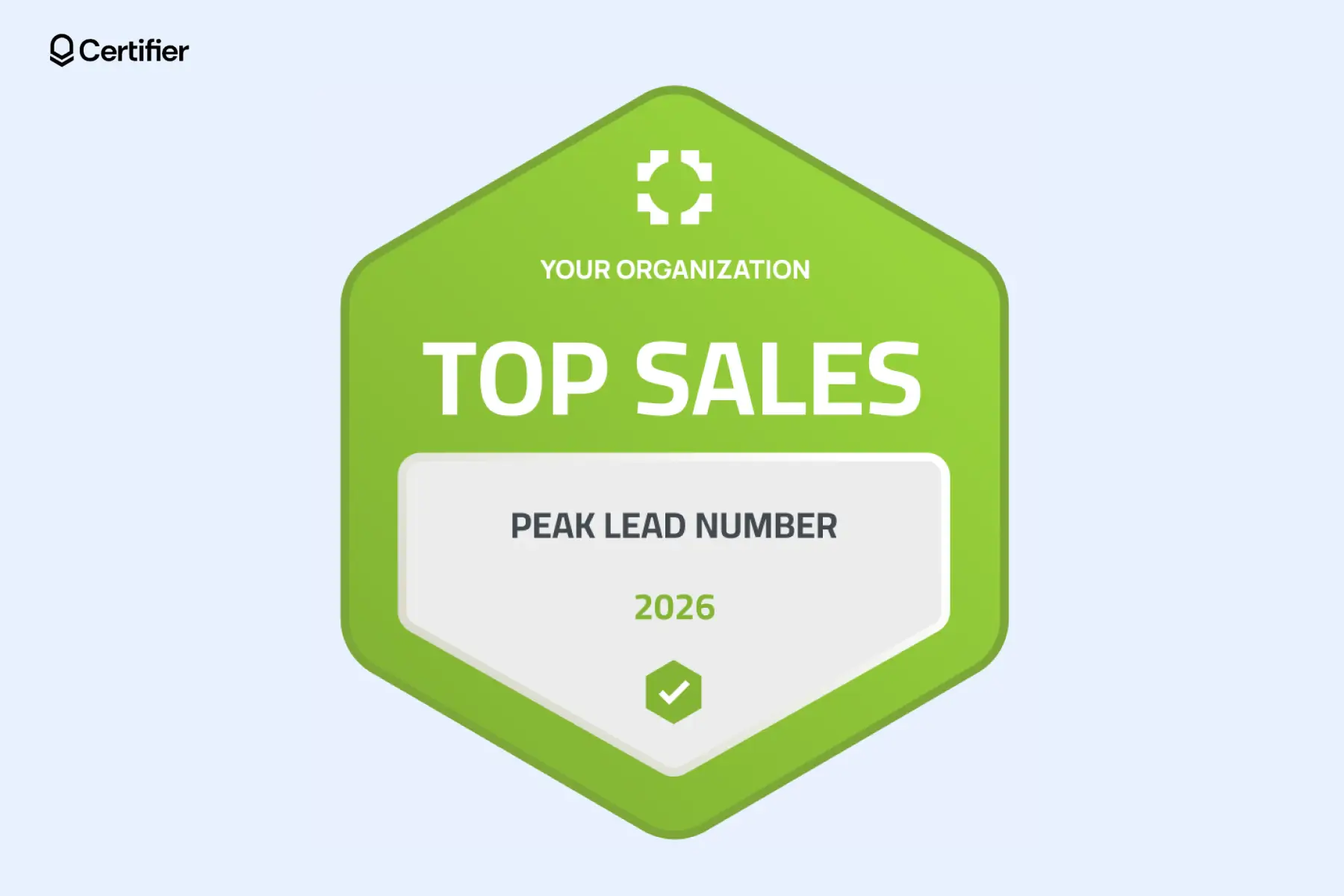
If the digital badge examples above inspired you to create your own, you can do it in minutes using Certifier. This editable digital badge template is designed for professional achievements and works for LinkedIn sharing.
Add your logo, update colors, change fonts and customize the text to reflect what was earned. Once ready, issue the badge in bulk and let recipients add it directly to their LinkedIn profile.
Engagement badges recognize active participation or contribution rather than completion of structured learning.
They’re especially powerful for building community, rewarding consistent involvement, or highlighting progress in non-formal contexts.
Because digital badges carry verifiable metadata about who earned them and why, they help issuers track engagement and motivate learners to stay involved in the long term.
Real-life examples of digital badges for students: UTS Open participation badge, UTS Open
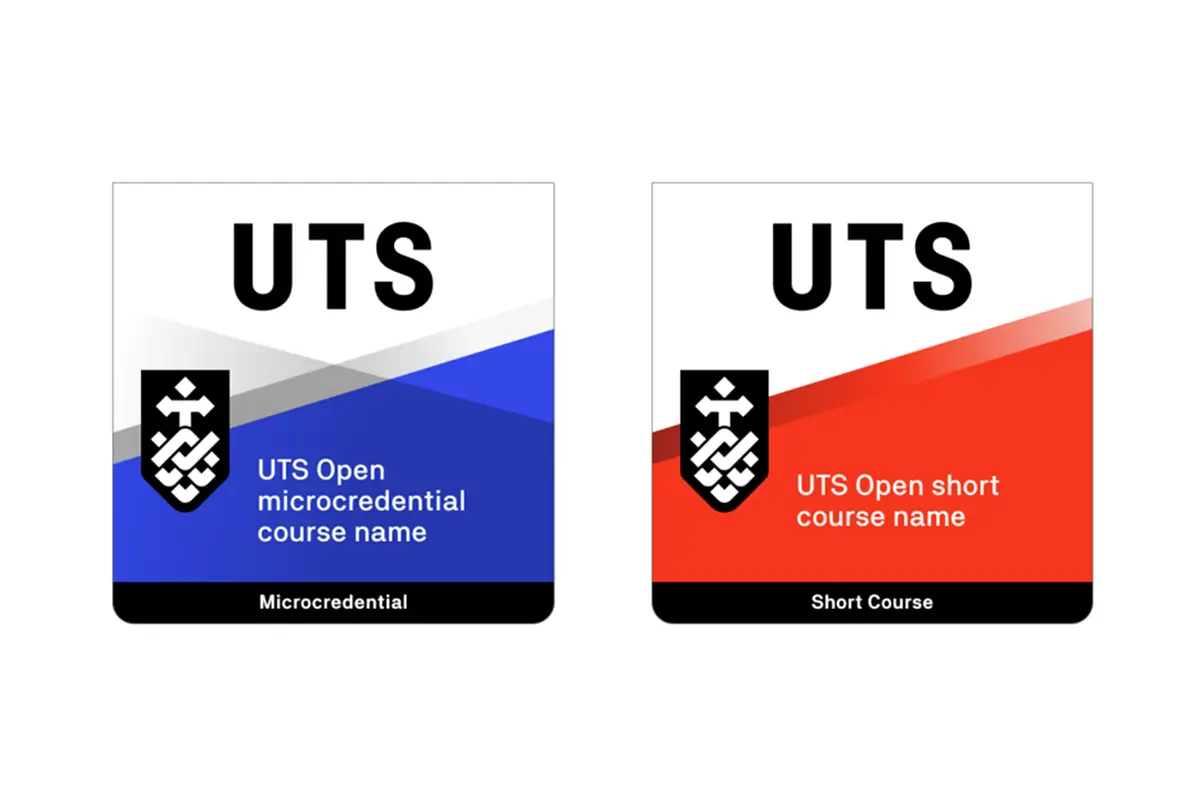
The University of Technology Sydney’s UTS Open issues digital badges for learners who engage with microcredentials or short courses. They recognize not just completion but involvement in specific learning pathways.
These digital badges combine the institution’s branding with embedded metadata about skills and activities completed.
Do you know about learning pathways in Certifier? You can issue digital badges for individual skills or milestones as learners progress through your course. They're automatically distributed upon meeting certain criteria, like ending a module or finishing an assessment.
Real-life digital badge design examples: Prude University
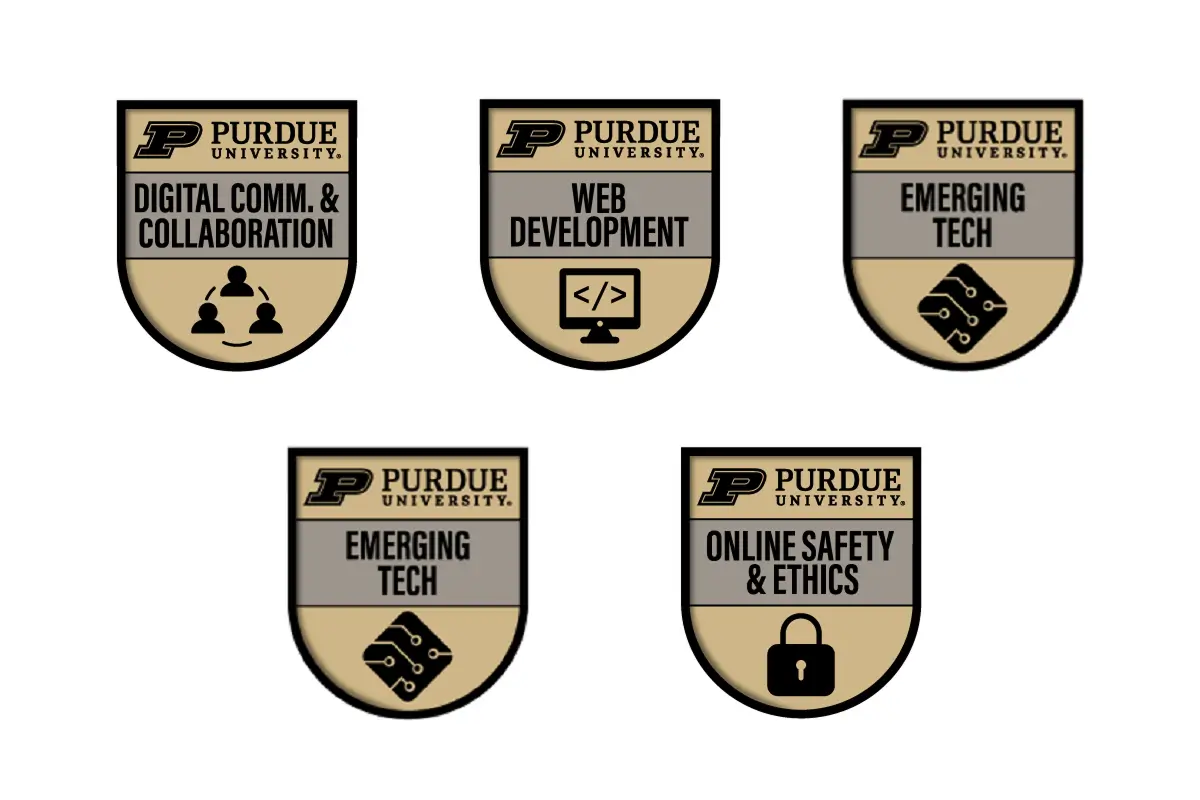
At Purdue University, digital badges work as stackable credentials that recognize co-curricular involvement, for example, competencies in digital communication and collaboration, or online safety and ethics, turning campus activity into stackable evidence of active learning.
Real-life digital badges examples: Career Readiness Digital Badging Program, Moravian University
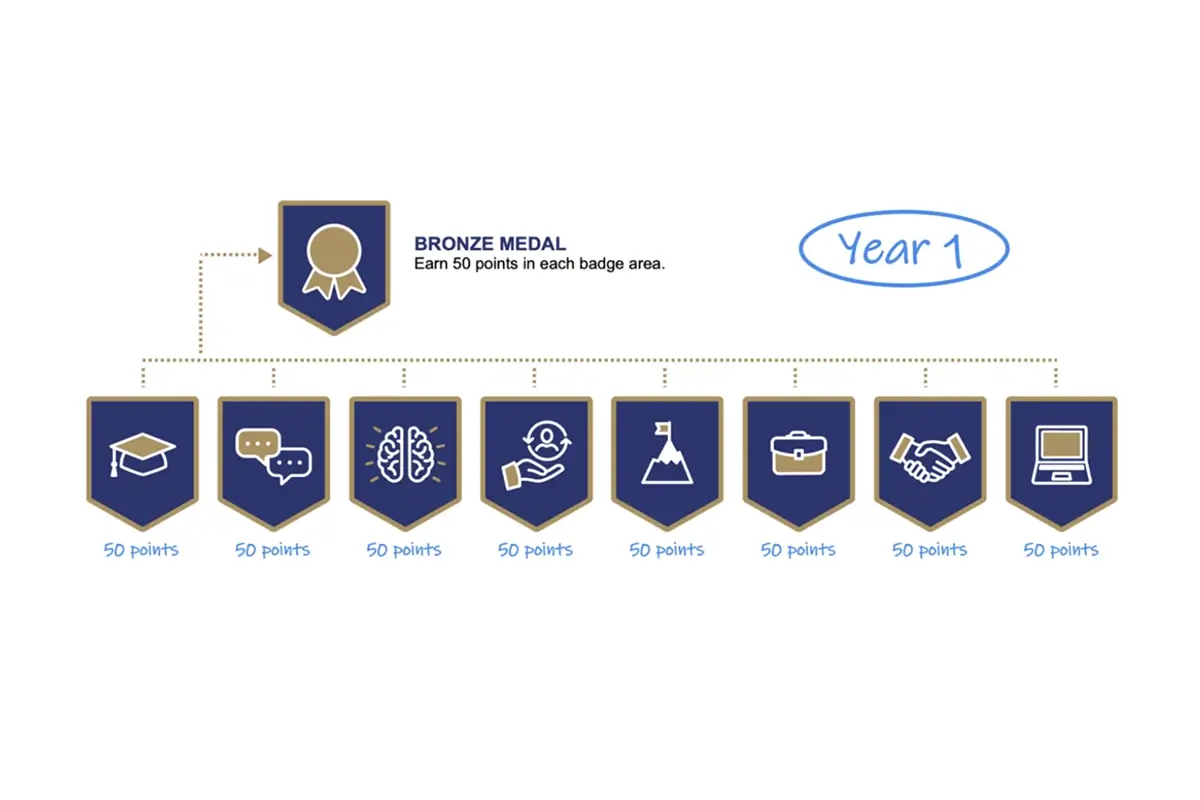
Moravian University’s career Readiness Digital Badging Program awards badges based on student involvement in career development activities such as attending workshops, networking events, or joining student organizations.
These digital badges for students motivate engagement by tying them to concrete experiences beyond classroom settings. Learn more about using digital badges in higher education.
Editable digital badges for students:
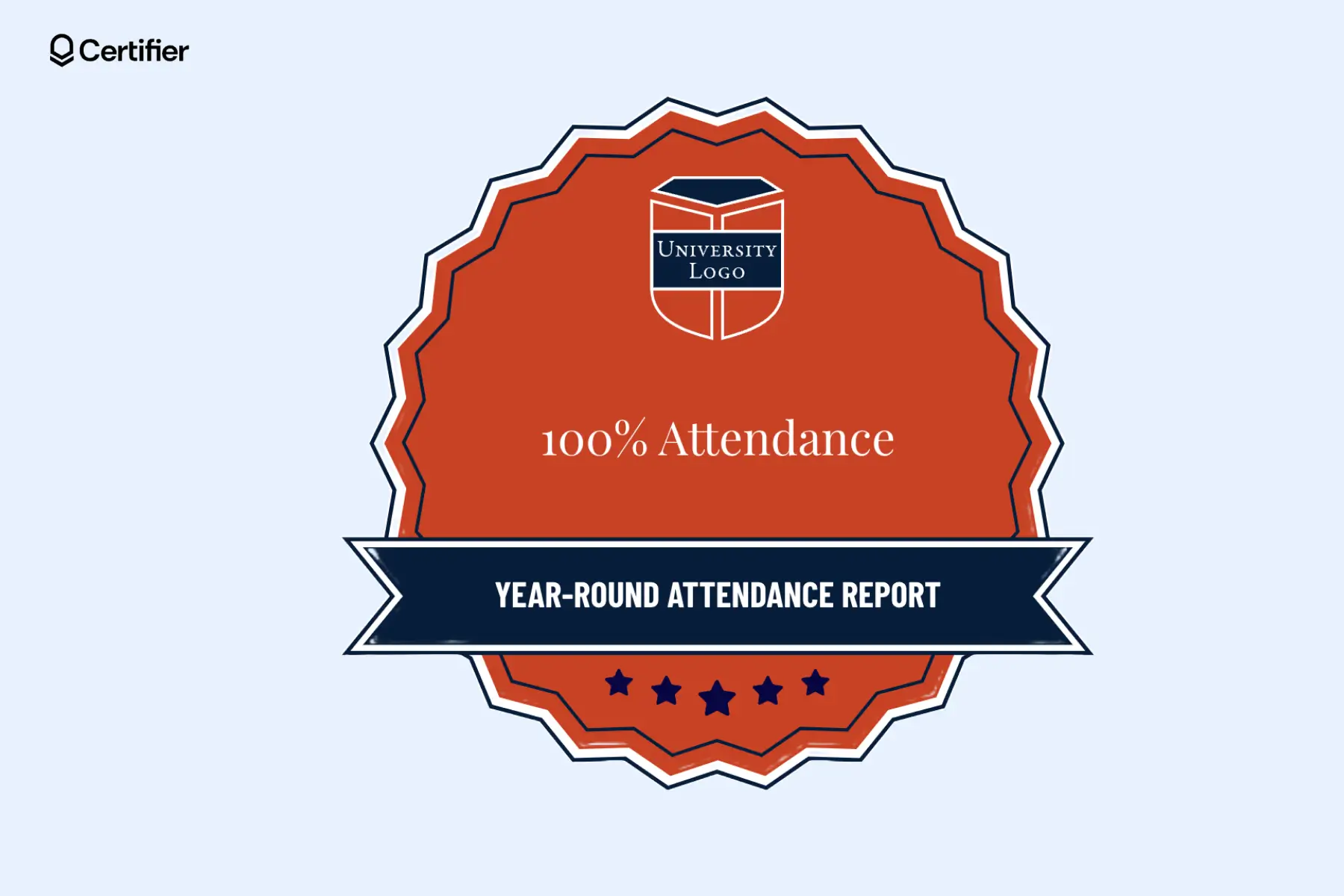
Feel free to adjust this engagement badge in minutes. It’s a great digital badge for teachers, students, employees–you name it.
Open the template in Certifier’s badge editor and start adjusting it to your context. Add your logo, adjust colors and fonts, update the text and issue the badge in bulk. Certifier is widely regarded as one of the best online badge makers for engagement and learning programs.
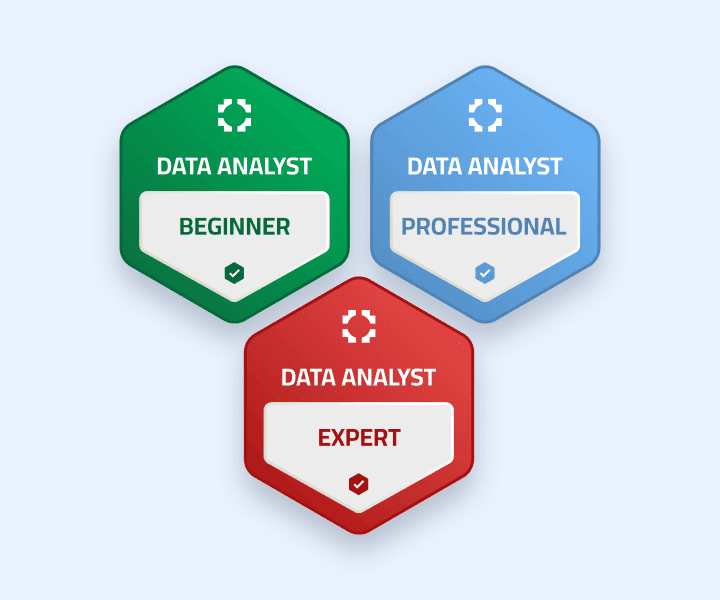
Professional development badges recognise skills and competencies people earn through targeted learning or workplace development.
These digital credentials show capability in areas relevant to careers or roles and because they contain verifiable metadata they offer digital proof of what badge earners have mastered.
Real-life digital badges for professional development: University of Utah digital badges
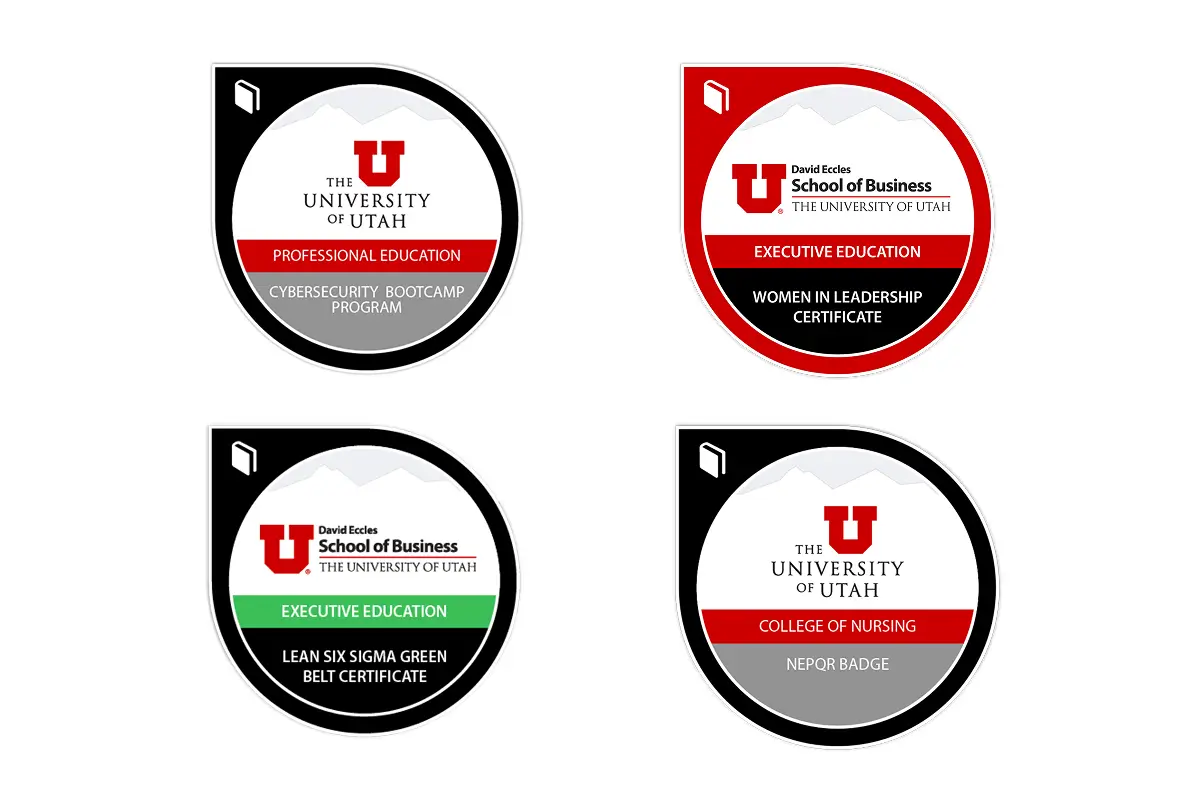
The University of Utah issues badges for a range of accomplishments, from completing a specific professional course to mastering high-value skills.
Students, alumni and lifelong learners can earn and share on platforms like LinkedIn or even incorporate into digital resumes.
Learn more about adding certifications to LinkedIn.
Real-life examples of digital badges for employees: Exemplar Badges from the Badging Commission

The Badging Commission offers a suite of exemplar digital badges spanning industry-aligned skills and outcomes that organizations and educators can use. These real digital badge examples can serve as inspiration for issuers.
Real-life examples of digital badges for employees: HPE technical skills badges, Hewlett Packard Enterprise
HPE offers digital badges once learners complete specific training modules and pass the required assessments with a minimum score.
These digital badges for employees reflect technical competencies in areas such as cloud fundamentals or storage technology. Earning criteria and achievement details are visible via the digital badge URL.
Real-life examples of digital badges for employees: Certified Network Associate (CCNA) digital badge, Cisco

Cisco issues official digital badges for certifications like CCNA, awarded after candidates pass the associated exam and meet performance requirements.
These badges are hosted on a platform where employers and peers can instantly verify the achievement.
Every badge issued through Certifier is saved in a credential digital wallet—a personal online hub where recipients can view, verify and share all their digital credentials in one place.
Editable digital badge design example:
This editable digital badge works well as a standalone credential or as part of a multi-stage course or certification program.
Don’t forget to upload your logo to the template. When recipients share it on social media or professional platforms, your course and organization gain greater recognition. Click the blue button and start editing.
Major organizations issue these types of digital badges. They represent specific achievements and mastery of skills that badge earners can share on professional profiles or digital wallets, offering digital proof of expertise beyond traditional paper certificates.
Real-life digital badge design examples: AWS certified cloud practitioner badges, Amazon Web Services

When learners successfully pass the AWS Certified Cloud or AI Practitioner exam, AWS issues a digital badge that shows foundational AI and cloud computing skills, including essential AWS services and cloud concepts.
These examples of digital badges use a plain background to keep the focus on the earned skills. The organization’s logo is placed at the top for clear issuer recognition.
Real digital badge examples: Microsoft certification
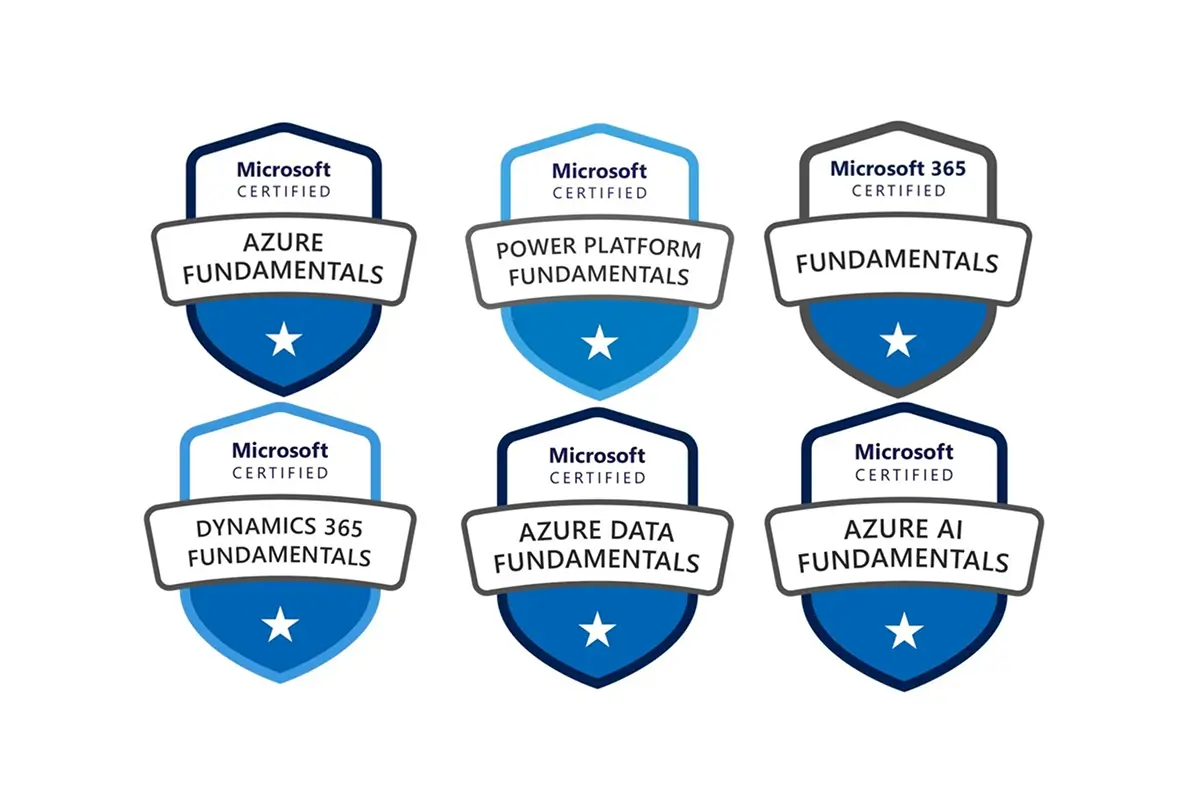
Microsoft awards digital badges to professionals who pass its technical certification exams across areas such as Azure, Microsoft 365 and other technology stacks.
These digital badges for professional development use a consistent design that makes skills easy to spot at a glance. The skill or certification name is placed front and center, helping employers quickly understand what was earned.
Real-life examples of digital badges for professional development: iLEARN Digital Badges
iLEARN issues digital badges across a range of vocational and industry-aligned areas that reflect specific competencies and achievements.
The message sits at the center, so learners and employers quickly see what was earned. These digital badge examples use a clear, round design.
In many fields, digital badges now complement or replace traditional paper certificates to represent professional status or continuing competency in regulated roles. Check out some factual digital badge examples in this field.
Real-life digital badge examples: CAMRT Entry-to-Practice digital badge, Canadian Association of Medical Radiation Technologists
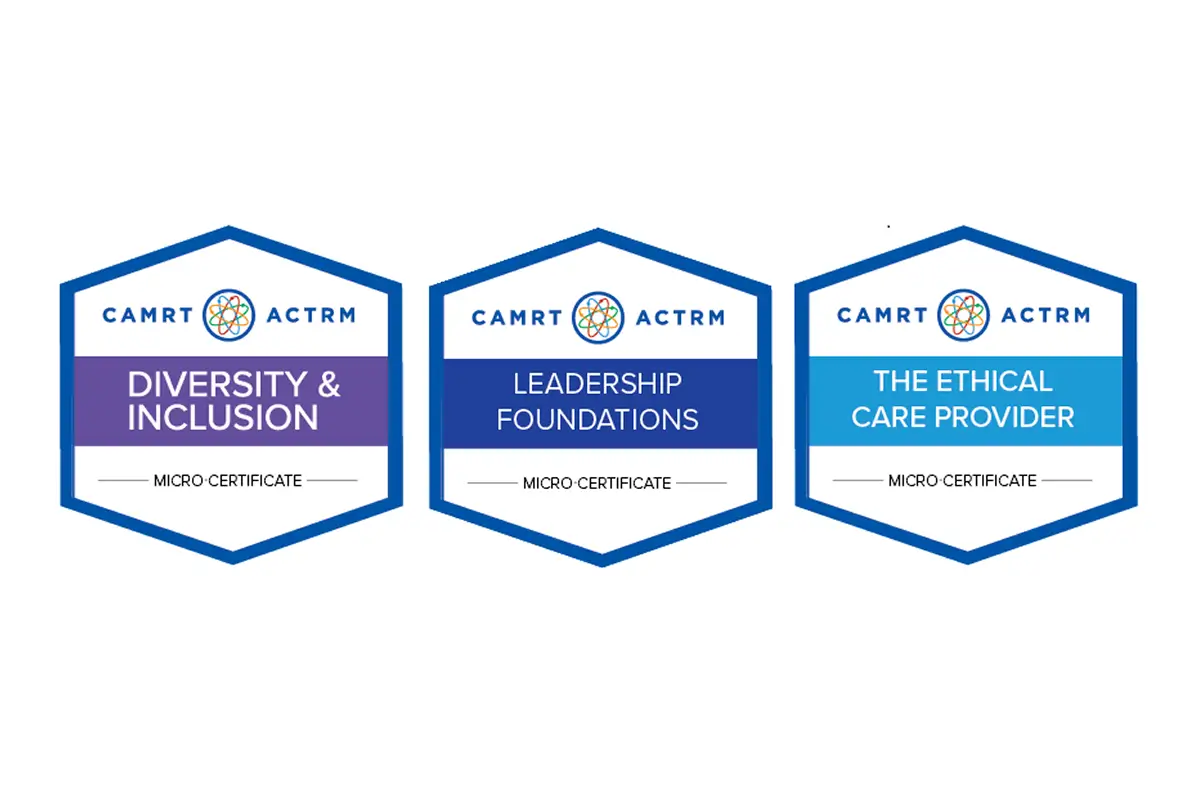
The CAMRT issues digital badges and digital certificates to medical radiation technologists who complete required certification and continuing professional development (CPD) milestones.
Editable digital badge examples: CPR & First Aid digital badges
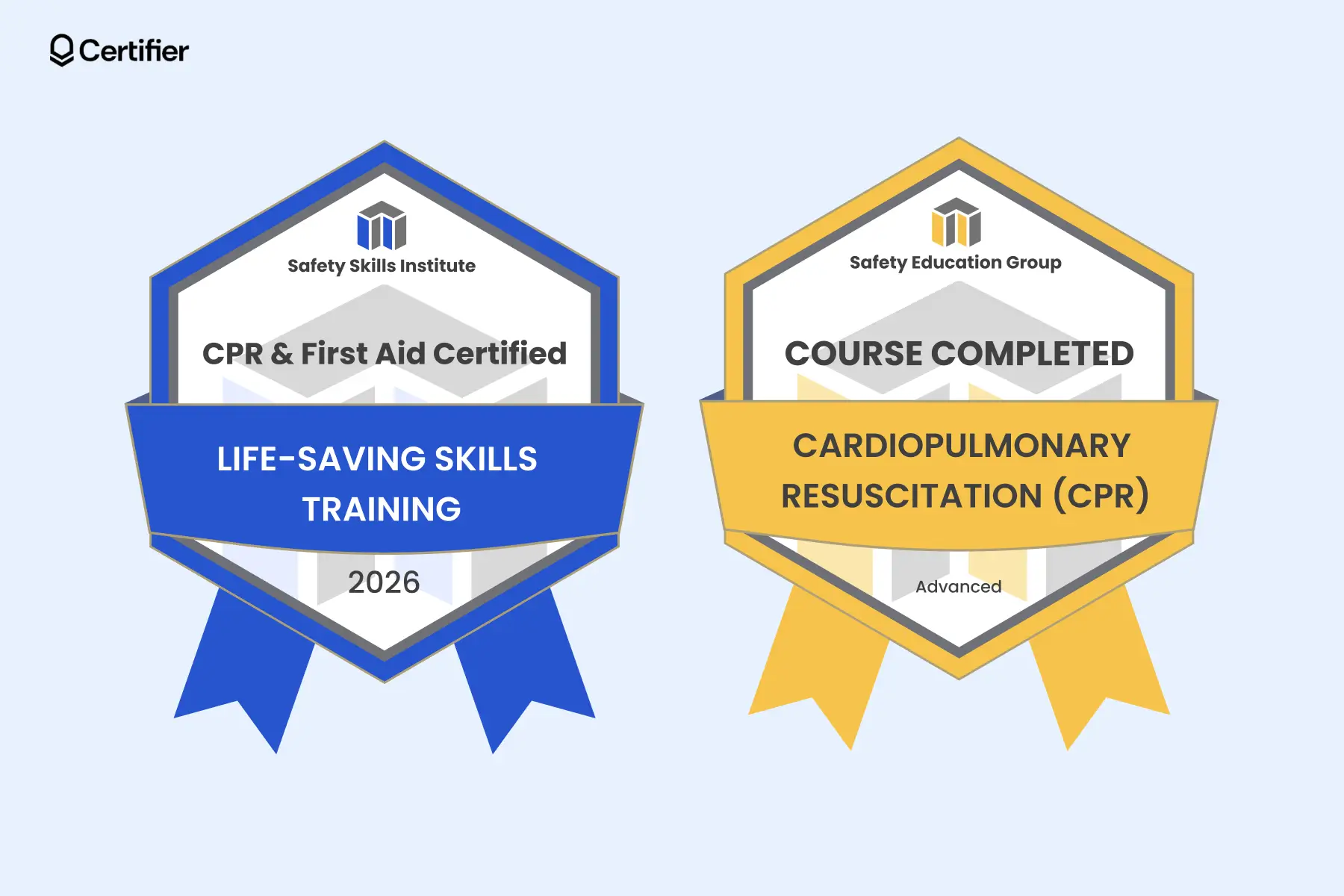
Many certified safety training organizations now issue digital CPR/First Aid badges upon learners' successful completion of courses.
These are editable digital badge templates you can customize in Certifier. The ribbon-style elements and vivid colors catch the eye. You can quickly adjust colors and layout to match your branding and program details.
Editable digital badge examples: Professional associations
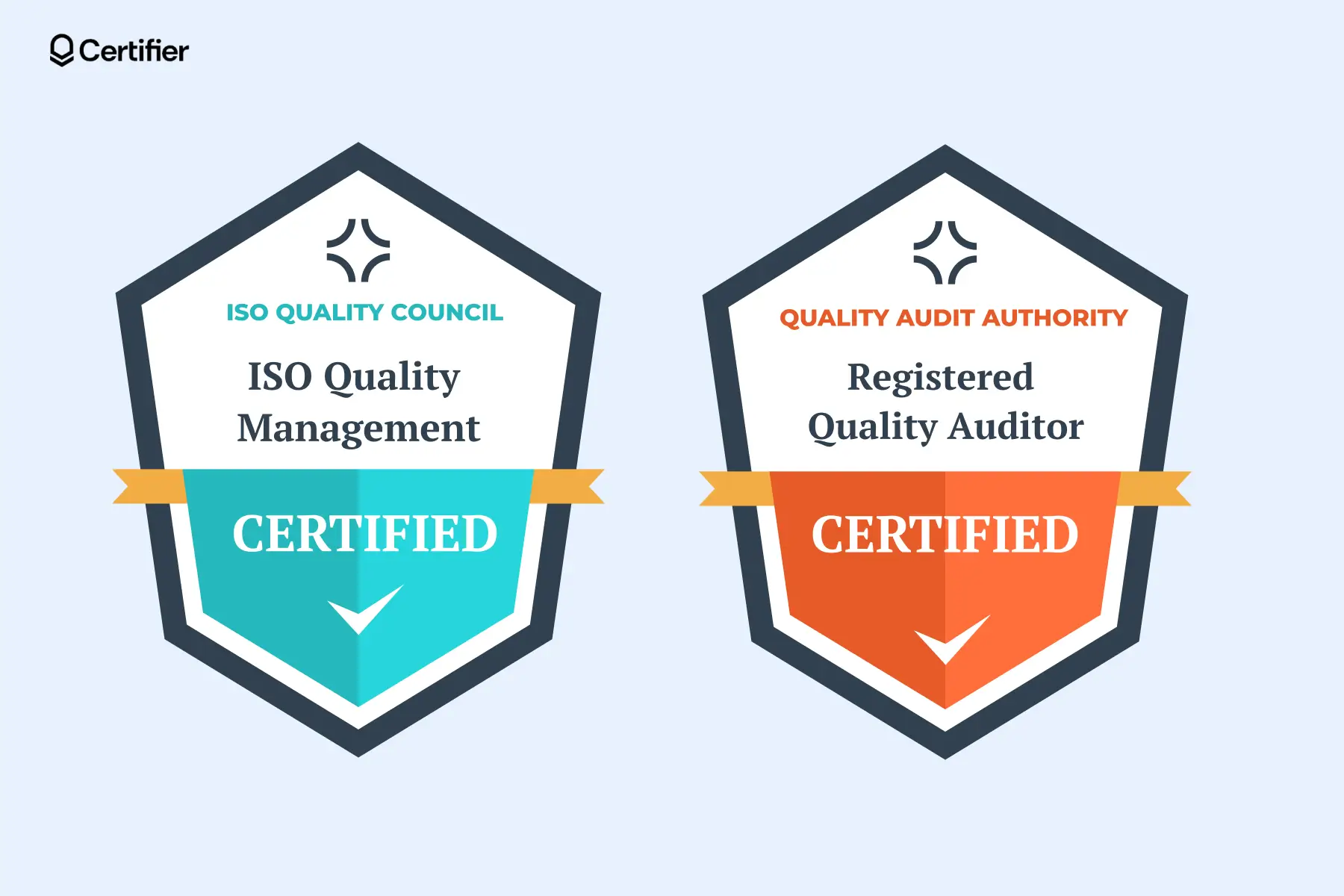
These digital badge examples signal verified expertise in quality and compliance programs. Once assessment requirements are met, they give employers instant proof of professional status.
Open these badges in Certifier to customize the design and issue verifiable credentials.
Community and engagement badges reward active participation or contribution to a learning community, professional network or organisational initiative.
This type of digital badge also supports broader stackable micro-credential strategies by capturing engagement that complements formal credentials.
Real-life digital badges example: Open Badge Factory
This badge is issued to users who actively start using an Open Badge wallet by creating an account and setting it up to manage their credentials. It recognizes the first step in digital credential adoption—collecting, storing and sharing earned badges in one place.
Real-life digital badge design examples: LinkedIn Learning badges
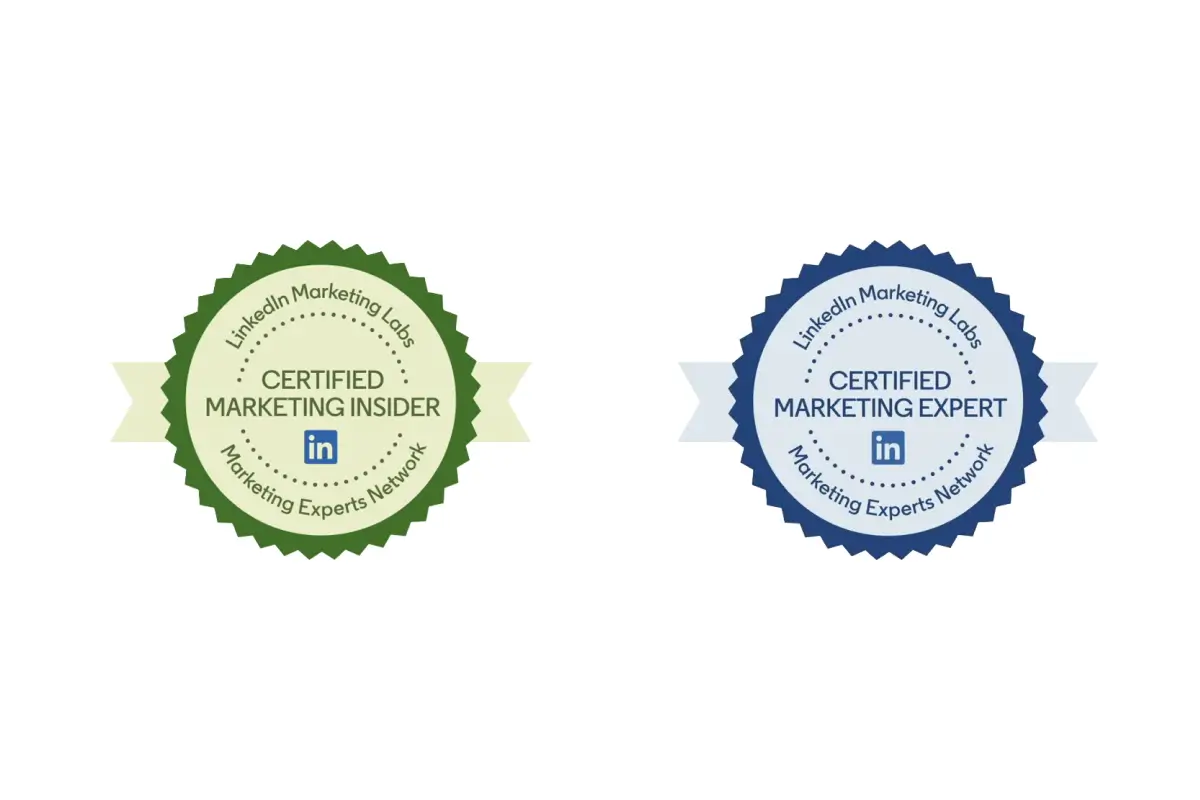
On LinkedIn Learning, learners earn digital badges by completing learning paths or participating in extended professional development challenges.
These LinkedIn digital badge examples become part of a learner’s professional brand, visible not just on LinkedIn profiles but also across social media platforms.
Editable digital badge example: Community distribution
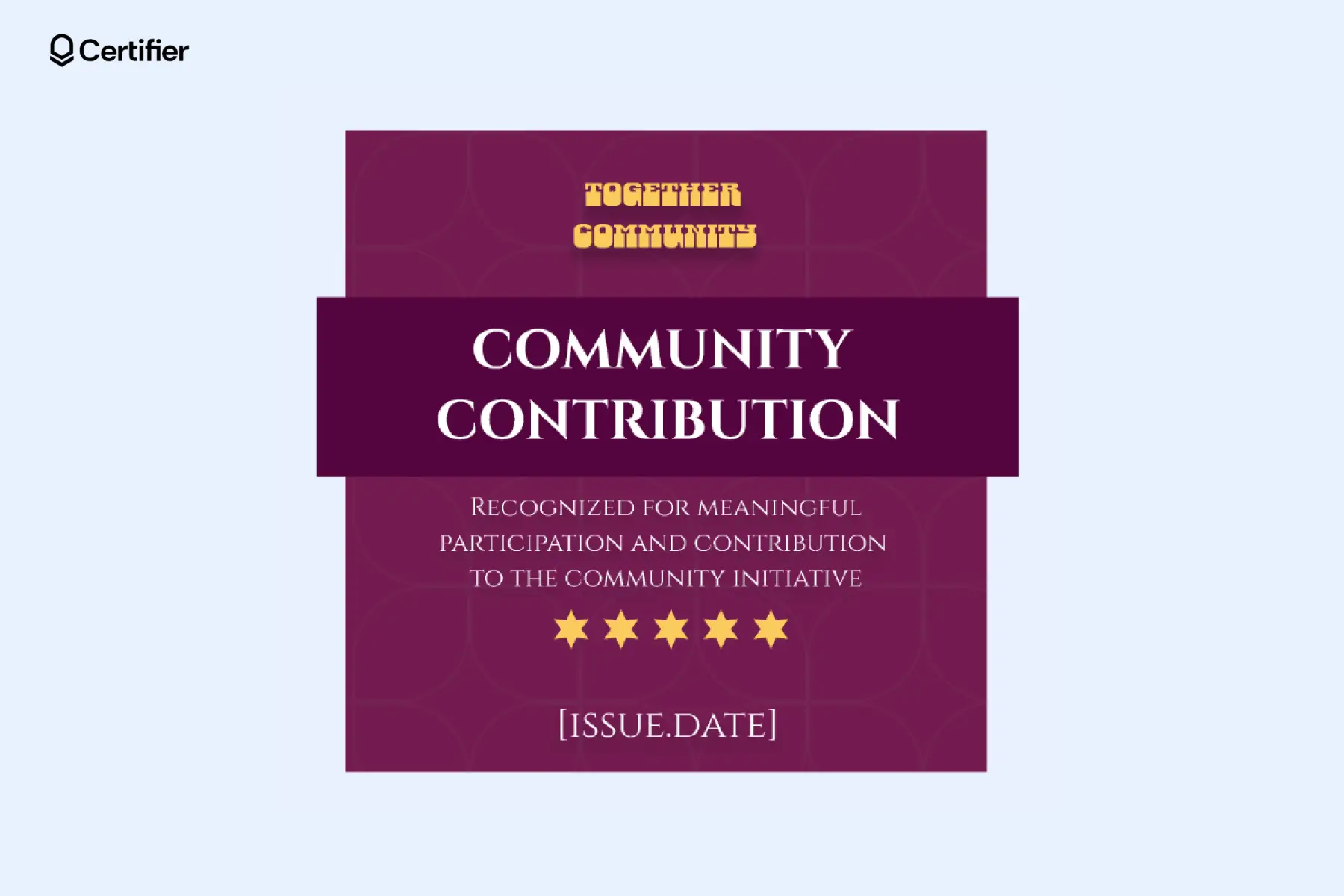
If you want to create a professional badge for community contribution, you can start with this editable template. Customize the title, description, colors, stars and issue date to reflect your initiative. Then add your organization’s branding.
This customizable badge example is ideal for recognizing meaningful participation, volunteer work, or ongoing community involvement.
Not all digital badges land the same way. Some get shared, recognized and remembered. Others quietly disappear. The difference usually comes down to clarity, structure and how the badge is issued—exactly what the practices below are designed to improve.

Use a reliable digital badge platform for issuing. Choose a system that handles verification, storage and sharing without manual work. Certifier is a top pick here.
Design with purpose. Use clear layouts and visual hierarchy so anyone can instantly understand what the badge represents.
Use descriptive skill tags. Add specific skills or competencies (for example, project management or data analysis) to make badges easier to find and stack across platforms.
Connect badges to real outcomes. Tie each badge to measurable learning, participation, or career-relevant achievements.
Choose a verifiable format. Issue badges with embedded metadata, clear issue dates, optional expiration dates and easy sharing to LinkedIn and social platforms. All badges created in Certifier include these elements by default.
Encourage sharing. Design and distribute badges in a way that helps earners share their achievements and promotes your program organically.
These digital badge examples show the main badge types used today: achievement, engagement, professional, industry, community and more. They’re solid benchmarks you can use when planning your own badge program.
Across all of them, the strongest badges share the same basics: a clear purpose, recognizable design, defined skills or criteria and verifiable metadata.
With Certifier, you can issue badges that include all of these essentials from the start. Use ready-made templates, customize them with your branding and issue verifiable digital badges in minutes.
Sign up for Certifier to start creating professional badges.
Still have questions after exploring these digital badge examples? The answers below should clear things up.
Digital badges are verifiable online credentials that recognize achievements and represent specific skills or competencies earned by an individual. They carry embedded information about:
Issuing organization
Earning criteria
Issue date
Optional expiration date
And other metadata.
Yes. Digital badges are valuable because they provide proof of skills and competencies. Employers and peers can easily confirm what was earned and many organizations, universities and industries now use digital badges to complement traditional credentials.
A virtual digital badge is the same as a standard digital badge—a digital credential that exists online rather than on paper.
You can list digital badges on a resume by creating a dedicated “Certifications & Digital Credentials” section or including them under relevant skills and adding each badge’s name along with a clickable link or QR code that points to the badge’s verification page.

- Content Strategy
- Content Writing
- Digital Credentialing
- Keyword Research
- Content Editing
Senior Content Specialist
Valerie leads Certifier's content strategy, creating SEO-optimized guides and resources on digital credentialing best practices for educators and training providers.