
Trusted by:
University of Southern California
Warner Bros.
Volvo
Amazon
Stanford University
Updated: October 16, 2026
11 min read
Choosing an LMS for certificates in 2026? Discover 10 platforms that work well with credentialing tools and learn how to automate certificate delivery after course completion.
Research with AI:
Most course creators hit the same wall. The LMS works fine–learners progress through modules, complete quizzes, finish the course.
Then what? Someone exports a spreadsheet, opens a PDF editor, types in names one by one and emails them out manually. Or worse, the platform spits out a generic result that looks like it was designed in 2009.
The problem isn't the tool. It's that most LMS platforms weren't built with certificate issuance in mind. They were built for learning delivery. Certificates are usually an afterthought, a checkbox feature with a basic template and no automation.
The administrative burden of handling credentials manually falls on administrators and managers who have better things to do.
That's why the question isn't "which is the best LMS." It's: which one connects cleanly to a proper credentialing tool, so you can issue certificates automatically the moment someone finishes your courses.
This guide covers 10 LMS for certificates that work well in that setup and how to connect each one to Certifier to automate the process.
Most LMS platforms offer native certificates, but they're limited in design, verification and automation.
The smarter setup is LMS for learning delivery + Certifier for certificate issuance, connected natively or externally, via Zapier, webhook, or API.
LearnWorlds leads the list for flexibility and user journey control, but the right choice depends on your scale and use case.
Certifier connects with all 10 platforms on this list and issues the first 250 credentials free.

Most LMS platforms include some form of native certificate functionality. But "certificate" means different things depending on the platform. In practice, native LMS certificates are typically static PDFs with a name and a date.
There's usually a certificate builder with limited certificate design options, no way to add verification (QR codes, credential URLs) and no bulk issuance if you're running cohorts. Compare Certifier with native LearnUpon certificates as an example.
For a single course with a handful of students, it works. For anything at scale, corporate employee training programs, online academies, certifications businesses, it breaks down quickly.
The architecture that actually works is simpler than it sounds: use your LMS to run the course and use a dedicated tool like Certifier to handle the certificate automatically. You just connect Certifier to your LMS directly through the native integration (where available), or through alternatives like Zapier, a webhook, or an API.
A learner reaches completion, the trigger fires and a branded, verifiable certificate lands in their inbox, without anyone manually doing anything.
That's the setup this list is built around.
These are the LMS platforms worth considering if certificates matter in your workflow.
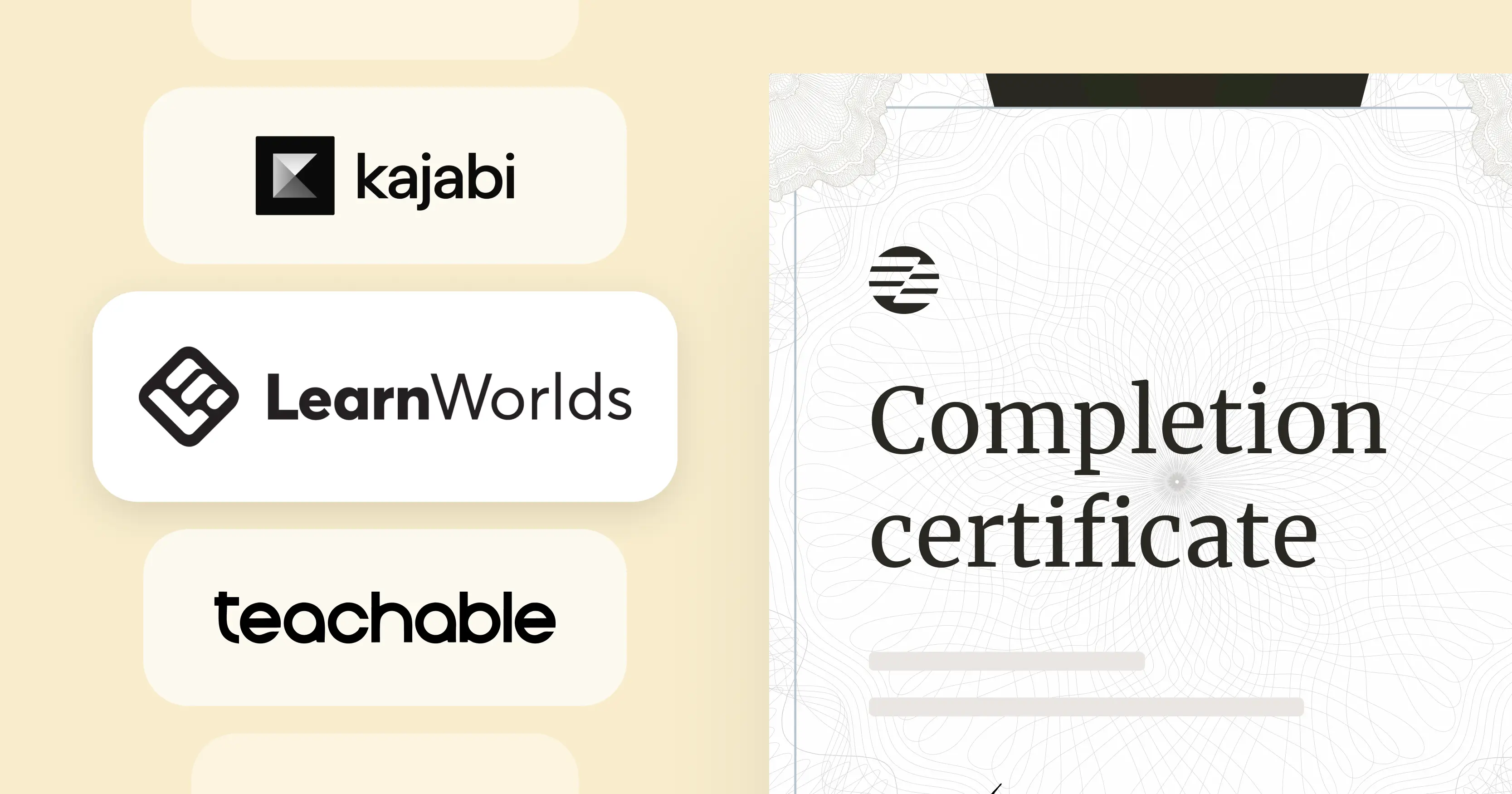
LearnWorlds is a complete learning experience platform built for course creators and training businesses that take the entire learner journey seriously, from enrollment through to post-completion.
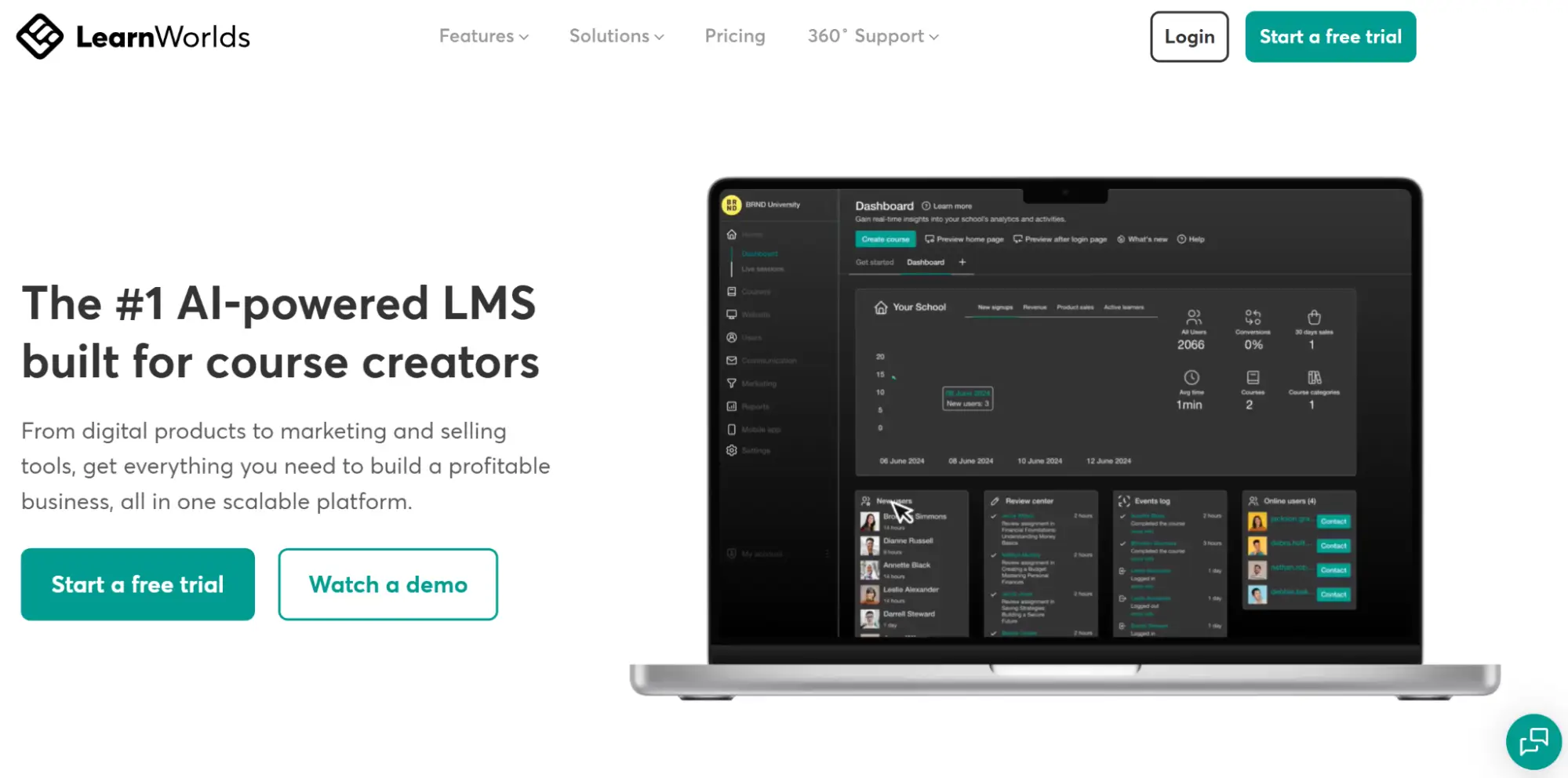
It's designed to let you shape what happens at every stage of the experience. That design philosophy is what makes it particularly strong for certificate workflows.
Because LearnWorlds gives you precise control over course structure and completion conditions, you can define exactly what "done" means–finishing every module, passing a final assessment, hitting a minimum engagement threshold–and map a course completion trigger to that specific event.
There's no ambiguity in the completion data, which makes downstream automation clean and reliable.
Creating certificates in Certifier and connecting them to LearnWorlds is where the setup gets interesting. Zapier is available from the Pro Trainer plan upward, while API and webhook access are included on the Learning Center and High Volume & Corporate plans.
The Zapier connection to Certifier follows the standard pattern: course completed → Certifier issues branded certificate → learner receives it automatically.
For businesses where the certificate is a meaningful part of the product experience, not just an add-on, that level of control is hard to match.
Best for: online course businesses, professional training academies, membership platforms where the certificate is part of the value proposition.
Teachable is one of the original creator-focused LMS platforms–large user base, intuitive setup and a straightforward path from course idea to published product. Its native certificate feature exists, but it's minimal: basic certificate templates, limited customization, no verification layer.
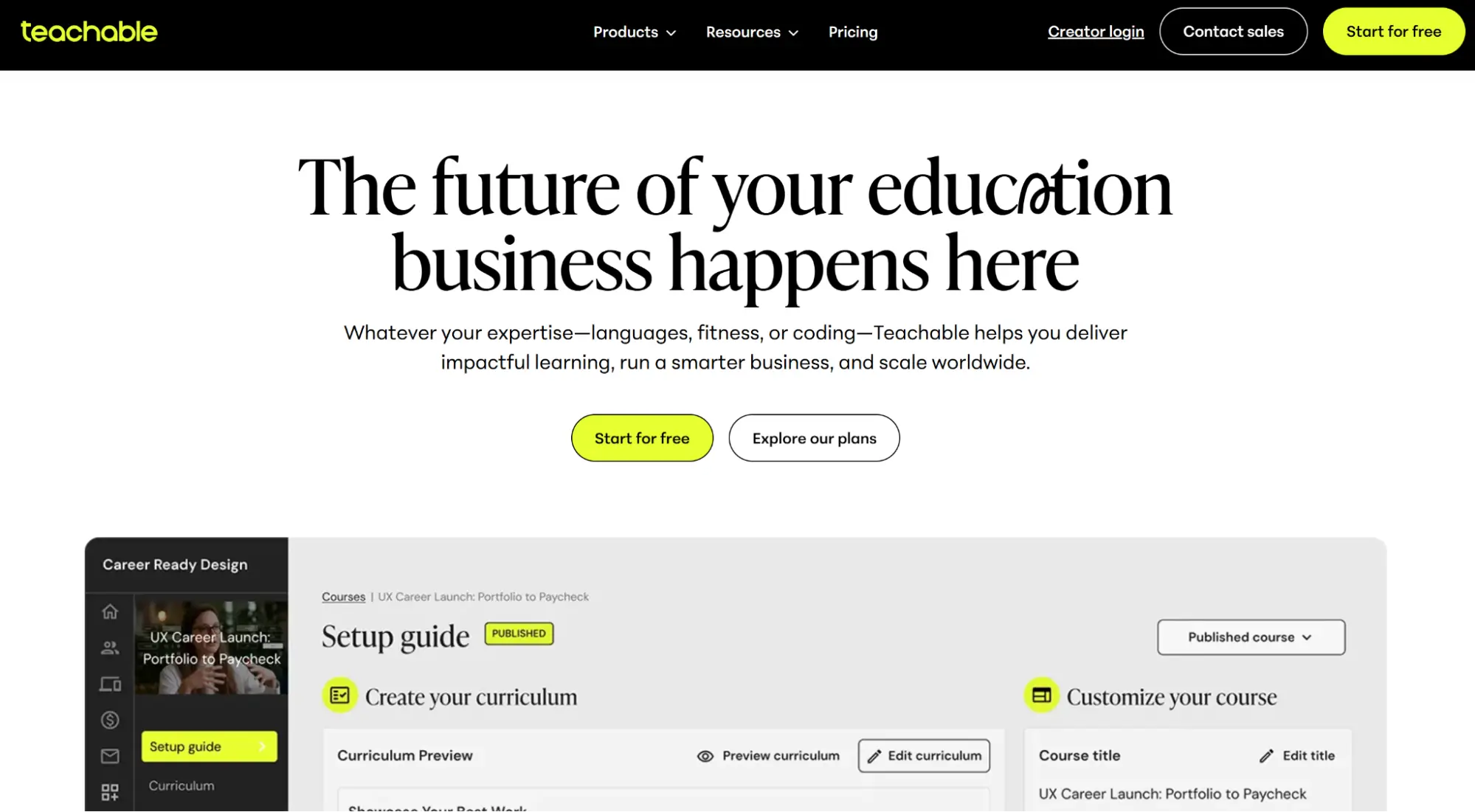
Where Teachable works well for certificates is as a trigger source. With the native Teachable to Certifier integration, you just connect your account to the Certifier dashboard, select course completion as a trigger, and Certifier takes care of the rest.
Learner progress events are similarly clearly defined and easy to connect via Zapier.
Once you're set up, the workflow runs automatically: learner finishes course → the native or Zapier integration fires → Certifier issues a branded, verifiable certificate.
Setup takes about 20 minutes and runs unattended after that. Instructors appreciate that the entire post-completion experience–email, credential, wallet–is handled without any manual steps on their end.
Best for: individual creators and coaches with straightforward course structures and moderate volume.
Watch how to create professional certificates with the powerful duo: Certifier + Teachable:
Thinkific sits in solid mid-market territory. It’s more customizable than Teachable, with a clean content builder and a growing app marketplace.

It has its own certificate feature, but like most native options, it maxes out quickly on design and verification.
Timed quizzes, assessments and completion gates are all well-supported, which means the completion data feeding into your certificate workflow is reliable. Fortunately, you can connect Thinkific to Certifier directly through the Certifier dashboard or with the help of Zapier.
The native Thinkific to Certifier integration works cleanly. You select the trigger event in Thinkific, configure the Certifier "Issue Credential" action, map the fields, run a test. Done.
If you're already using Thinkific for course delivery and want certificates that look and function like a professional credential, this is the straightforward path.
Best for: growing course businesses and small training companies that want more recognition without switching platforms.
Watch how easy it is to issue and deliver certificates using Certifier and Thinkific:
Kajabi is an all-in-one platform–LMS, email marketing, landing pages, CRM, checkout–which makes it appealing for creators who want to manage everything from one place.

It does have a native certificate feature and it's more capable than most: you can upload a logo, set completion conditions and trigger automated notifications to learners.
But the certificate design options are constrained and there's no verification or credential sharing built in.
Certifier fills that gap directly. The Kajabi–Certifier integration lets you trigger certificate issuance off Kajabi completion events or assessment passes and the credential that comes out the other end is fully branded, verifiable via QR code and shareable on LinkedIn.
For Kajabi users running commerce around their courses, where the certificate is part of a premium experience, that's a meaningful upgrade.
Best for: digital product creators and online educators running their entire business on one platform.
See the workflow setup for the Kajabi–Certifier integration and how the native and Zapier connections compare.
Learn the process of issuing Kajabi certificates of completion using Certifier:
TalentLMS is built for corporate and team training: compliance programs, onboarding, skills development, internal certification tracks.
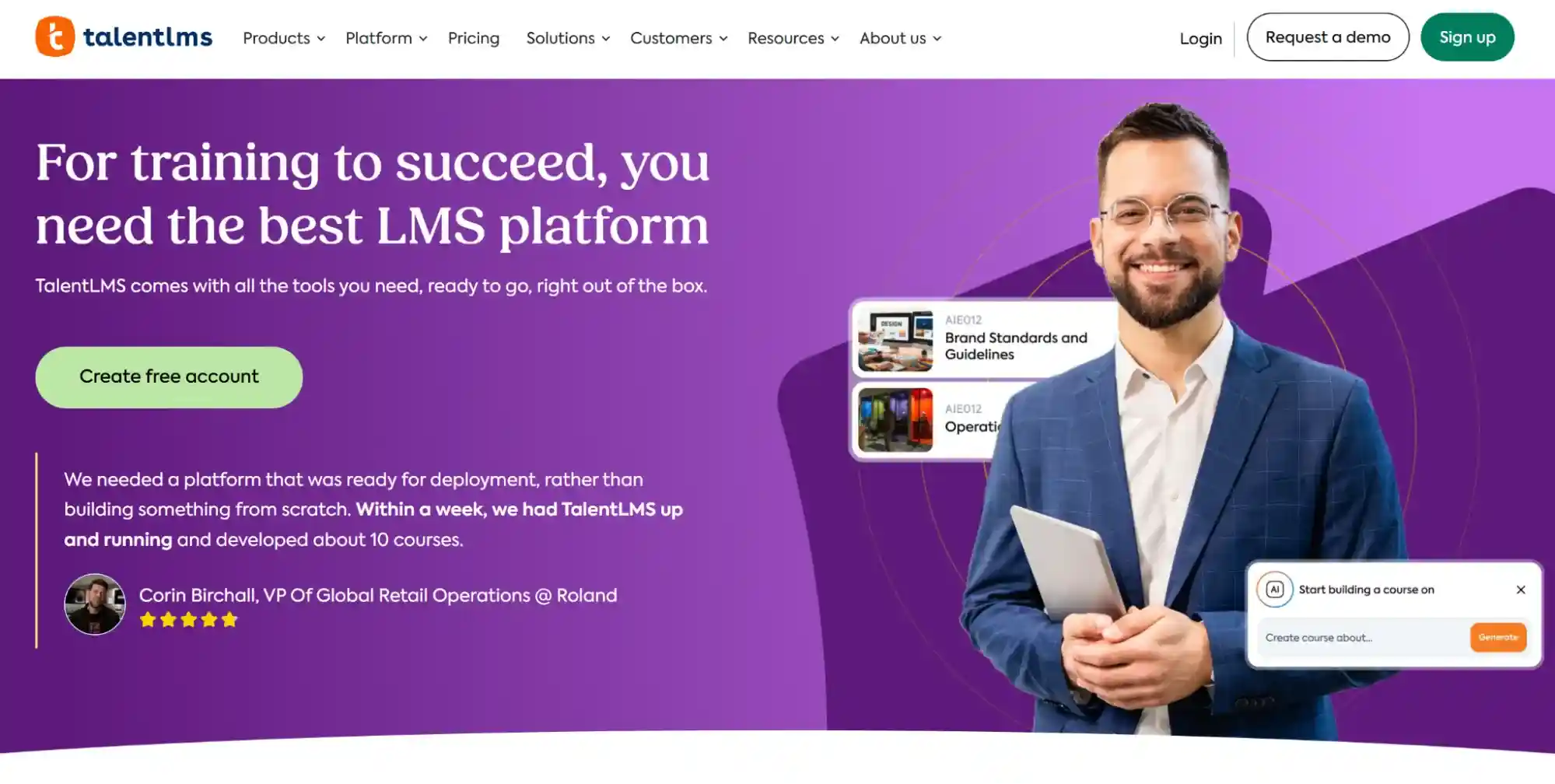
It has solid native certificate functionality: basic templates, track progress tools, SCORM support and some customization. For internal use cases where the certificate doesn't need to be shared or verified externally, the built-in option is often enough.
Where TalentLMS gets interesting for certificates is its REST API and Zapier support. For organizations that need professional credentials, especially for external training programs or partner training, connecting TalentLMS to Certifier via Zapier or API gives you a proper credentialing layer without replacing the LMS.
Completion data flows from TalentLMS, digital badges and certificates are issued through Certifier and recipients get credentials they can share and verify.
Best for: HR teams, L&D departments and compliance training programs with mixed internal/external audiences.
LearnDash is the WordPress-native LMS: maximum flexibility, full data ownership and deep integration with the broader WP ecosystem.
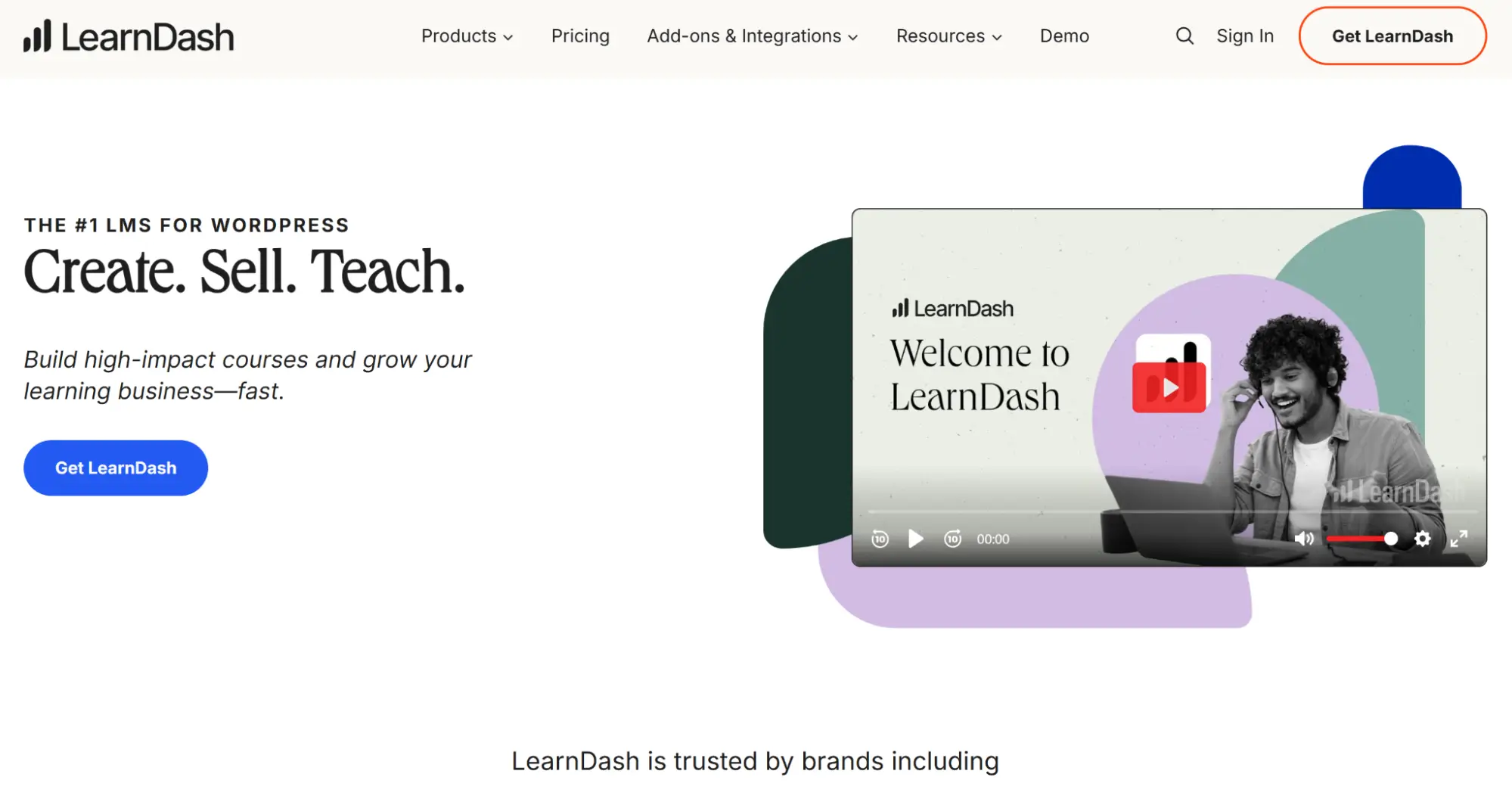
Its native certificate system requires manual code via shortcodes, offers no preview before attaching to a course and has no bulk delivery option. It works, but it's clearly built for developers, not course creators.
That said, LearnDash supports exams, drip content and multi-step learning paths natively, which gives you precise completion triggers to build on.
The LearnDash–Certifier connection can be set up via Zapier (no-code) or through direct API integration for more complex workflows–multi-step learning paths, conditional issuance, cohort-based programs.
Additionally, LearnDash's tight WP integration means the completion hooks are accessible at a low level, giving developers full control over when and how Certifier fires.
Either way, the certificate that comes out is a proper credential: branded, verifiable, shareable and issued automatically on completion.
Best for: developers, established WordPress sites and training businesses that want full ownership of their course infrastructure.
Moodle is the backbone of institutional e-learning: universities, government training programs, large enterprises. It's open-source, highly extensible and supports multiple languages natively, which matters for global programs. 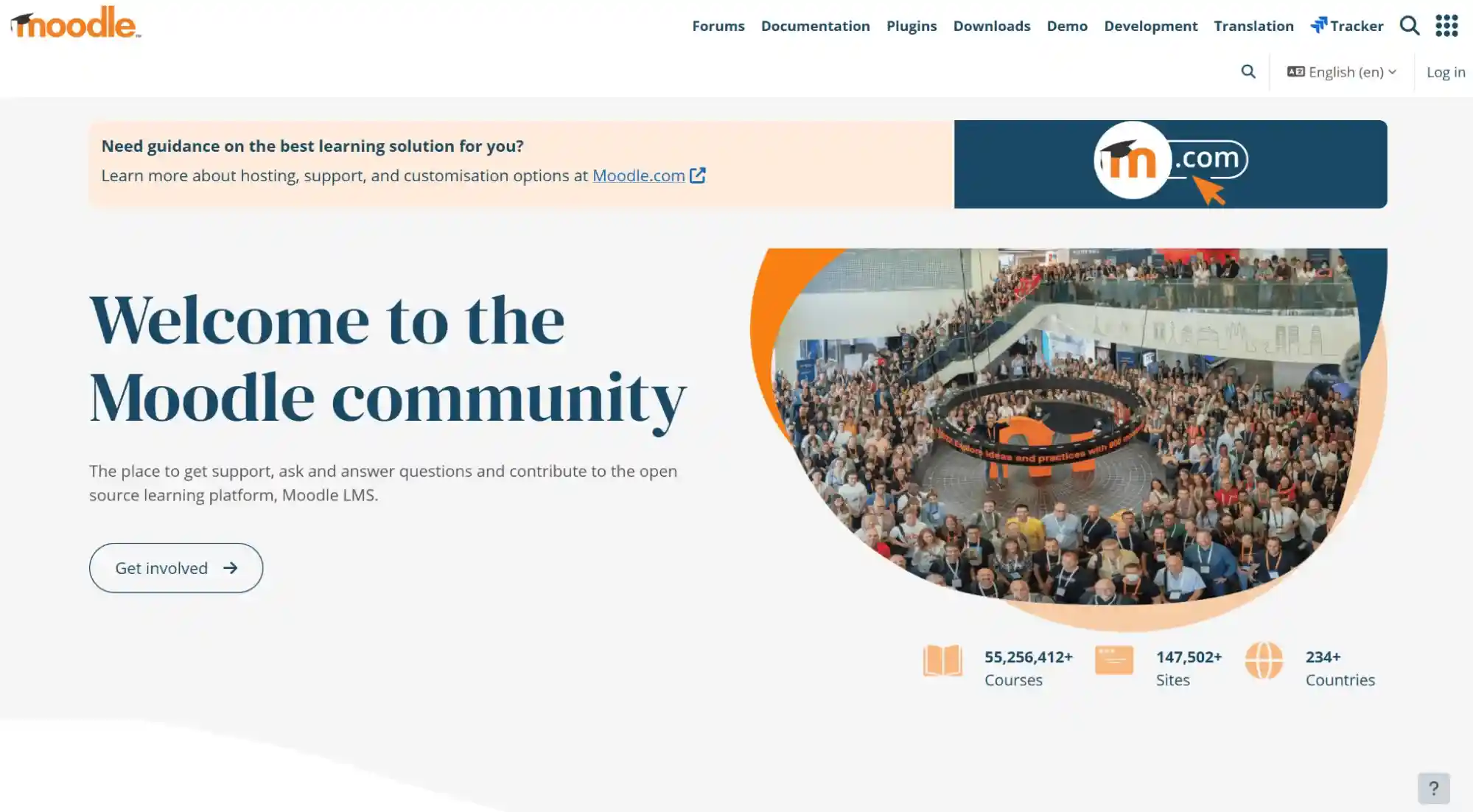
Native badges and certificate modules exist and for users already deep in the Moodle ecosystem, they may be sufficient for basic needs.
For external credentialing, certificates that need to look professional, carry verification and be shareable outside the LMS–the integration path requires more technical setup than the platforms above.
Moodle's REST API is capable and Zapier connectors exist through third-party bridges, but expect to involve a developer for anything beyond basic workflows.
Note that Moodle's maintenance and configuration typically sits with an IT or development team rather than L&D staff, so factor that into your setup timeline.
The payoff is significant. Certifier-issued credentials work at scale and Moodle's completion tracking is precise enough to trigger them reliably.
Best for: universities, large enterprises and technically resourced teams already invested in the Moodle ecosystem.
Podia is a lightweight all-in-one platform for digital products, communities and simple courses. It's not primarily an LMS, it's closer to a digital storefront with course functionality built in.
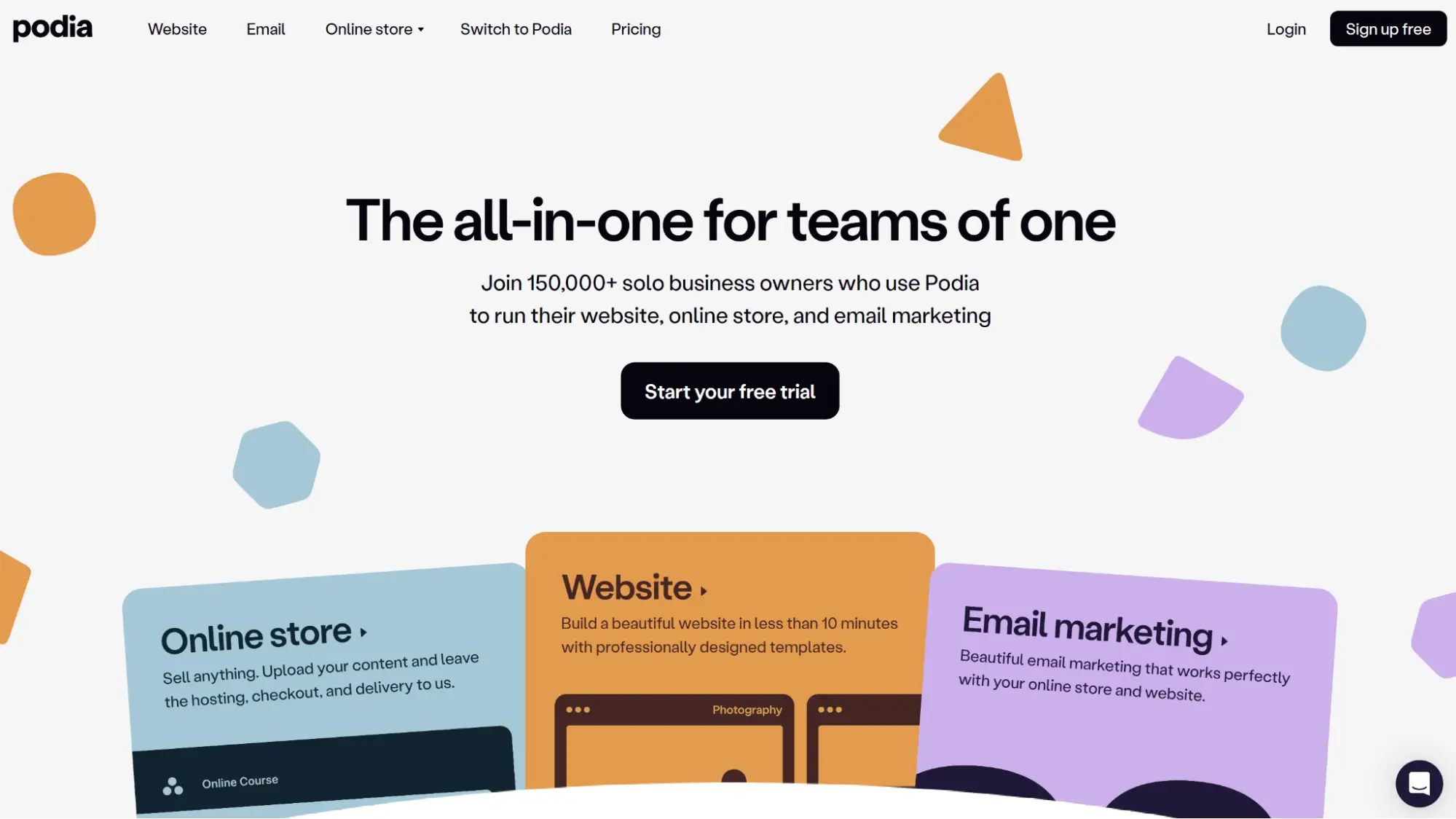
Native certificate support is minimal and there's no interactive assessment layer or advanced development path tooling. What it does offer is simplicity, which is often exactly what smaller operations need.
Zapier integration is available and sufficient for a basic certificate workflow: course completed → Certifier issues course credential → learner receives it.
The triggers are more limited than dedicated LMS platforms, but for small-scale programs–a single course, a coaching cohort, a community with a learning component–it's a workable setup.
Podia is a solid orientation point for creators who want to create and sell without managing a complex platform. Connecting it to Certifier via Zapier is the clearest upgrade path when certificates start to matter.
Best for: solo creators, digital product businesses and community-led learning at low-to-moderate volume.
Read the guide on how to create a course certificate and how to automate this process.
Absorb is enterprise-grade–strong on reporting, admin controls and scalability. It's built for extended enterprise training: partner certification programs, customer education, large-scale internal L&D.
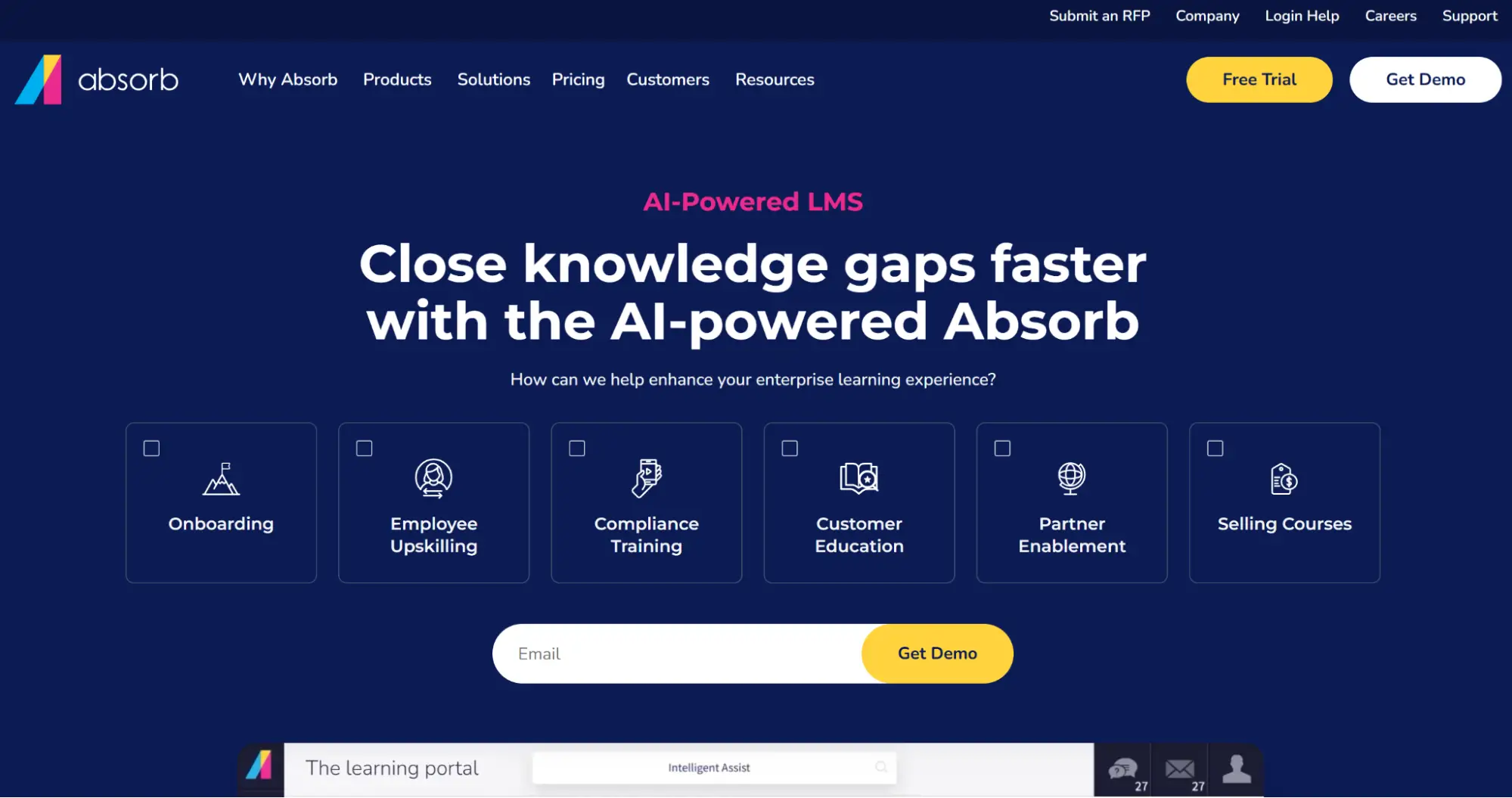
The platform supports xAPI and SCORM, has detailed completion tracking and generates clean, reliable data for downstream automation.
Employees and customers can be managed in separate learning environments within the same instance, which is useful for organizations running both internal and external programs.
That data quality is what makes Absorb a solid foundation for certificate workflows. The REST API is well-documented and Absorb supports webhooks natively, including course completion events, which means you can trigger Certifier issuance in near real-time without polling.
There's no native Zapier app for Absorb. The recommended path is direct API or webhook integration. For enterprise teams, that's not a limitation. It's the right architecture for programs running at this system level.
Best for: mid-to-large enterprises, extended enterprise programs and organizations with dedicated L&D operations.
Create and Send Digital Credentials
Docebo is an AI-enhanced enterprise LMS with strong social learning features and an event-driven architecture that makes it one of the cleaner platforms to connect to external tools.
Its analytics are particularly strong. Managers and L&D leads can track engagement, completion rates and assessment results across complex learning paths in real time.
The tool is used by large organizations running programs that span employees, partners and customers in a single platform.
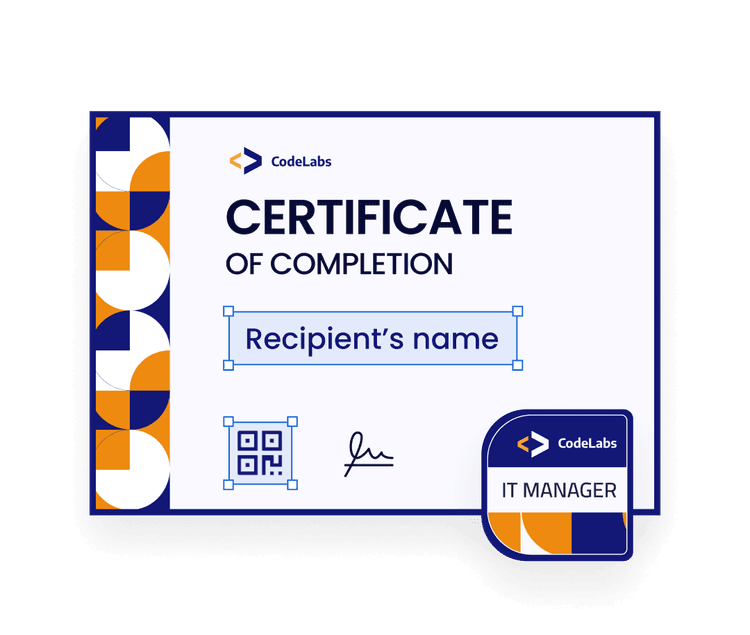
Docebo also has built-in certificate creation and automated issuance, although its design options rely on HTML-based formatting, and certificates are primarily delivered as PDFs.
For teams needing more flexibility, Docebo integrates natively with Certifier. Connecting your accounts lets you use Certifier’s drag-and-drop certificate editor to design complex, on-brand certificates with greater freedom.
You get the same certificate expiration capabilities while using Certifier’s credentials, plus the option to issue multi-page certificates and badges with public verification — all without replacing your LMS or relying on third-party connectors.
Zapier workflows are also possible through API authentication, although there's no native Docebo app in its marketplace. Such alternatives require additional setup but remains an option for teams comfortable with custom integrations.
Completion events trigger reliably either way and the data supports personalized certificate attributes at scale. A new template in Certifier can be mapped to any Docebo course or learning path regardless of your chosen setup.
Best for: large organizations running multi-format learning programs where credentials need to function beyond the LMS.
The integration tier that makes sense depends on your volume and how much custom logic your workflow needs.

Zapier is the right starting point for most setups because no code is required
The typical workflow takes under 30 minutes to configure
The logic is simple: LMS fires a "course completed" trigger, Zapier passes the data to Certifier and Certifier issues and delivers the certificate
You can automate certificate delivery via Zapier across all the major LMS platforms–Teachable, Thinkific, Kajabi, TalentLMS, LearnDash and more
Support for most of these is native on the Zapier side, meaning the trigger events are pre-built and don't require custom configuration
If the certificate tool has a native integration for your LMS, the setup is typically similar to Zapier but doesn't require an additional third-party subscription for a connector platform.
Webhooks are faster and more reliable for higher-volume programs
Most mid-tier and above LMS platforms support outbound webhooks on completion events
The certificate is issued in near real-time without Zapier as an intermediary, which reduces latency and eliminates a potential failure point
You can also add a background image to your certifier template at this stage
Since the webhook carries full completion data, dynamic personalization applies automatically
Absorb LMS is a good example of a platform where webhooks are the primary recommended integration path
Direct API integration is the right choice for complex workflows—conditional issuance, multi-step learning paths, bulk programs or certificate logic that depends on more than a single completion event
It requires development time, but the result is a workflow that scales cleanly and handles edge cases that no-code tools can't
Refer to the Certifier's API documentation for endpoint specs and authentication requirements
CSV is the fallback for platforms without real-time trigger support or for programs where issuance happens in batches rather than continuously
You export your completion data from the LMS, upload it to Certifier and issue certificates in bulk
This is not automated, but it is functional for lower-frequency programs and works well for print runs
If you need physical certificates alongside digital ones, a CSV batch gives you full control over the output.
The key point: the integration method doesn't have to be perfect from day one. Most teams start with Zapier, validate the workflow and move to webhooks or API as revenue and volume grow.
Not all certificate requirements are the same. But if certificates are a meaningful part of what your learners get. Something they'll share, refer back to or use professionally. These are the features worth checking against your LMS and credentialing setup.

Automated issuance on completion
The certificate should fire automatically when the learner finishes, not when someone gets around to exporting a spreadsheet. Manual steps don't scale and introduce delays that undermine the post-completion experience. A good system handles this invisibly, so your team can focus on creation rather than logistics.
A certificate with the learner's name, the course title, the date and a unique credential ID is a credential. A PDF certificate with a blank name field filled in is just a document.
Dynamic attributes in certificates–pulled automatically from completion data–are what make the difference and Certifier lets you customize this across bulk programs without any manual editing.
You can maintain a single master template and have it produce hundreds of unique, personalized certificates in one go.
Verifiability
A certificate that can be verified matters more and more as credentials move online. A QR code certificate or unique URL that confirms authenticity turns a certificate into something genuinely useful beyond the job it was issued for.
If you're running cohorts, corporate programs or any kind of batch-based credentialing, one-by-one issuance isn't viable. The ability to upload a recipient list and issue hundreds of certificates in one action is a baseline requirement, not a premium feature.
This is especially true for employee training and compliance programs where volume is high and timelines are tight.
Tracking and analytics
Knowing who received a certificate, whether they opened it, whether they shared it on LinkedIn–these credential insights tells you whether your credentialing program is actually driving engagement and helps you improve it over time.
Instructors and administrators can use this to identify which courses are generating the most credential activity and which need stronger completion incentives.
Payment processing (where relevant)
If you're selling certifications or gating credentials behind a paid course, make sure your LMS and credentialing setup are aligned. Not every platform handles payment processing at the course level cleanly.
Note this before committing to a stack if commerce is part of your model. Additionally, check whether your platform supports interactive content like timed quizzes and exams as completion gates, since these affect both learner progress and the reliability of your certificate triggers.
The LMS you choose sets the ceiling on how clean your certificate workflow can be. But all 10 platforms on this list can be connected to a proper credentialing tool with the right integrations in place.
If you want to see what that looks like in practice, Certifier issues the first 250 credentials free. No commitment required to test the workflow with your current LMS. Sign up for Certifier right now.
An LMS certification is a general name for a certificate issued after a learner completes a course, assessment, or learning path that's part of a learning management system.
Many LMS platforms can generate basic completion certificates, but they're often limited in terms of automation features, verification capabilities, and design. This is why we recommend using LMS for course delivery and a separate credentialing tool, like Certifier, for issuing professional certificates.
For our guide, the top five LMS platforms for certificate-based workflows that stood out to us are LearnWorlds, Teachable, Thinkific, Kajabi, and TalentLMS.
LearnWorlds leads the list overall, while the others each fit different use cases such as creator courses, growing training businesses, all-in-one digital product businesses, and corporate training.
There's no standalone "Google LMS" product, although there is a Google Classroom, often referred to as such.
Google Classroom is available at no extra cost for institutions eligible for Google Workspace for Education Fundamentals, as well as for individual Google accounts. Personal accounts do have some limitations as opposed to paid education tiers.
Our top pick for the best LMS for certificate workflows is LearnWorlds due to its extensive control over course structure, automations, and completion rules.
The best setup for certification is an LMS that fits all your needs and a dedicated credential platform that can enable easy and secure credential management at scale.

- SaaS Growth
- Digital Credentials
- APIs
- Product Marketing
- Company Operations
CEO and Co-Founder
Sergey is CEO and Co-Founder of Certifier, a Forbes 30 Under 30 honoree building digital credential infrastructure for 2,000+ organizations worldwide and shaping the future of credentialing.