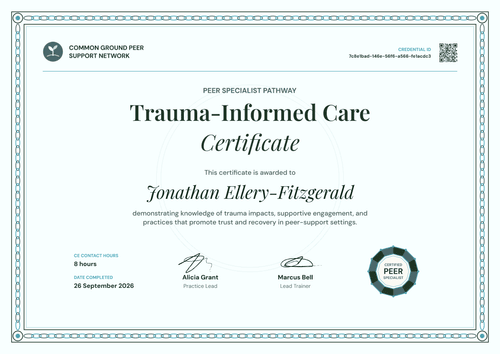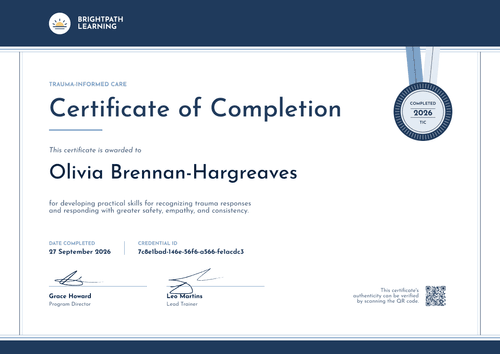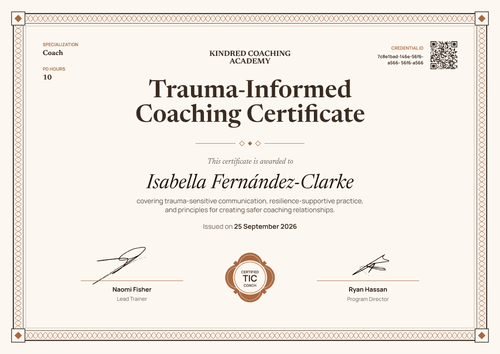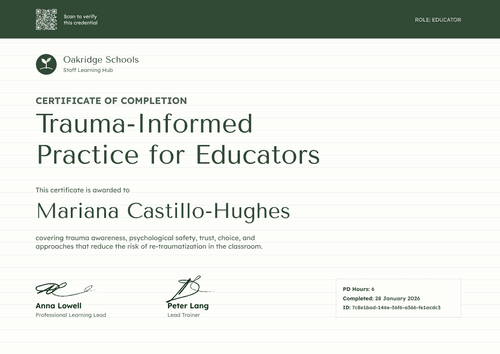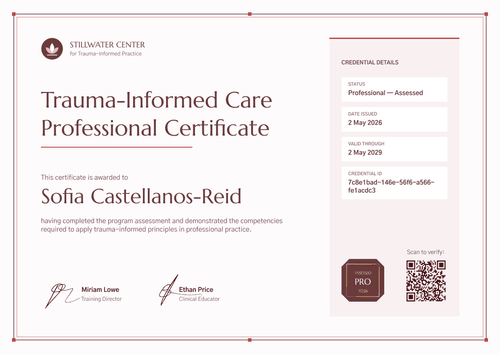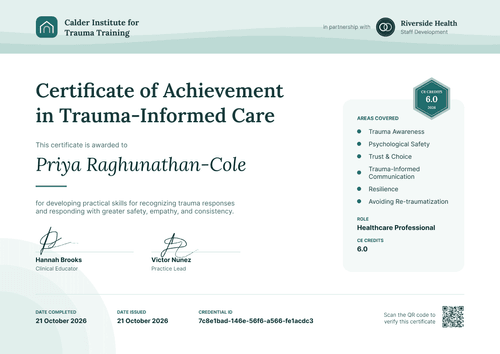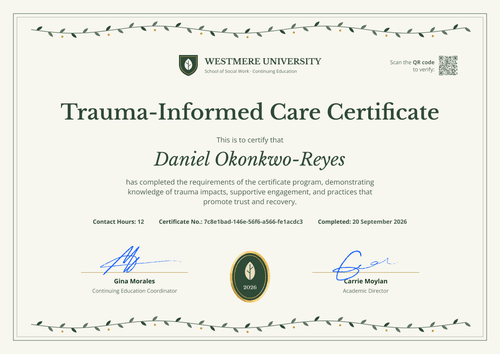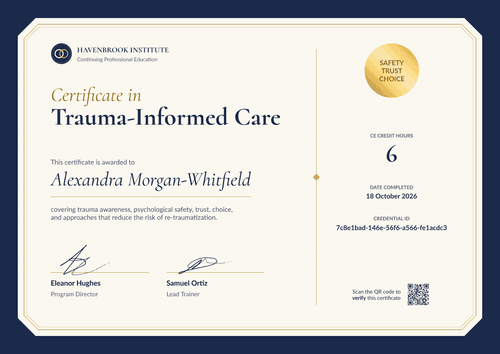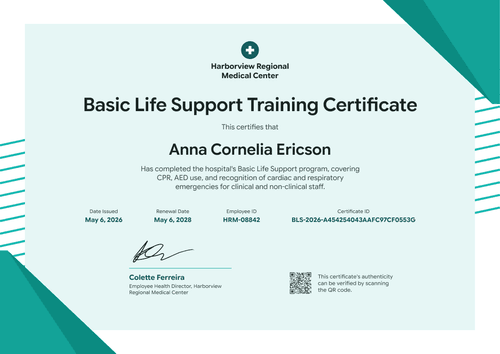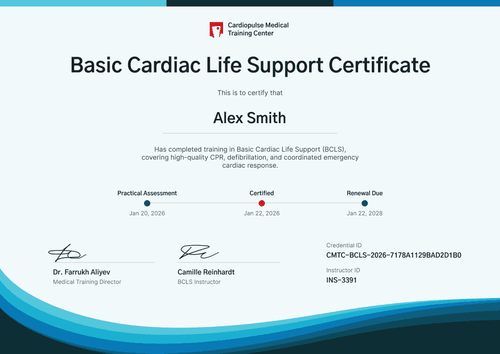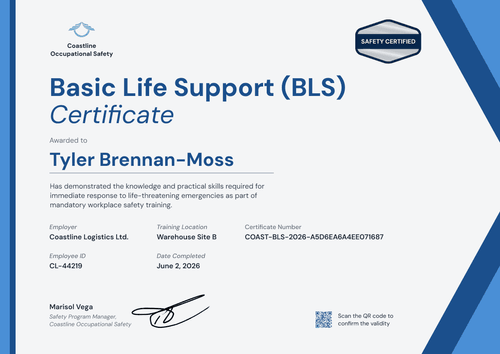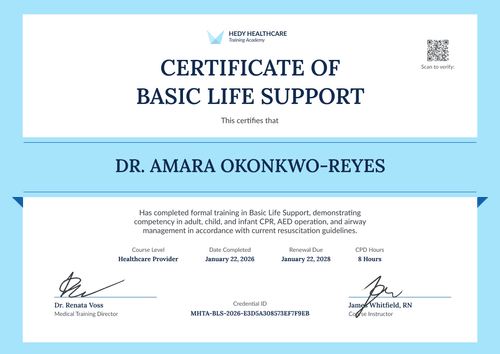

Community Trauma-Informed Care Certificate
Community agencies and social service networks can use this certificate to recognize caseworkers, outreach staff, and volunteers who complete trauma-informed care training. It lists their role and contact hours.
Customize this template for free
Email and export in bulk
Track recipient engagement
Download in
Don't have Certifier account? Sign up
Professional lavender community trauma-informed care certificate template
This free community trauma-informed care certificate shows that a caseworker, outreach worker, or volunteer completed your training. It's meant for social service agencies and community learning networks that train people working directly with families and individuals in community settings.
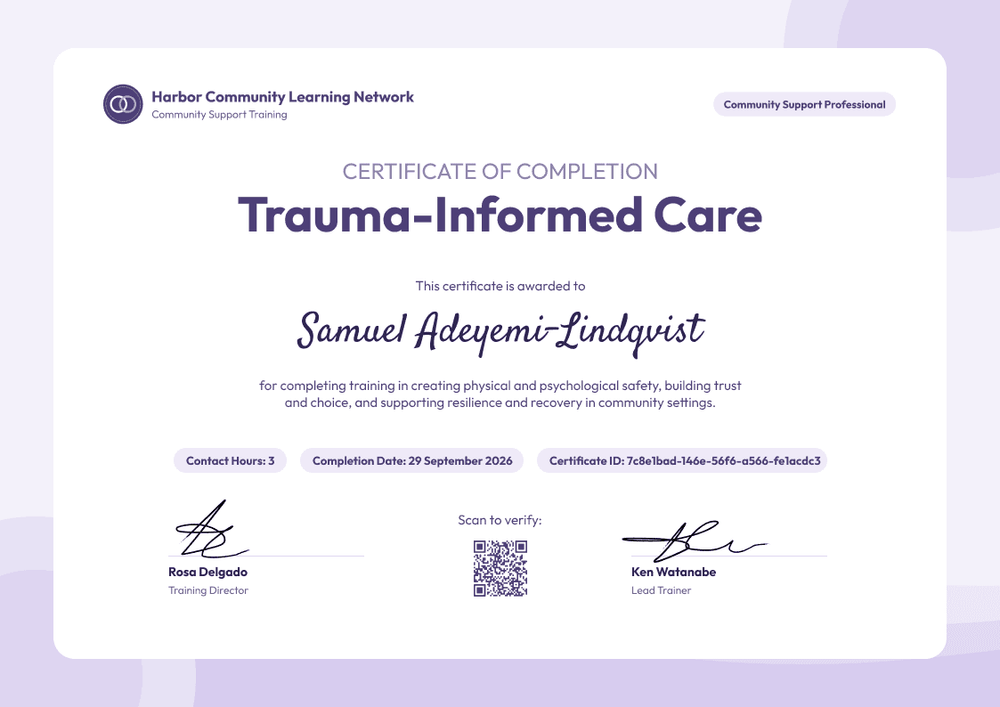
The design places a white card with rounded corners on a soft lavender background with overlapping purple shapes. Your logo and network name sit top left, and a purple pill top right shows the recipient's role. "Certificate of Completion" appears in light purple capitals above a bold purple "Trauma-Informed Care" title.
The name is in a friendly script, and three lavender pills hold contact hours, completion date, and certificate ID. A QR code sits centered between the two signatures.
When a training cohort finishes, import attendance from a spreadsheet, connect your LMS, or send records from your intake form with Zapier. Each person gets a credential page with a verification link on every plan.
What is a community trauma-informed care certificate?
A community trauma-informed care certificate is a record that a community worker completed trauma-informed care training, often covering safety, trust, choice, and support for recovery. Agencies use it to show funders and partners that their staff are trained, and workers keep it as proof of their own development.
The certificate records attendance and hours, but it doesn't qualify anyone to provide clinical care.
This template is laid out on A4 landscape (29.7 x 21 cm). Sign up for a free Certifier account to add your network's details.
What should a community trauma-informed care certificate include?
Keep it simple: who was trained, in what role, for how long, and when.
Static fields
- Network block: Your logo, organization name, and program (e.g., Harbor Community Learning Network, Community Support Training).
- Certificate label and title: The award type and topic (e.g., Certificate of Completion, Trauma-Informed Care).
- Signature lines: Two signers and roles (e.g., Rosa Delgado, Training Director, and Ken Watanabe, Lead Trainer).
Dynamic fields (automatically populated by Certifier)
- Recipient name: The participant's full name (e.g., Samuel Adeyemi-Lindqvist).
- Role: The person's role in the top-right pill (e.g., Community Support Professional).
- Training description: What the training covered (e.g., creating physical and psychological safety, building trust and choice, and supporting resilience and recovery in community settings).
- Contact hours: Hours completed (e.g., 3). The label is editable.
You can change any field in Certifier's design builder.
How to issue community trauma-informed care certificates
- Brand it for your network: Add your logo, program name, and signers. Edit the training description to match your curriculum.
- Collect attendance: Record names, emails, roles, and hours at each session, in a spreadsheet or an online form.
- Issue to the group: Upload the spreadsheet, or connect your form through Zapier so certificates go out when a record is added. Each person gets an email with their certificate.
- Report to funders and partners: Use the Credential Repository to see how many certificates you issued and who opened them, so you have numbers ready for your next report.
Available community trauma-informed care certificate template formats
Edit and issue online with Certifier
Edit the design in your browser, add participants, and send every certificate from one place. Each participant gets a credential page where anyone can verify it.
Download in Microsoft Word
Enter your email to receive a ZIP with editable Word files.
PDF document export
Participants download a print-ready PDF from their credential page.
Who issues community trauma-informed care certificates?
Community learning networks
Regional networks train staff from many local organizations and issue one consistent certificate to all of them.
Social service agencies
Agencies train caseworkers, housing staff, and outreach teams who work with people affected by trauma.
Child welfare and family support programs
Programs train caseworkers and foster or kinship caregivers, often as part of a state initiative or grant.
Frequently asked questions
Yes. You can customize the design on the free Starter plan, which allows up to 5 custom attributes. This template's custom fields (role, training description, and contact hours) fit within that limit. The QR code needs the Professional or Advanced plan.
Yes, as hours of training. Only approved providers can award accredited CE, so a non-accredited organization can issue a certificate of completion or attendance with hours, but it can't claim accredited CE. Label them "contact hours" or "training hours" and leave out any approval statement.
Yes. Add a role column to your spreadsheet, such as caseworker, peer advocate, or volunteer. Each certificate shows the right label in the role pill.
Yes. Duplicate the design for each partner and swap in their logo and name. If each partner needs its own separate account space, multiple workspaces are available on the Advanced plan.
Certifier templates are provided for general informational and design purposes only. They do not constitute legal, regulatory, or compliance advice and are not guaranteed to satisfy the requirements of any regulator, auditor, standard, insurer, or jurisdiction. The issuing organization is responsible for the content of its training program and for verifying that its records meet the requirements that apply to it.